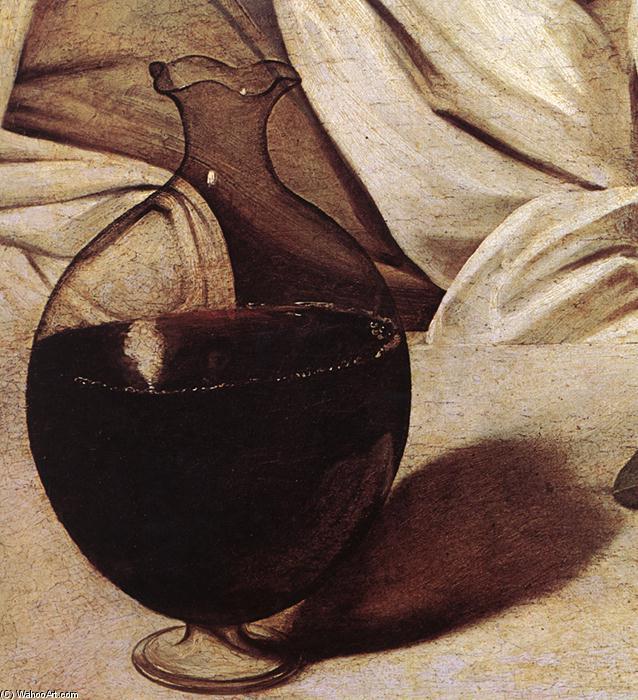
Bacchus (detail): A Symphony of Darkness and Delight
Michelangelo Merisi da Caravaggio’s
Bacchus (detail) stands as a cornerstone of Baroque art—a painting that continues to fascinate viewers centuries after its creation. Housed in the Galleria degli Uffizi in Florence, Italy, this deceptively simple composition encapsulates Caravaggio’s revolutionary approach to artistic representation and invites contemplation on themes of pleasure, mortality, and classical ideals. More than just a depiction of a wine glass and an empty bottle,
Bacchus (detail) is a masterful exercise in chiaroscuro—the dramatic use of light and shadow—that elevates it to an unforgettable visual experience.
The Artistic Genius of Caravaggio
Caravaggio, born in Milan in 1571, irrevocably altered the course of European painting. Rejecting the idealized forms favored by Renaissance artists, he championed realism, portraying figures with unflinching honesty and capturing psychological nuance. His technique—characterized by intense contrasts between light and dark—became known as tenebrism, creating a palpable sense of depth and emotion that draws the viewer into the scene’s dramatic narrative. This approach wasn't merely stylistic; it reflected Caravaggio’s profound belief in portraying human experience with uncompromising truthfulness.
Contextualizing Bacchus (detail)
Painted in 1596,
Bacchus (detail) is considered one of Caravaggio’s early masterpieces—a testament to his burgeoning talent and his fascination with classical mythology. The painting aligns with Caravaggio's broader exploration of humanist themes, mirroring the intellectual currents circulating in Florence during this period. Specifically referencing Dionysus, the Greek god of wine, revelry, and ecstasy,
Bacchus (detail) speaks to the aristocratic patronage of Cardinal Francesco Maria del Monte—who commissioned the work—and embodies the desire for refined aesthetic experience.
Symbolism and Interpretation
The seemingly unassuming elements within
Bacchus (detail) are laden with symbolic significance. The dark liquid in the wine glass serves as a metaphor for life itself—fleeting and precious—while simultaneously hinting at decay and mortality. Adjacent to it is an empty bottle—a poignant reminder of lost opportunity and the inevitable emptiness that accompanies earthly pursuits. Caravaggio’s masterful use of chiaroscuro amplifies these themes, highlighting the textures of the objects and creating a mesmerizing visual illusion. As art historian Mina Gregori noted, Caravaggio's vision celebrated freedom of senses and referenced Bacchic rituals—a deliberate nod to humanist ideals prevalent in Florence at the time.
Artistic Techniques
Caravaggio’s mastery of tenebrism is evident throughout
Bacchus (detail)—where a single source of light illuminates the central figure and objects, casting deep shadows that heighten dramatic tension. This technique isn’t merely decorative; it's integral to conveying emotion and creating an immersive experience for the viewer. The artist meticulously rendered the surfaces of the wine glass and bottle, capturing their materiality with remarkable precision—a testament to Caravaggio’s dedication to anatomical accuracy and observational realism.
Legacy and Influence
Caravaggio’s impact on Baroque painting is undeniable—inspiring artists such as Rubens, Rembrandt, and Vermeer to adopt his dramatic lighting style and embrace a more truthful depiction of human form. His influence extended beyond Italy, shaping artistic traditions in Flanders and Holland and establishing a new visual vocabulary that continues to resonate today. The enduring fascination with Caravaggio’s work underscores the power of art to transcend time—a testament to his genius as a painter and his profound understanding of the human condition.
- The Galleria degli Uffizi: A prominent art museum housing a collection of priceless works, particularly from the Italian Renaissance.
- Caravaggio (Michelangelo Merisi): An Italian painter known for his realistic observation of the human state and dramatic use of lighting.
- Bacchus (detail): A painting by Caravaggio depicting Dionysus—the god of wine, inebriation, fertility and theater.
- Baroque painting: Characterized by great drama, rich color, and intense light and dark shadows, often evoking emotion and passion.
ArtsDot.com offers a unique opportunity to own high-quality reproductions of famous paintings like
Bacchus (detail). Each piece is carefully crafted by skilled artists, ensuring that the essence of Caravaggio’s masterpiece is preserved.