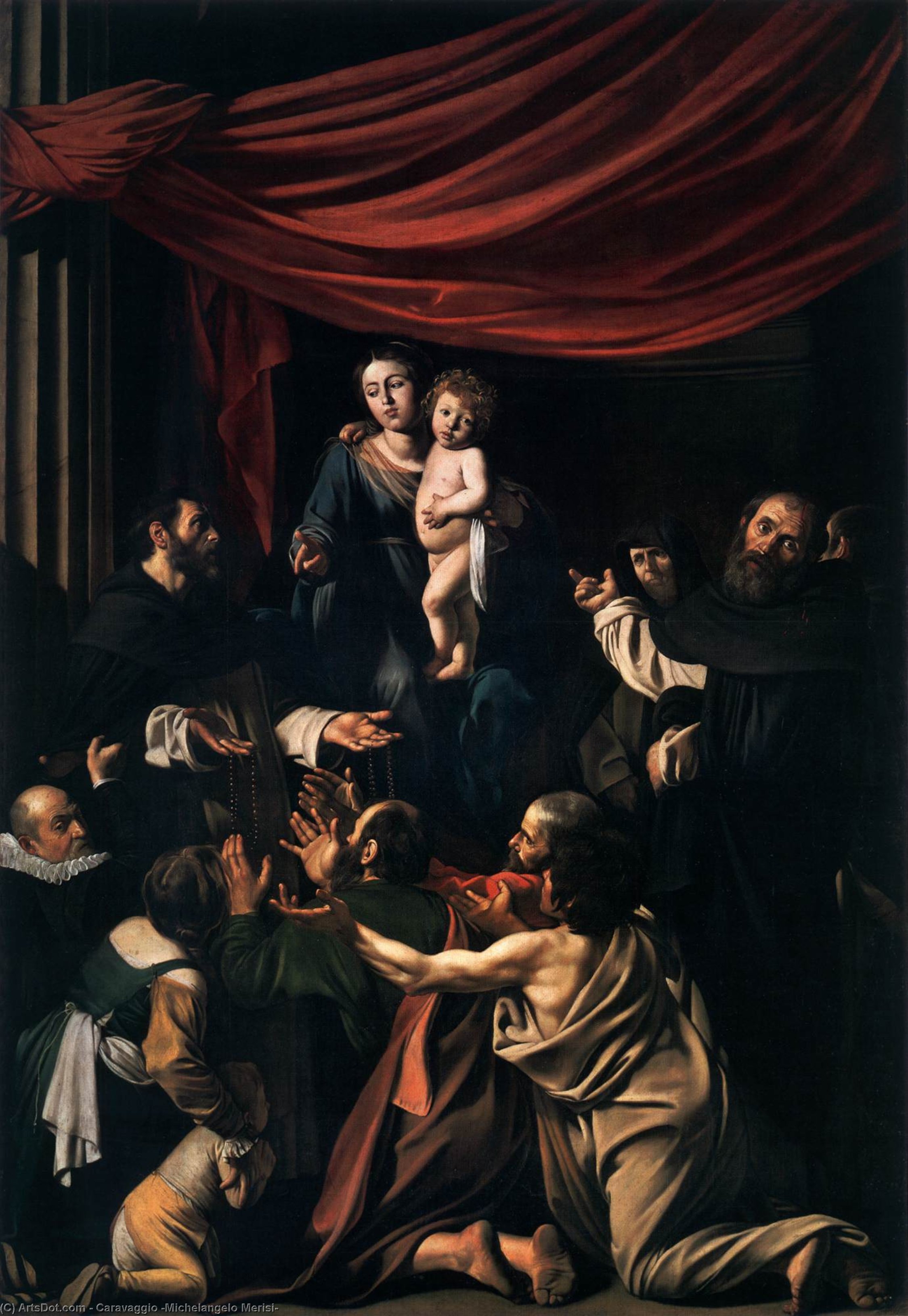
A Dramatic Revelation: Caravaggio’s Madonna del Rosario
Michelangelo Merisi da Caravaggio, a name synonymous with the dramatic intensity of Baroque painting, was born in Milan in 1571, a period steeped in both artistic flourishing and societal upheaval. His early life was marked by loss; plague ravaged his hometown, claiming the lives of his father and grandfather when he was just six years old. Raised amidst relative poverty, young Michelangelo’s formative years instilled within him a keen awareness of human suffering and resilience—themes that would later permeate his canvases.
His artistic training began in Milan under Simone Peterzano, a former pupil of Titian, absorbing the fundamentals of Renaissance technique but already hinting at a rebellious spirit that would soon shatter conventional norms. This apprenticeship provided a solid foundation, yet it was in Rome, arriving around 1592, that Caravaggio truly found his voice, though not without initial struggle and hardship. The city, a vibrant hub of artistic patronage and religious fervor, challenged him to push boundaries—a challenge he embraced with unparalleled conviction.
The Painting’s Essence: Composition and Technique
Caravaggio's Madonna del Rosario, completed in 1607, is an oil on canvas masterpiece measuring a monumental 364 x 249 cm. Currently housed at the Kunsthistorisches Museum in Vienna, Austria, it exemplifies his signature style—chiaroscuro—a technique that manipulates light and shadow to create startling visual effects. This masterful use of illumination isn’t merely decorative; it serves as a conduit for conveying profound emotion, drawing viewers into the scene's dramatic core.
The composition is deliberately unsettling yet profoundly compelling. Caravaggio eschews idealized depictions of Mary and Jesus, presenting them with unflinching realism—a stylistic choice that reflects his humanist sensibilities and distinguishes him from many of his contemporaries. The Virgin Mary dominates the center of the canvas, cradling her child in a gesture of tender devotion. Surrounding her are twelve figures – representing the apostles – who gaze upwards towards Mary and Jesus, creating a palpable sense of reverence.
Symbolism and Historical Context
Beyond its aesthetic brilliance, Madonna del Rosario resonates with deep religious symbolism. The depiction aligns perfectly with the fervor of the Baroque era, mirroring the fervent devotion to the Virgin Mary that characterized the period. Caravaggio’s deliberate positioning of Mary and Jesus—facing each other—emphasizes their divine unity and underscores the central role of faith in Christian belief.
The painting's origins are shrouded in mystery, fueling speculation about its commission and intended audience. Scholars believe it was commissioned by the Duke of Modena, though definitive proof remains elusive. Its subsequent acquisition by Rubens and its placement within Antwerp’s Dominican Church underscore its significance as a symbol of Catholic piety.
Reproductions Available: Preserving Caravaggio's Legacy
For those captivated by Caravaggio’s artistic vision, ArtsDot.com offers meticulously crafted oil painting reproductions and prints on canvas—allowing you to experience the grandeur of this iconic artwork in your own home. These reproductions are created using archival pigments and printing methods, guaranteeing that the vibrancy and nuance of Caravaggio's original masterpiece endure for generations to come.
Explore ArtsDot.com today and bring a piece of Baroque brilliance into your space!