A Vision in Shadow: The Raw Humanity of Caravaggio
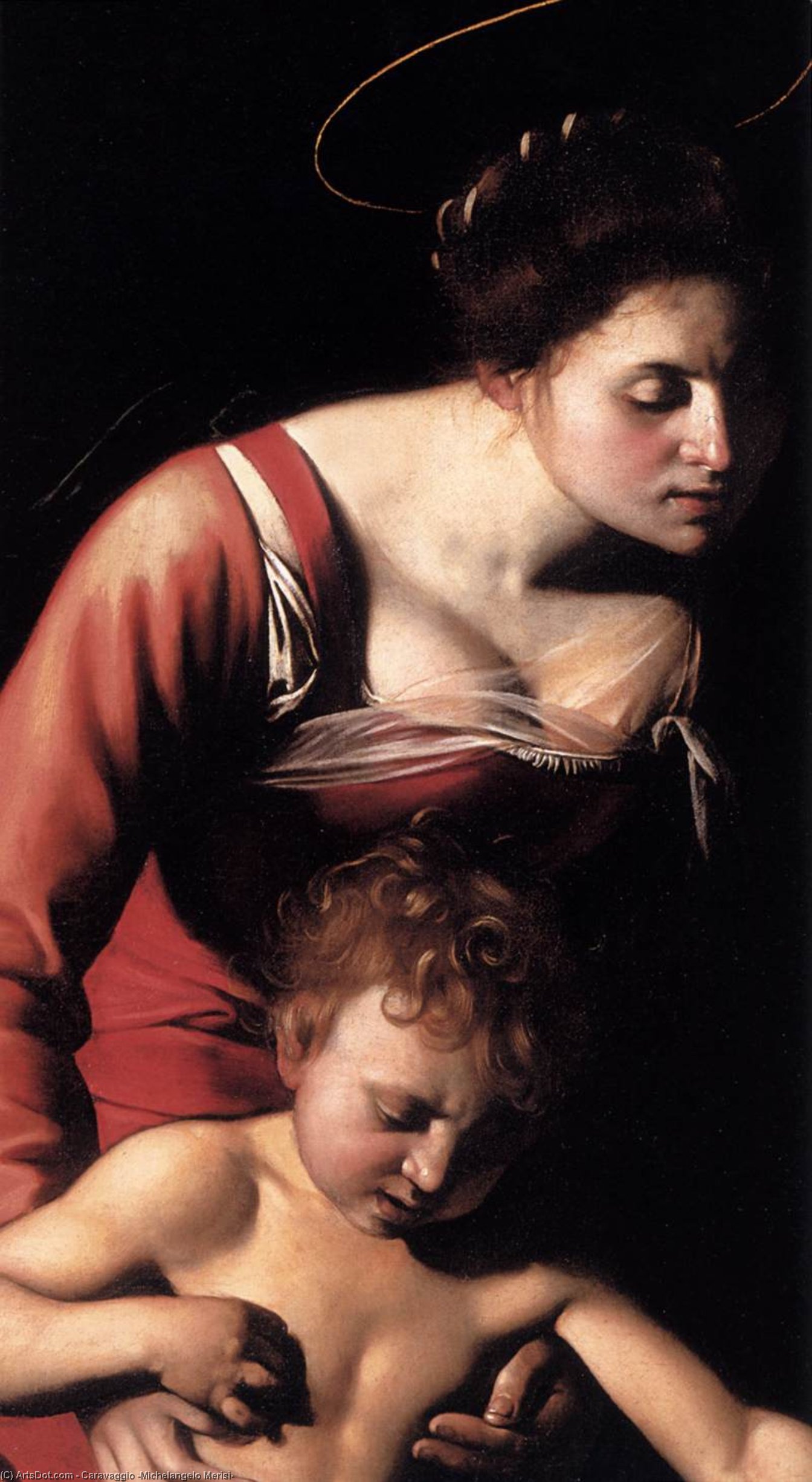
In the quiet, dramatic depths of Michelangelo Merisi da Caravaggio’s Madonna Palafrenieri, we encounter a moment that transcends mere religious iconography to touch the very essence of human vulnerability. This detail of the masterpiece captures more than just a sacred scene; it presents a visceral, breathing reality that was revolutionary for its time. The painting depicts the Virgin Mary in an intimate, almost startlingly natural pose, tending to the Christ Child. There is no celestial glow or ethereal distance here—only the heavy, palpable presence of flesh, fabric, and shadow. For the modern collector or lover of fine art, this piece offers a profound window into the Baroque soul, where the divine is found not in the clouds, but in the grit and grace of everyday existence.
The brilliance of this work lies in Caravaggio’s unparalleled mastery of chiaroscuro. Through a deliberate and theatrical manipulation of light, he directs our gaze with surgical precision. A single, piercing shaft of light emerges from an unseen source, illuminating the soft contours of Mary’s face and the delicate skin of the infant, while simultaneously plunging the surrounding environment into a profound, velvety darkness. This technique, often referred to as tenebrism, does more than create depth; it creates tension. The stark contrast between the luminous subjects and the encroaching shadows forces an emotional confrontation, making the viewer feel like an unobserved witness to a private, sacred moment of nurturing.
Symbolism and the Weight of Reality
Beyond its visual splendor, the Madonna Palafrenieri is rich with layers of theological and symbolic meaning that reward deep contemplation. In this specific detail, the interaction between mother and child serves as a poignant metaphor for protection and the shared destiny of humanity. While the broader composition includes elements like the serpent—symbolizing the triumph over sin—the focus on the nursing or tending of the child emphasizes the physical reality of the Incarnation. Caravaggio strips away the polished, idealized surfaces of the Renaissance to reveal a Christ Child who is undeniably human, vulnerable and dependent. This realism was controversial in 1606, yet it remains the very quality that makes the painting so enduringly powerful for contemporary audiences.
For those looking to integrate such a profound work into a curated interior, this piece serves as a commanding focal point. Its ability to command attention through shadow and light makes it an ideal centerpiece for spaces designed for reflection or sophisticated conversation. Whether displayed in a grand library or a modern, minimalist gallery setting, the Madonna Palafrenieri brings with it an atmosphere of historical weight and emotional depth. It is not merely a decoration; it is an invitation to experience the dramatic tension of the Baroque era, offering a timeless elegance that speaks to the enduring human connection between light and dark, life and mortality.