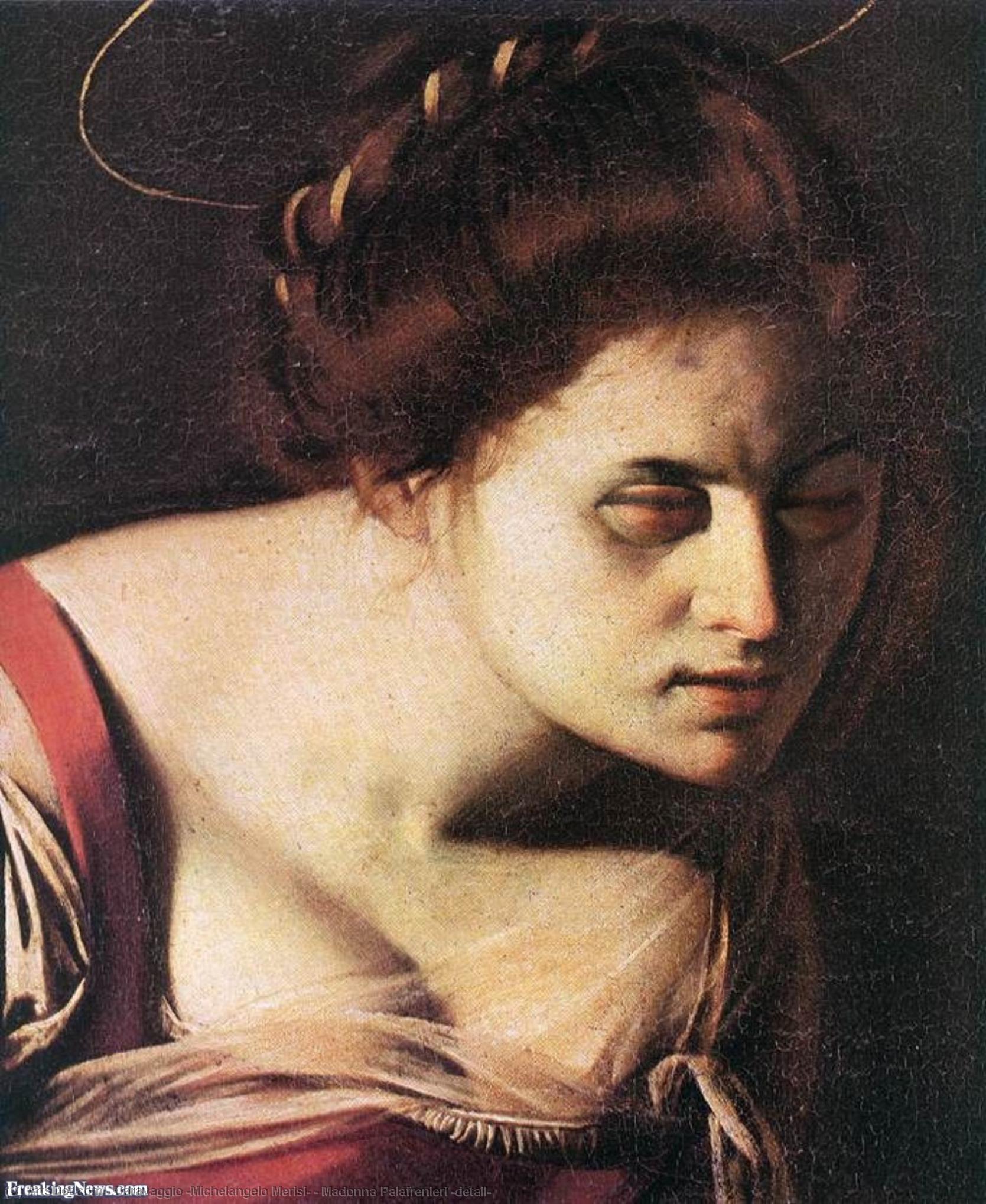
The Enigmatic Beauty of Caravaggio’s Madonna Palafrenieri
Michelangelo Merisi da Caravaggio – universally known as simply Caravaggio – remains one of the most profoundly influential and intensely debated figures in art history. His dramatic, emotionally charged paintings shattered artistic conventions, ushering in a new era of realism and psychological depth that continues to captivate audiences centuries later. Among his vast and remarkable oeuvre, Madonna Palafrenieri (detail) stands as a particularly compelling example of his genius – a work brimming with narrative complexity, technical mastery, and an unsettling intimacy rarely found in depictions of the Virgin Mary and Child.
Painted in 1606, this masterpiece was initially intended for the altar of the Archconfraternity of the Papal Grooms (Arciconfraternita di Sant’Anna de Parafrenieri) within the Basilica of Saint Peter. However, its unconventional portrayal – a strikingly realistic depiction of Mary, complete with visible breasts and a vulnerable expression – immediately drew controversy. The painting was briefly exhibited before being discreetly removed and ultimately finding its home in the Galleria Borghese in Rome, where it remains today. This very act of removal speaks volumes about Caravaggio’s daring approach to religious iconography, challenging established norms and forcing viewers to confront the humanity within sacred subjects.
Chiaroscuro: The Heartbeat of Caravaggio's Drama
Caravaggio’s signature technique – chiaroscuro – is perhaps most powerfully demonstrated in Madonna Palafrenieri. This masterful manipulation of light and shadow isn’t merely a stylistic flourish; it’s the very essence of the painting’s emotional impact. Caravaggio doesn't simply illuminate his subjects; he sculpts them with light, creating an almost theatrical drama within the confines of the canvas. The deep, enveloping darkness surrounding Mary and Christ draws the viewer’s eye directly to their luminous forms, intensifying their vulnerability and fostering a sense of profound intimacy. Notice how the folds of her dress are defined by subtle gradations of light, while the background remains shrouded in shadow – a deliberate choice that emphasizes the central figures and amplifies the painting's emotional intensity.
The use of tenebrism—a particularly dramatic form of chiaroscuro—is evident. Caravaggio’s approach wasn’t about creating soft transitions between light and dark; instead, he employed stark contrasts, almost like stage lighting, to heighten the drama and focus attention on key elements. This technique was revolutionary for its time, moving away from the idealized beauty often associated with religious art and embracing a more raw, immediate representation of human experience.
A Portrait of Vulnerability: Mary’s Unconventional Beauty
What distinguishes Madonna Palafrenieri is not simply Caravaggio's technical brilliance but also his profound understanding of the human psyche. Unlike many depictions of the Virgin Mary, which often portray her as serene and distant, Caravaggio presents a remarkably vulnerable and emotionally charged figure. Her gaze is direct, almost challenging, while her expression hints at both tenderness and a deep well of emotion. The nudity of the infant Christ – a bold departure from traditional iconography – further underscores his vulnerability and evokes a powerful sense of intimacy. This isn’t a distant deity; it's a mother cradling her child, radiating warmth and compassion.
The inclusion of St. Anne, Mary’s mother, adds another layer of complexity to the composition. Her wrinkled face and humble demeanor contrast sharply with the youthful beauty of Mary, suggesting a lineage of both grace and hardship. The scene as a whole speaks to themes of motherhood, faith, and the enduring power of family – all rendered with Caravaggio's characteristic intensity and realism.
A Legacy of Innovation
Caravaggio’s influence on Western art is immeasurable. His innovations in technique—particularly his use of chiaroscuro and his focus on psychological realism—laid the foundation for the Baroque style that followed, inspiring artists such as Peter Paul Rubens, Jusepe de Ribera, Gian Lorenzo Bernini, and even Rembrandt. Madonna Palafrenieri stands as a testament to Caravaggio’s revolutionary spirit – a painting that continues to provoke discussion and inspire awe centuries after its creation. For those seeking to experience the power of this masterpiece firsthand, ArtsDot offers meticulously crafted hand-painted reproductions that capture the essence of Caravaggio's genius.