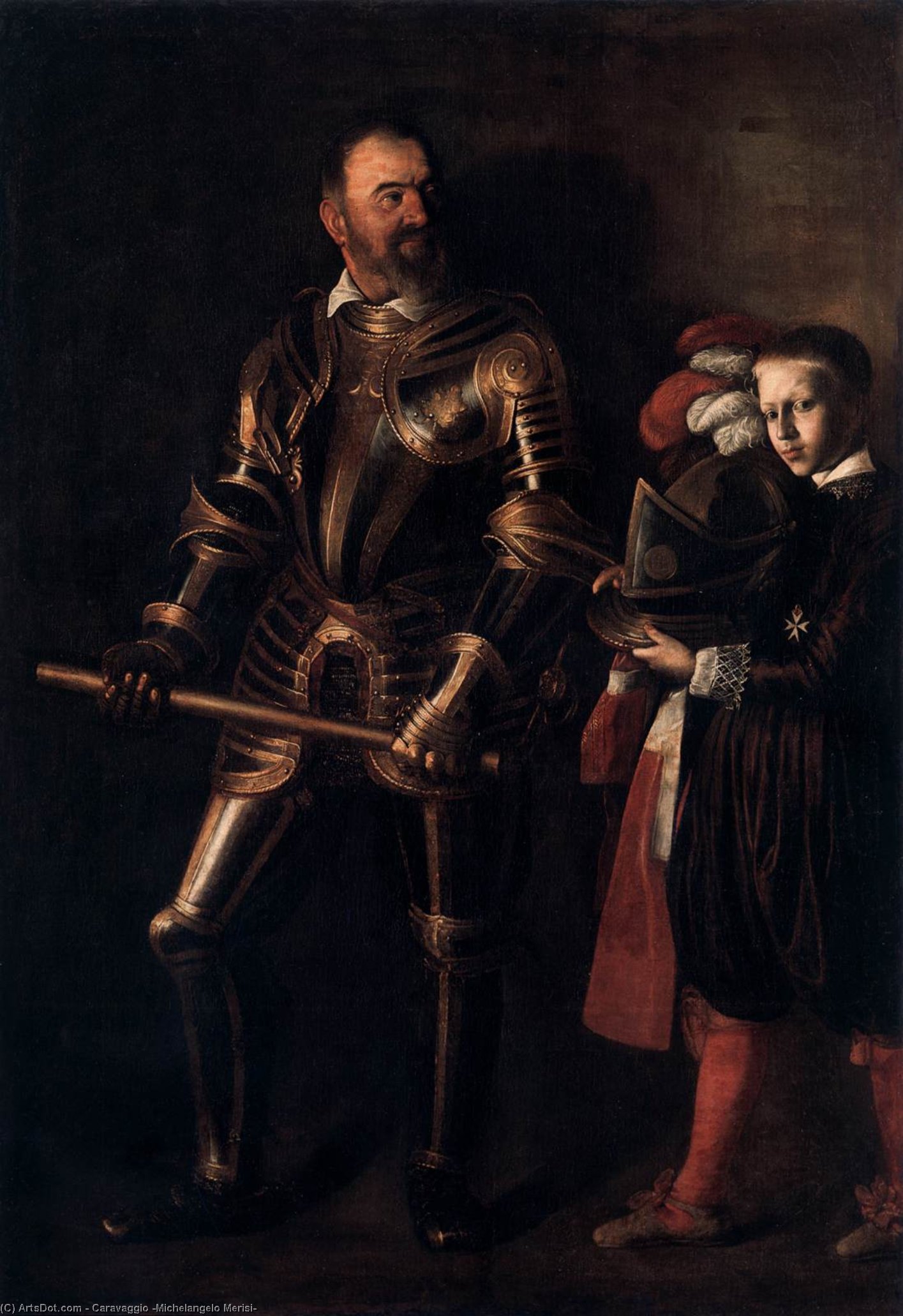
Portrait of Alof de Wignacourt
Caravaggio’s “Portrait of Alof de Wignacourt” stands as an emblem of Baroque artistry—a testament to Michelangelo Merisi da Caravaggio's unparalleled command of light and shadow, a technique known as tenebrism. Painted in 1608, this monumental oil on canvas resides within the hallowed halls of the Musée du Louvre in Paris, attracting visitors eager to immerse themselves in its dramatic beauty. The painting transcends mere representation; it embodies the spirit of an era defined by grandeur and fervent religious conviction.
The Artistic Context: Tenebrism and Baroque Drama
Caravaggio’s stylistic innovation wasn't merely about capturing likeness; it was fundamentally reshaping how artists approached visual storytelling. He championed tenebrism—a radical departure from Renaissance ideals—creating a stark contrast between luminous highlights and impenetrable darkness. This method, born out of Caravaggio’s profound understanding of human psychology and theatrical presentation, elevates the portrait beyond a simple depiction of an individual to become a vehicle for conveying emotion and spiritual contemplation. The dramatic chiaroscuro serves not only to illuminate the subject's face but also to envelop him in an aura of solemn dignity—a hallmark of Baroque art’s ambition to stir the soul.
The Subject: Alof de Wignacourt – Grand Master of Malta
Alof de Wignacourt, a pivotal figure in Maltese history, was elected Grand Master of the Order of Saint John in 1601, succeeding Jean Parisot de Valois. This appointment marked a zenith of the Knights’ influence and prestige—a period characterized by assertive diplomacy and military prowess. Caravaggio skillfully portrays Wignacourt as a man of authority, clad in opulent Milanese armor that speaks volumes about his status and power. The inclusion of Nicholas de Paris Boissy, a young page standing beside him, underscores the aristocratic milieu of Valletta at the time—a symbol of youthful ambition and noble lineage.
Composition and Symbolism: A Dialogue Between Light and Darkness
The composition itself is remarkably restrained, prioritizing focus on Wignacourt’s visage against a backdrop of subdued darkness. This deliberate simplicity amplifies the impact of Caravaggio's masterful use of light—a single shaft illuminating Wignacourt’s face, highlighting his gaze and conveying an expression of unwavering resolve. The positioning of Boissy subtly reinforces the portrait’s narrative dimension, suggesting a connection between experience and mentorship—a visual metaphor for the transmission of leadership and tradition. Furthermore, the armor serves as a potent symbol of military strength and devotion to the Order's ideals.
Legacy and Preservation: A Timeless Masterpiece
“Portrait of Alof de Wignacourt” has graced the Louvre’s collection since 1670—a testament to its enduring artistic merit and historical significance. Though subjected to careful restoration efforts in the eighteenth century, the painting retains an astonishing immediacy—capturing a moment frozen in time with breathtaking accuracy. Its preservation ensures that future generations can appreciate Caravaggio's genius and contemplate the profound psychological depth embedded within this iconic Baroque portrait. For those seeking inspiration or desiring a stunning reproduction of this masterpiece, explore more works by Caravaggio on ArtsDot.com:
Caravaggio (Michelangelo Merisi): Portrait of Alof de Wignacourt and
Caravaggio (Michelangelo Merisi): Portrait of Alof de Wignacourt are available on ArtsDot.com.