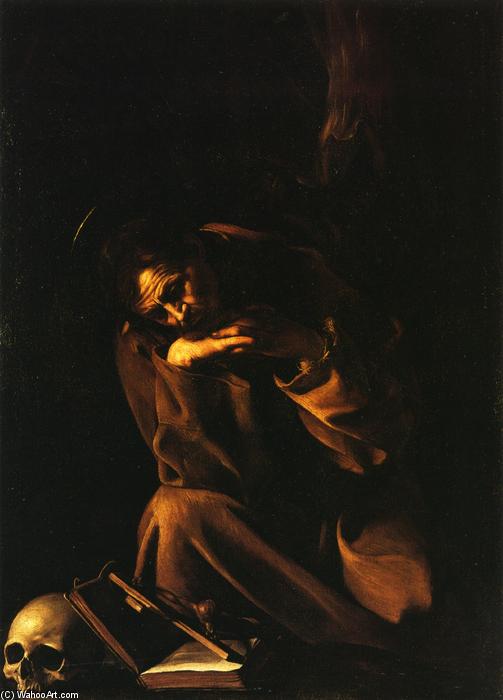
Saint Francis in Meditation: A Masterpiece of Baroque Drama
Michelangelo Merisi da Caravaggio’s *Saint Francis in Meditation*, completed around 1606-1607, stands as a cornerstone of Baroque art—a testament to the artist's unparalleled ability to infuse religious iconography with visceral emotion and breathtaking realism. More than just a depiction of Saint Francis contemplating mortality, it embodies Caravaggio’s revolutionary approach to painting, cementing his legacy as one of history’s most influential figures.
- Composition & Symbolism: The scene unfolds with Saint Francis seated on the ground, head bowed in prayer, hand resting upon his knee—a posture conveying profound introspection. Surrounding him are carefully placed symbols: a skull representing death and reminding viewers of human fragility; a clock signifying the passage of time and urging contemplation of eternity; and a cypress trunk symbolizing mourning and remembrance. These elements converge to create a powerfully symbolic tableau reflecting Franciscan spirituality.
- Caravaggio’s Technique – Tenebrism Unleashed: Caravaggio's signature technique, tenebrism—characterized by dramatic contrasts between light and dark—dominates the canvas. Brilliant shafts of illumination pierce through the gloom, highlighting Saint Francis’ face and hand while enveloping the rest of the composition in deep shadows. This masterful manipulation of chiaroscuro wasn’t merely stylistic; it served to heighten emotional impact and draw the viewer's gaze directly to the central figure.
- Historical Context & Influence: Painted during the Counter-Reformation, *Saint Francis in Meditation* reflects the Church’s fervent desire for spiritual renewal. Caravaggio’s work resonated deeply with audiences of his time, influencing subsequent Baroque artists who adopted his dramatic style and psychological realism. However, Caravaggio's innovations faced resistance from some critics who deemed his approach too unsettling—a reflection of the turbulent intellectual climate of the era.
- Beyond Representation: Unlike Renaissance predecessors who prioritized idealized beauty, Caravaggio sought to capture human emotion with unflinching honesty. The saint’s gaze is imbued with sorrow and contemplation, conveying a palpable sense of vulnerability. This psychological depth distinguishes *Saint Francis in Meditation* from other religious paintings of its time, establishing Caravaggio as a pioneer of expressive portraiture.
- Legacy & Reproduction: Today, reproductions of *Saint Francis in Meditation* continue to captivate collectors and inspire interior designers alike. ArtsDot offers exceptional quality prints that allow viewers to experience the grandeur and emotional intensity of Caravaggio’s masterpiece—a timeless reminder of art's ability to illuminate the human condition.