The Dramatic Revelation: Exploring Caravaggio’s ‘Supper at Emmaus’
Within the hallowed halls of the Pinacoteca di Brera in Milan resides a painting that continues to resonate with viewers centuries after its creation – Caravaggio's 'Supper at Emmaus'. More than just a biblical depiction, it is a profound exploration of faith, recognition, and the transformative power of divine presence. Completed in 1606, this work stands as a testament to Caravaggio’s revolutionary approach to art, particularly his masterful manipulation of light and shadow, or *chiaroscuro*, which draws us directly into the heart of the scene and elevates it beyond mere illustration.
At first glance, the painting presents a seemingly simple tableau: two disciples, identified as Cleopas and Peter (though some scholars debate this), are seated at a rustic table in an inn. Before them lies a loaf of bread, a symbol of sustenance and shared experience. However, it is the figure of Christ, subtly revealed within the darkness, that commands our attention. He’s not grand or imposing; instead, he appears as a common man, his face etched with gentle kindness and a quiet dignity. The artist's deliberate choice to portray him in this way—stripped of conventional iconography—immediately challenges our expectations and invites us to contemplate the profound reality of his resurrection.
Artistic Techniques
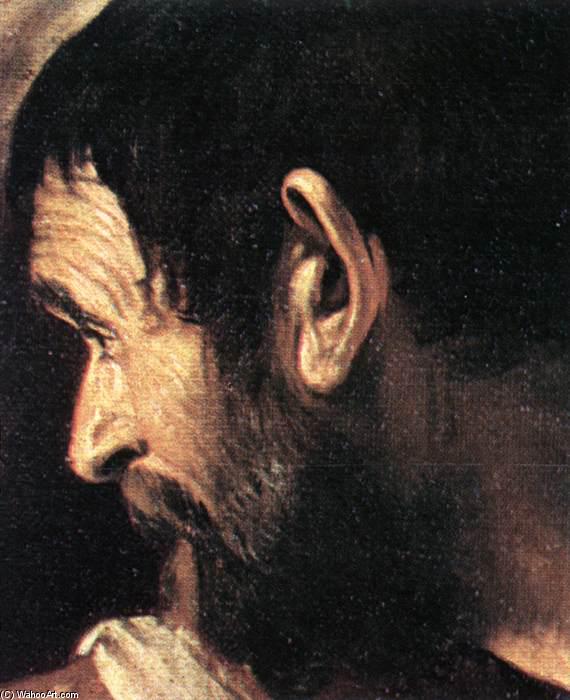
- Chiaroscuro Mastery: Caravaggio’s signature technique is on full display here. A brilliant, almost theatrical light source emanates from the left side of the canvas, bathing the faces of Christ and the disciple on his right in a golden glow. This stark contrast against the enveloping darkness creates an immediate sense of drama and depth, pulling our eyes directly to the central figures.
- Fluid Brushwork: Notice the loose, expressive brushstrokes that animate the scene. Caravaggio eschewed meticulous detail in favor of capturing the essence of his subjects—their emotions, their gestures—with a dynamic and immediate style. The texture of the fabrics, the worn surfaces of the table, all contribute to a palpable sense of realism.
- Oil on Canvas: The use of oil paint allowed Caravaggio to build up layers of color gradually, achieving rich, vibrant tones that were uncommon for his time. This technique also provided him with the flexibility to correct mistakes and refine details with remarkable precision.
Symbolism and Narrative Depth
Beyond its immediate depiction of a biblical event, ‘Supper at Emmaus’ is rich in symbolic meaning. The innkeeper's wife, an unexpected addition to the scene not found in Luke 24:28-32, serves as a poignant foil to the disciples’ astonishment. Her gesture—reaching out to offer them wine—represents hospitality and divine grace. The placement of the ear of the disciple on the right, seemingly detached from the composition, is another intriguing detail. Some scholars believe it alludes to the word “hoti” (that) in Luke 24:35, signifying that the disciples were still questioning whether they had truly seen Christ before recognizing him. The hand of the innkeeper’s wife, outstretched towards the viewer, invites us into the scene and suggests a shared experience of revelation.
Historical Context
It's important to consider that this painting was created during a turbulent period in Caravaggio’s life. Following the death of his assistant, Ranuccio Tomassoni, he fled Rome and sought refuge with Prince Marzio Colonna. This period of exile undoubtedly influenced the mood and intensity of his work. The sense of vulnerability and emotional depth evident in ‘Supper at Emmaus’ reflects this personal struggle.
A Legacy of Dramatic Realism
‘Supper at Emmaus’ is more than just a religious painting; it's a profound meditation on faith, recognition, and the human condition. Caravaggio’s innovative use of light, his dramatic composition, and his unflinching portrayal of ordinary people have cemented this work as one of the most iconic images in Western art history. It continues to captivate viewers with its emotional power and technical brilliance.
At ArtsDot.com, we are proud to offer meticulously crafted hand-painted reproductions of Caravaggio’s ‘Supper at Emmaus’. Each reproduction is created by skilled artisans using traditional techniques and the finest materials, ensuring that you receive a faithful representation of this masterpiece. Bring the drama and emotion of Caravaggio's vision into your home or office – explore our collection today.
Resources for Further Exploration: