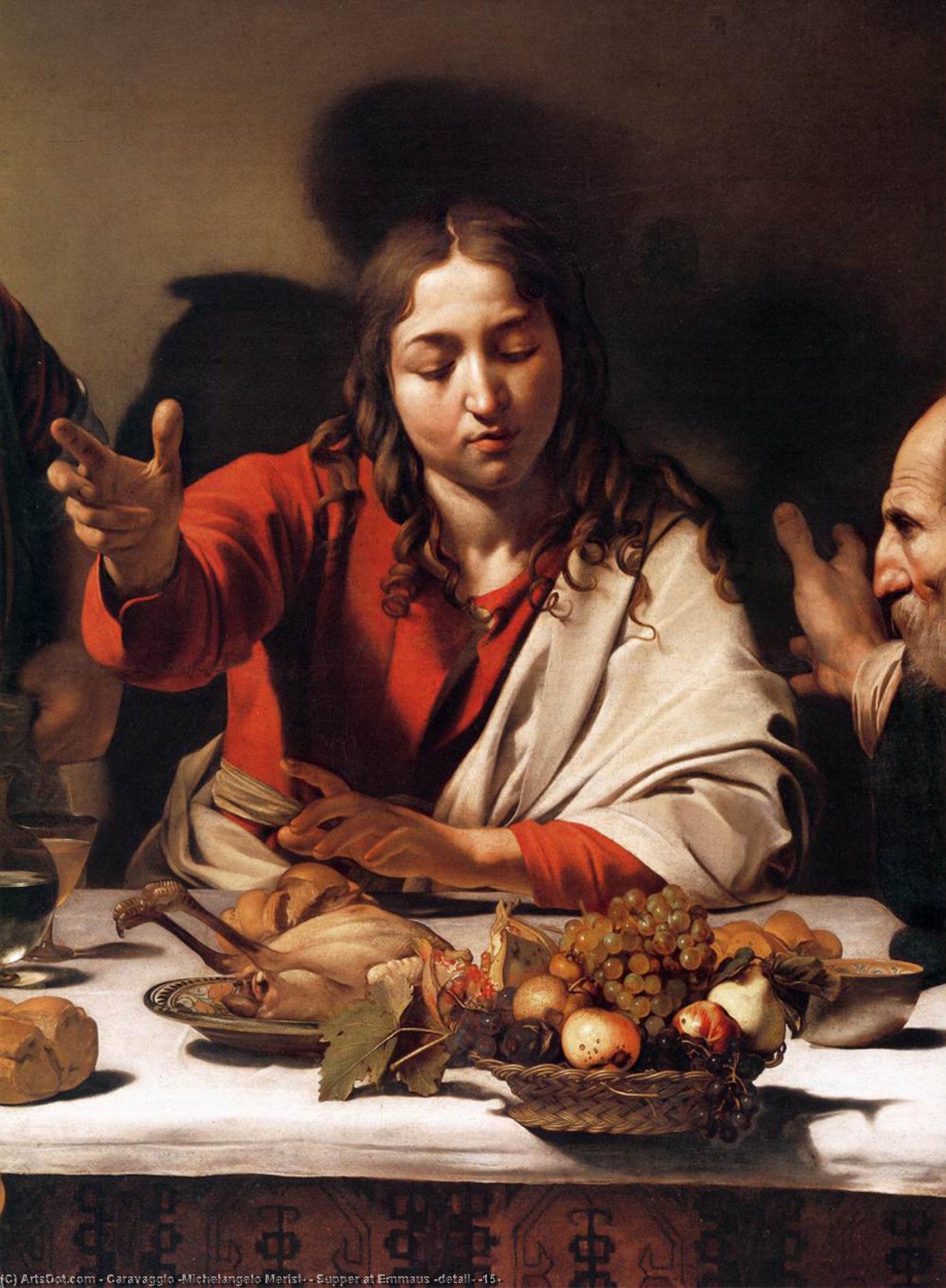
The Dramatic Revelation: Exploring Caravaggio’s *Supper at Emmaus* (Detail)
Michelangelo Merisi da Caravaggio, a name synonymous with revolutionary artistry and visceral emotion, gifted the world with countless masterpieces. Among these, *Supper at Emmaus*, particularly in its intimate detail rendition, stands as a profound meditation on faith, recognition, and the enduring power of human connection. This isn’t merely a depiction of a biblical scene; it's a carefully constructed drama, bathed in an arresting chiaroscuro that pulls the viewer directly into the heart of the moment. Created in 1601 and now residing within the hallowed halls of the National Gallery in London, this painting transcends its historical context to resonate with viewers centuries later.
Caravaggio’s genius lay not just in his technical skill – though undeniably masterful – but in his ability to capture the raw, unvarnished truth of human experience. He eschewed the idealized forms and polished surfaces favored by many of his contemporaries, instead presenting figures with a startling realism, imbued with palpable emotion. In *Supper at Emmaus*, he achieves this brilliantly. The scene unfolds with an almost cinematic intensity: Jesus, raised in blessing, dominates the center, his gesture radiating revelation. Around him, the disciples – one animated by startled recognition, the other frozen in contemplative awe – are caught in a whirlwind of feeling. The simple setting—a humble table laden with food—only serves to heighten the drama, emphasizing the profound significance of this unexpected encounter.
A Symphony of Light and Shadow: Caravaggio’s Technique
At the core of Caravaggio's style is his revolutionary use of light and shadow, a technique known as *tenebrism*. He masterfully manipulates darkness to create pools of intense illumination that draw the eye directly to key elements within the composition. Notice how the candlelight casts dramatic shafts across Jesus’ face, highlighting his gesture and imbuing it with an almost divine quality. The surrounding figures are rendered in deep shadow, their faces partially obscured, adding to the sense of mystery and emphasizing their emotional vulnerability. This stark contrast isn't merely aesthetic; it serves to amplify the drama and underscore the transformative nature of Jesus’ revelation.
Furthermore, Caravaggio’s meticulous attention to detail is remarkable. The textures of the food—the rough surface of the apples, the glistening sheen of the oranges—are rendered with astonishing realism. The folds in the clothing, the expressions on the faces – each element contributes to a sense of immediacy and authenticity. He employed a technique called *sfumato*, subtly blurring edges and creating an atmospheric effect that further enhances the painting’s depth and realism. The inclusion of seemingly mundane details—the wine glass, the simple table setting—grounds the scene in a tangible reality, making the miraculous event all the more compelling.
Symbolism and Spiritual Depth
Beyond its technical brilliance, *Supper at Emmaus* is rich in symbolic meaning. The meal itself represents the Eucharist, the central sacrament of Christianity, commemorating Jesus’ last supper with his disciples. Jesus' gesture—raising his hands in blessing—is a direct reference to the biblical account, signifying the revelation of his identity. The reactions of the disciples – one reaching out in eager recognition, the other recoiling in surprise – embody the profound impact of this encounter. The presence of the two additional figures in the background adds layers of complexity, suggesting the universality of faith and the ongoing process of spiritual discovery.
The choice of food—apples and oranges—is also significant. These fruits were symbols of abundance and prosperity during the Renaissance, further emphasizing the transformative nature of Jesus’ revelation. It's a scene that invites contemplation on themes of belief, doubt, and the enduring power of faith to shape our lives.
Bringing Caravaggio Home: Reproductions by ArtsDot
Experience the breathtaking artistry of Caravaggio in stunning detail with a hand-painted reproduction from ArtsDot.com. Our skilled artisans meticulously recreate every nuance of this iconic masterpiece, capturing the drama, emotion, and technical brilliance that have captivated art lovers for centuries. Each reproduction is created using archival-quality materials, ensuring its longevity and preserving the rich colors and textures of the original painting.
Artist: Michelangelo Merisi da Caravaggio (Caravaggio)
Painting Title: *Supper at Emmaus* (Detail) (15)
Museum: National Gallery, London, United Kingdom
Medium: Oil on Canvas
Date: 1601
Discover more Caravaggio masterpieces and explore our exquisite collection of hand-painted reproductions at Caravaggio (Michelangelo Merisi): Supper at Emmaus (detail) (15).