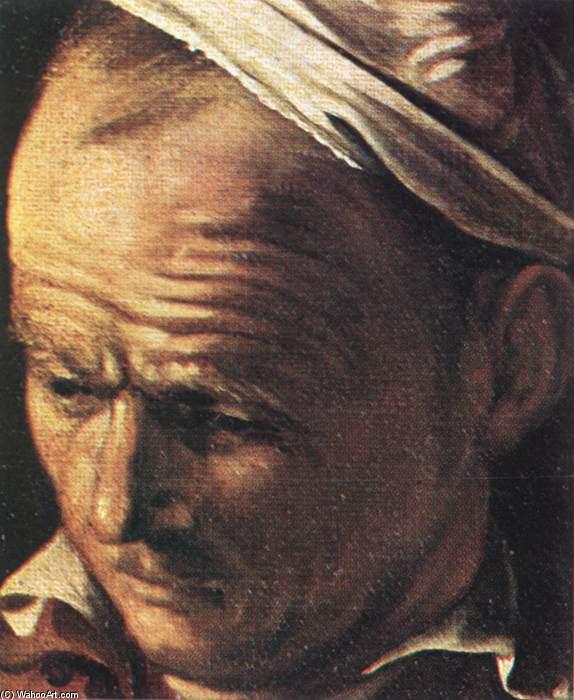
Caravaggio was born in Milan in 1571 and died in 1610. He revolutionized painting with his dramatic realism and chiaroscuro technique, influencing artists like Rembrandt and La Tour. The painting depicts Jesus revealing himself to two disciples at Emmaus, highlighting the Eucharist as a moment of profound spiritual recognition.
Supper at Emmaus (detail) – A Dramatic Revelation of Faith
Michelangelo Merisi da Caravaggio’s ‘Supper at Emmaus,’ completed in 1606, stands as a cornerstone of Baroque art and a profound meditation on Christian faith. Housed within the Pinacoteca di Brera in Milan, this painting transcends mere visual representation; it embodies Caravaggio's revolutionary approach to illumination and emotion—a legacy that continues to inspire artists today.
The Artistic Context: Caravaggio’s Baroque Vision
Born in Milan in 1571 amidst the turbulent backdrop of religious reformation, Caravaggio (1571-1610) irrevocably altered the artistic landscape. Rejecting the idealized forms and serene compositions favored by Renaissance artists, he championed realism—observational accuracy combined with theatrical drama—drawing heavily from biblical narratives. Influenced by Rembrandt’s masterful use of chiaroscuro, Caravaggio pushed the boundaries of technique, establishing tenebrism as his signature style: a deliberate contrast between intense darkness and radiant light designed to heighten emotional impact.
A Study in Light and Shadow – Caravaggio's Technique
- Tenebrismo: Caravaggio’s masterful manipulation of light is evident throughout ‘Supper at Emmaus.’ He employs tenebrism, a technique that plunges the scene into deep shadows punctuated by dramatic spotlights—creating an atmosphere of mystery and spiritual contemplation.
- Chiaroscuro: The interplay between light and dark enhances the realism of the figures and underscores their psychological states. Caravaggio meticulously renders textures and contours with painstaking detail, capturing the palpable presence of human emotion.
- Oil Paint on Canvas: Caravaggio utilized oil paint on canvas—a medium that allowed for unprecedented luminosity and tonal range—resulting in an image brimming with vibrancy and depth.
Symbolism Within the Scene – Layers of Meaning
Beyond its technical brilliance, ‘Supper at Emmaus’ is laden with symbolic significance. The bandage on the man's head serves as a poignant reminder of suffering—a visual allusion to Christ’s wounds and the sacrifices endured for salvation. The red shirt symbolizes passion and sacrifice, mirroring Jesus’s willingness to endure pain for humanity’s benefit. Furthermore, the gaze downward of the central figure invites viewers to contemplate their own spiritual journey.
Legacy and Emotional Resonance – Caravaggio's Enduring Influence
"Caravaggio’s Supper at Emmaus" is more than just a depiction of an event; it’s a conduit for profound emotion. Like Rembrandt before him, Caravaggio sought to convey the spiritual experience of encountering divine grace—a feat achieved through his uncompromising realism and masterful use of light. His influence extended beyond painting, shaping theatrical productions and inspiring artists across Europe. Today, reproductions of this iconic artwork continue to captivate audiences worldwide, reminding us of the enduring power of art to illuminate the human condition.