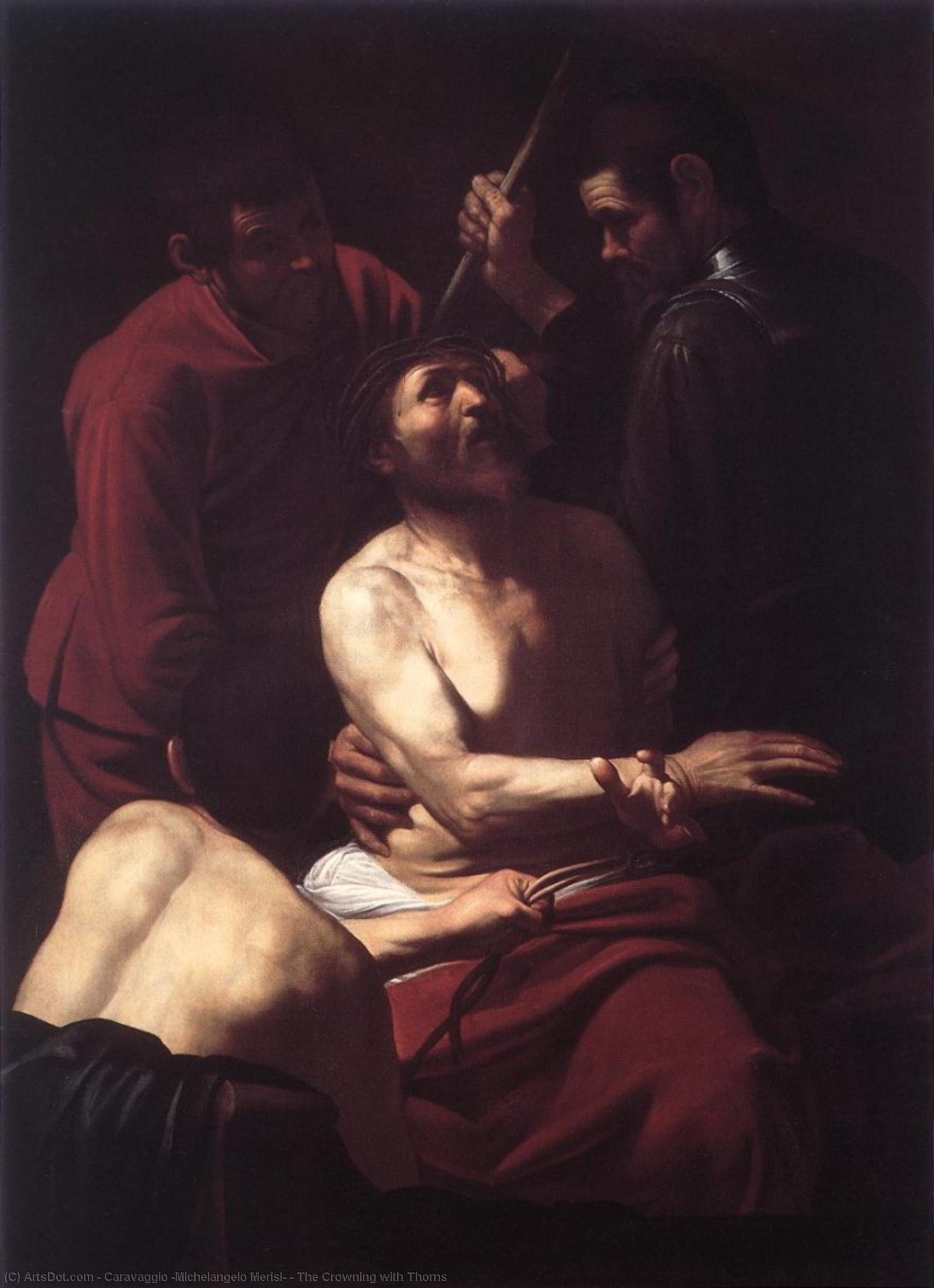
Michelangelo Merisi da Caravaggio’s “The Crowning with Thorns” depicts Jesus Christ being crowned with thorns by Roman soldiers—a dramatic masterpiece showcasing tenebrism and profound emotional depth. Explore its symbolism & legacy at ArtsDot.com!
Explore Caravaggio (1571-1610): Baroque master of realism & tenebrism. Dramatic religious scenes, intense chiaroscuro, and a revolutionary style that influenced Rubens & Rembrandt.
Explore Cassa di Risparmi di Prato: a unique Italian museum blending art & finance! Discover Tuscan masterpieces, contemporary works (incl. Anish Kapoor), and its link to the Pecci Centre.
A Symphony of Shadow and Suffering
In the hallowed, quiet corridors of the Kunsthistorisches Museum in Vienna, there exists a moment frozen in time, captured with such visceral intensity that it seems to pulse with life even centuries after its creation. Michelangelo Merisi da Caravaggio’s The Crowning with Thorns is not merely a painting; it is a profound psychological encounter. As we gaze upon the canvas, we are thrust into the heart of a biblical tragedy where the divine meets the brutal. The composition centers on the figure of Jesus Christ, whose body is contorted in a display of both physical agony and spiritual endurance. Surrounded by the harsh, unyielding presence of his tormentors, the scene captures the precise, agonizing instant when the crown of thorns is pressed onto his brow, a moment that serves as a precursor to the ultimate sacrifice of the crucifixion.
The Mastery of Tenebrism
Caravaggio’s revolutionary approach to light and shadow—a technique known as tenebrism—is the driving force behind the painting's overwhelming drama. By utilizing deep, impenetrable shadows that swallow much of the background, the artist forces the viewer’s eye toward the central figures, illuminated by sudden, piercing shafts of light. This dramatic use of chiaroscuro does more than just create depth; it sculpts the very flesh and bone of the subjects, lending a startling realism to the scene. The way the light catches the glint of a knife or the tension in a soldier's arm creates a sense of immediacy, as if the viewer is standing within the room, witnessing the violence unfold. This stark contrast between brilliance and darkness serves as a metaphor for the struggle between light and sin, life and death, making the technique an inseparable part of the painting's theological weight.
<
A Legacy of Raw Emotion
Beyond its technical brilliance, the power of this masterpiece lies in its unflinching observation of the human condition. Caravaggio eschewed the idealized, graceful figures of the Renaissance in favor of a gritty, palpable reality. The faces of the tormentors are not mere caricatures of evil but are rendered with a heavy, earthbound presence that makes their cruelty feel terrifyingly possible. For collectors and lovers of fine art, this work offers more than just aesthetic beauty; it provides an emotional resonance that is rare in the annals of Baroque art. Whether displayed in a private gallery or as a focal point in a sophisticated interior, The Crowning with Thorns commands attention, inviting contemplation on themes of resilience, sacrifice, and the enduring strength of the human spirit amidst the darkest of circumstances.