A Moment Frozen in Time: The Quiet Mastery of Carel de Moor
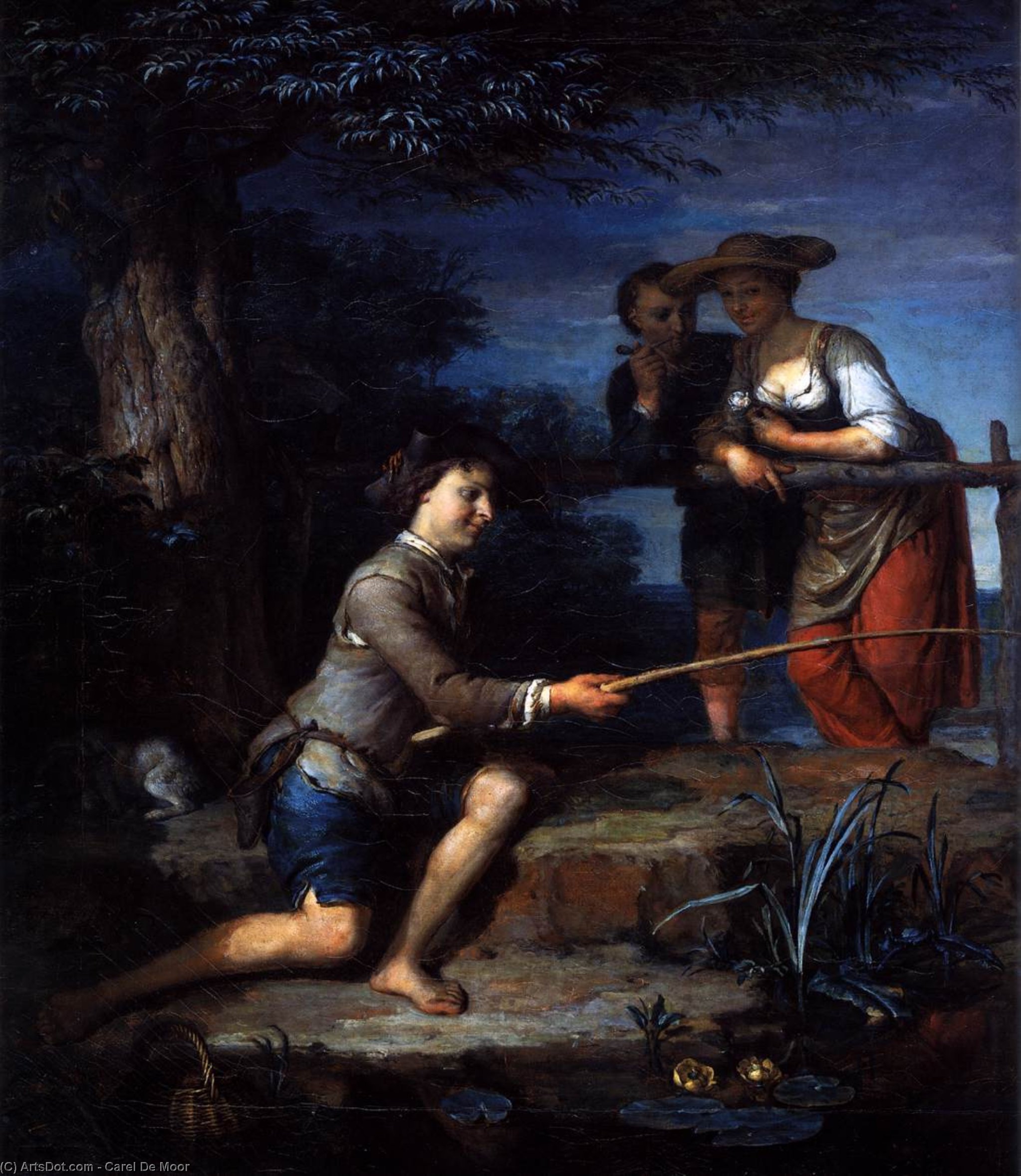
In the soft, dappled light of the Dutch Golden Age, few artists captured the profound beauty of the mundane as delicately as Carel de Moor. His work, Angler, completed around 1700, serves as a masterful distillation of the Baroque aesthetic—a period renowned for its meticulous realism and deep psychological insight. To gaze upon this piece is to step into a world where time slows down, inviting the viewer to witness a serene tableau of rural life. The scene portrays three figures engaged in quiet activity beneath the protective shade of a sprawling tree: a young boy, lost in the singular focus of his fishing task, and two women tending to their domestic duties near a rustic fence. It is not merely a depiction of a pastime; it is an evocative window into the values of seventeenth-century Holland, where tranquility and diligence were held in the highest regard.
The technical brilliance of de Moor lies in his command over texture and light, a skill inherited from the prestigious Leiden school. Employing techniques that allowed for astonishing precision, he rendered the subtle tonal variations of the landscape with surgical accuracy. The artist skillfully utilized chiaroscuro—the dramatic interplay between light and shadow—to sculpt form and imbue the scene with a palpable sense of atmosphere. One can almost feel the coolness of the shade beneath the heavy foliage and the warmth of the sunlight filtering through the leaves. Every element, from the rough texture of the clothing to the focused gaze of the young boy, is executed with a level of detail that speaks to the fijnschilder tradition, making the painting feel less like a static image and perhaps more like a living, breathing memory.
Symbolism and the Soul of the Dutch Landscape
Beyond its surface-level beauty, Angler carries a profound symbolic weight that resonates with collectors and art enthusiasts alike. The sprawling tree that anchors the composition serves as a powerful metaphor for stability and nourishment, representing the very foundations of Dutch agricultural prosperity during this era. Similarly, the boy’s unwavering concentration embodies the virtues of perseverance and patience—qualities deeply embedded in the societal framework of the time. Even the presence of the women and their basket suggests the industrious spirit that fueled the nation's burgeoning trade and economic strength.
For the interior designer or the discerning collector, this artwork offers more than just visual elegance; it provides an emotional anchor for a space. The predominant use of earthy tones and the tranquil subject matter create a sense of peace and groundedness, making it an ideal centerpiece for rooms designed for contemplation or sophisticated relaxation. Whether displayed in a sun-drenched gallery or a cozy study, a high-quality reproduction of this masterpiece brings with it the enduring legacy of the Dutch Baroque, offering a timeless connection to a period of unparalleled artistic and cultural flourishing.