A Visionary Encounter with History
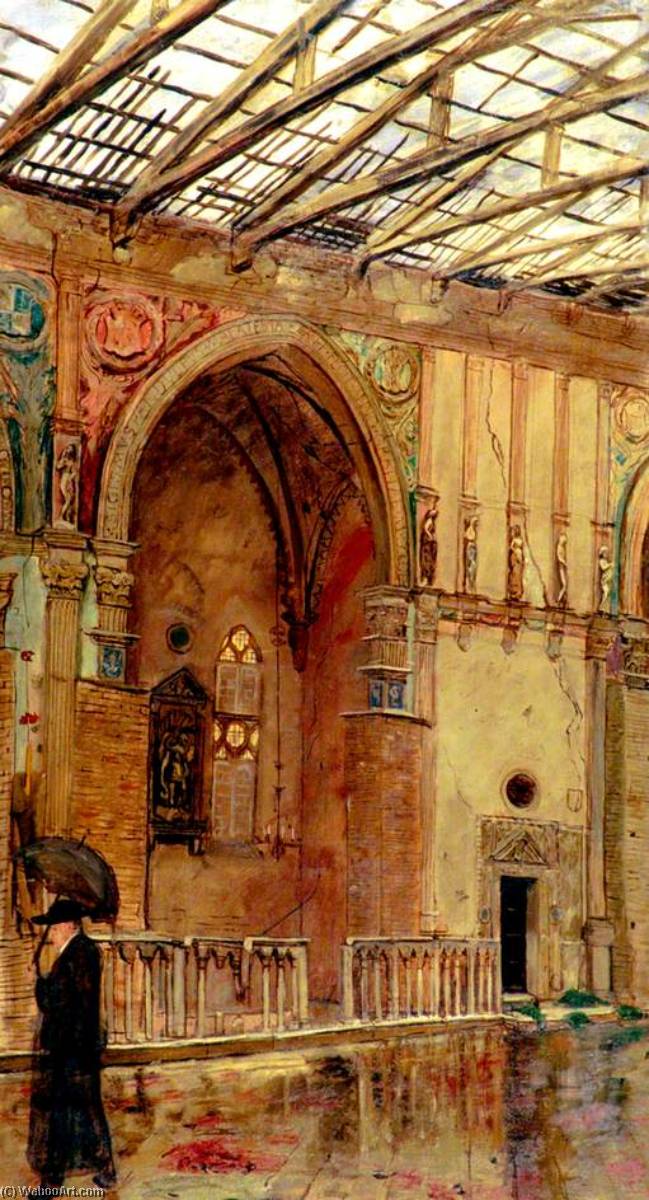
In the evocative oil on canvas titled Temple of Malatesta, Rimini Interior, the viewer is invited into a space where time seems to suspend itself between the grandeur of the Renaissance and the introspective melancholy of the mid-20th century. Painted in 1945 by the English master Carel Victor Morlais Weight, this work presents a profound architectural dialogue. The composition centers on the majestic interior of the Tempio Malatestiano, a site renowned for its seamless blend of Gothic and classical splendor. Through Weight’s lens, the temple is not merely a static monument of stone and marble, but a living, breathing vessel of memory. A solitary woman stands in the foreground, her back turned to us as she gazates into the vastness of the hall. This placement creates an immediate sense of intimacy and voyeurism, drawing the observer into her silent contemplation of the monumental arches and the soaring central dome that defines the sacred space.
The painting’s atmosphere is thick with a quiet, psychological depth, characteristic of Weight’s unique ability to infuse everyday or historical scenes with a sense of drama. The presence of a clock mounted high upon the wall serves as a poignant memento mori, a subtle reminder of the relentless passage of time that contrasts sharply with the enduring, heavy permanence of the temple's architecture. As we look through the arches, the interplay of light and shadow suggests a world caught in a moment of transition—perhaps reflecting the post-war era in which the piece was created, where the weight of history and the uncertainty of the future loomed large over the European landscape.
Mastery of Texture and Light
Technically, this reproduction captures the essence of Weight’s distinctive approach to oil painting. His style is celebrated for its richly textured surfaces and a luminous color palette that breathes life into even the most somber settings. In Temple of Malatesta, the artist employs a masterful handling of light to define the structural rhythm of the temple. The way the illumination catches the edges of the railings and spills across the floor creates a sense of three-dimensional depth, making the vast interior feel tangible and immersive. For the discerning collector or interior designer, this piece offers a sophisticated interplay of tones—from the deep, shadowed recesses of the arches to the soft, ethereal glow within the dome.
The brushwork, though controlled, retains an expressive quality that lends the scene its emotional resonance. The woman’s silhouette, draped in the textures of her attire, acts as a focal point that anchors the grand scale of the architecture to a human experience. This balance between the monumental and the personal makes the artwork an exceptional choice for high-end decor. Whether placed in a contemporary gallery setting or a classic study, the painting serves as a conversation piece, inviting guests to ponder the relationship between humanity and the enduring monuments we leave behind. It is a work that does not merely decorate a wall; it transforms a room into a sanctuary of thought and aesthetic beauty.