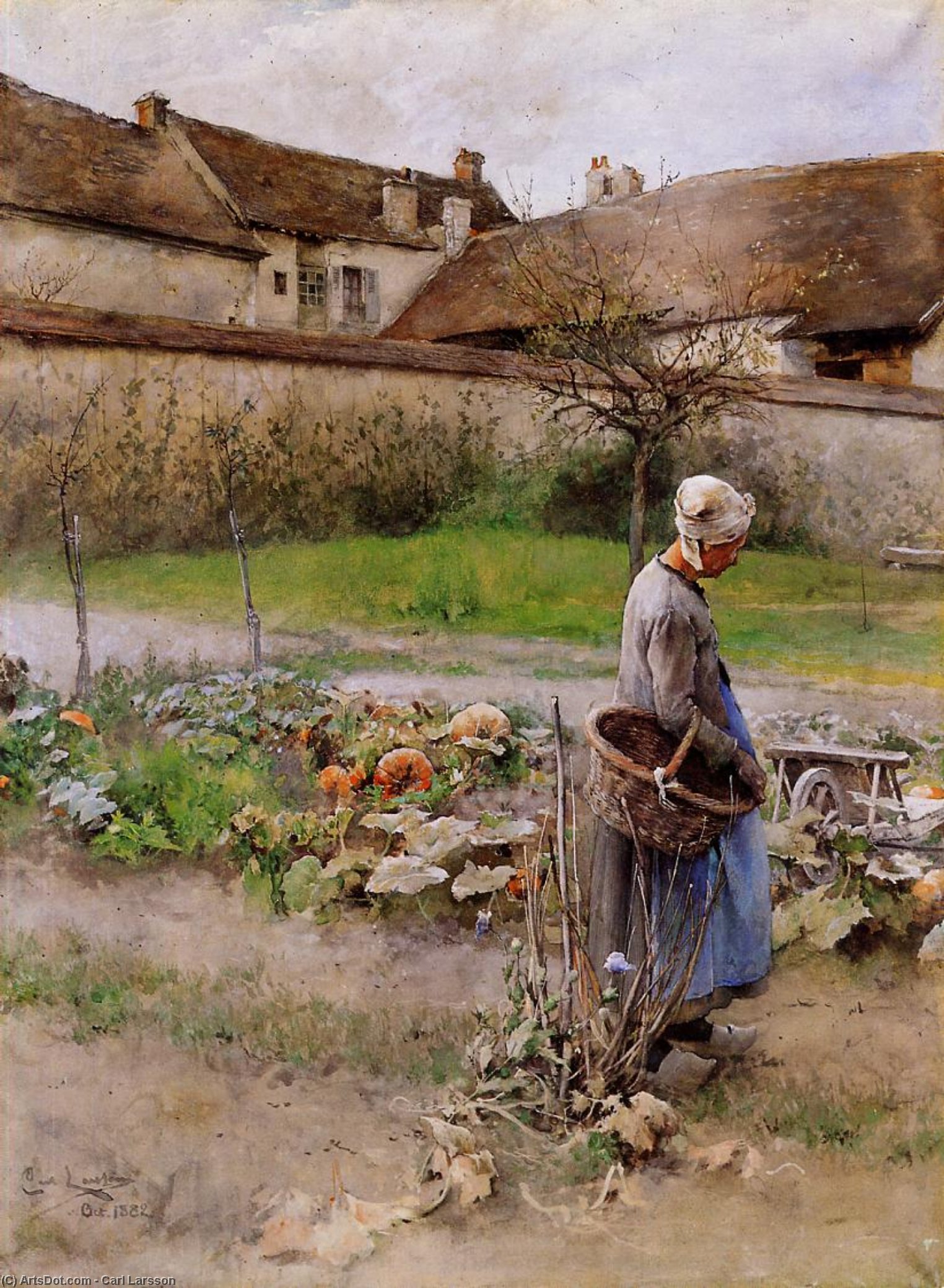
October (also known as The Pumpkins) by Carl Larsson
- Title: October (also known as The Pumpkins)
- Artist: Carl Larsson
- Date: 1882
- Medium: Watercolor on paper
- Location: Göteborgs Konstmuseum, Sweden
A Glimpse of Rural Serenity
Carl Larsson's "October (also known as The Pumpkins)" is a captivating watercolor painting that transports viewers to a tranquil scene of rural life in 19th-century Sweden. The artwork depicts a woman standing amidst a vibrant garden overflowing with pumpkins and squash, evoking the abundance of the harvest season. A basket brimming with produce sits beside her, suggesting a day's labor well spent. The composition is carefully balanced, featuring a chair, bench, and dining table nearby, creating an atmosphere of warmth and domestic comfort. In the background, two houses are subtly visible, adding depth to the landscape.
Style and Technique: A Masterclass in Watercolor
"October" exemplifies Larsson's mastery of watercolor technique. He skillfully employs soft, muted tones – greens, browns, and blues dominate – to create a serene and harmonious atmosphere. The brushstrokes are loose and expressive, allowing the colors to blend seamlessly and capture the ephemeral quality of light. This painting is firmly rooted in Realism, showcasing everyday life with meticulous detail while incorporating elements of Impressionism through its atmospheric rendering. Larsson's attention to texture – from the smooth surfaces of the houses to the rough foliage of the garden – adds a layer of visual richness.
Symbolism and Historical Context
Beyond its aesthetic appeal, "October" carries symbolic weight. The pumpkins themselves represent abundance, prosperity, and the fruits of labor. The painting reflects a period in Swedish history marked by increasing industrialization but also a deep appreciation for rural traditions and the connection to nature. Carl Larsson's work often celebrated family life and domesticity, themes that resonated strongly with audiences at the time and continue to evoke feelings of nostalgia today. The artwork was created during a period when artists were increasingly drawn to depicting scenes from everyday life, moving away from purely historical or mythological subjects.
Emotional Impact: A Sense of Peace and Nostalgia
“October (also known as The Pumpkins)” evokes a profound sense of peace and tranquility. The gentle lighting, the muted colors, and the depiction of simple rural life combine to create an atmosphere that is both calming and inviting. Viewers are drawn into the scene, experiencing a moment of quiet contemplation amidst the beauty of nature. The painting’s enduring popularity lies in its ability to tap into universal emotions – nostalgia for simpler times, appreciation for the natural world, and a longing for connection with family and community.