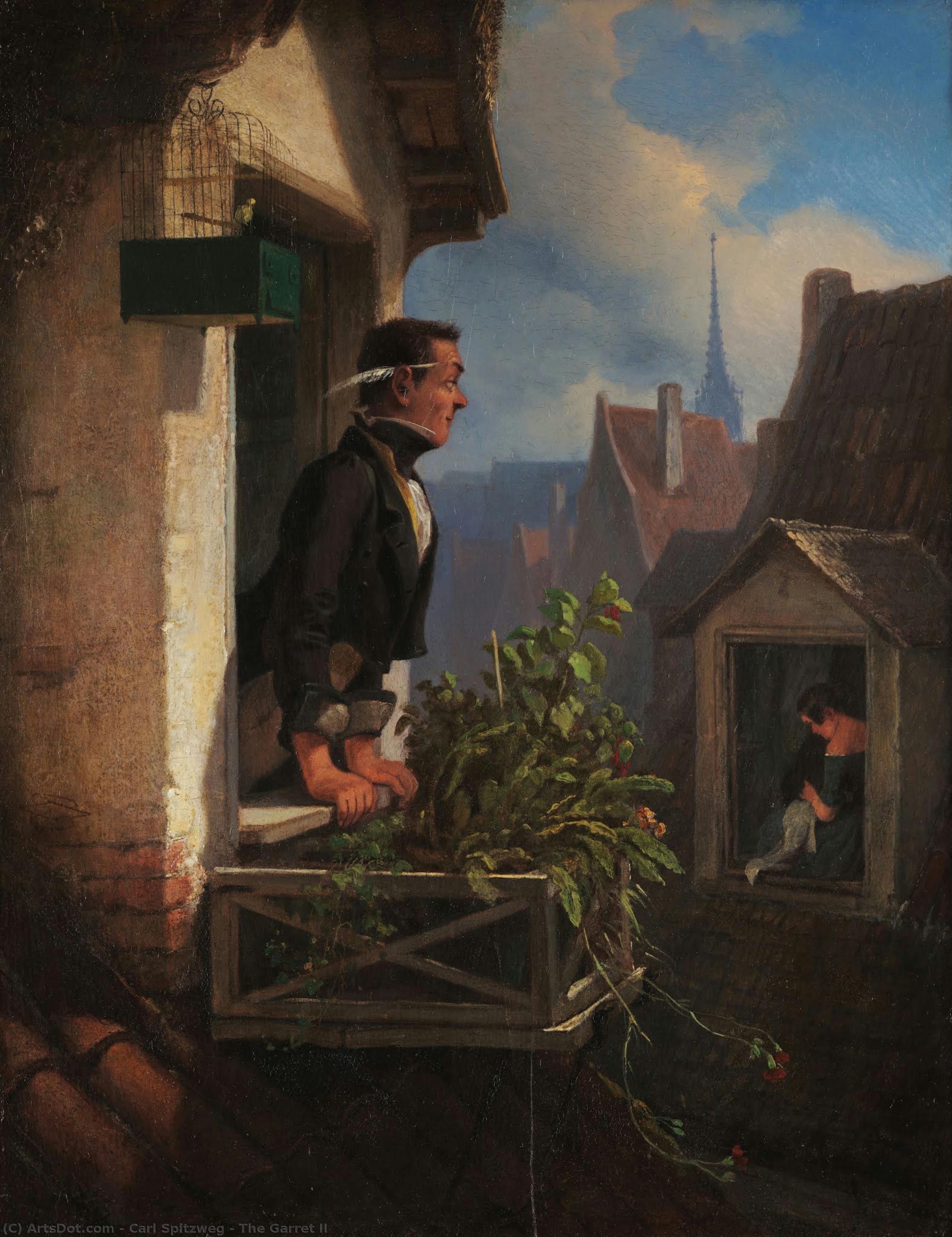
Delve into Carl Spitzweg's 'The Garret II,' capturing a poignant moment of longing amidst Bavarian simplicity. Observe the young man’s gaze, mirroring his fascination with a distant woman and symbolizing unfulfilled desires.
Discover Carl Spitzweg (1808-1885), a leading German Romanticist painter of the Biedermeier era. Explore his charming genre scenes, humorous depictions of everyday life & iconic works like 'The Poor Poet'.
Grohmann Museum
(Milwaukee, United States of America)
Explore the Grohmann Museum in Milwaukee, WI – home to 1900+ works depicting the evolution of human work! Discover art from the 17th-21st centuries, including a renowned Carl Spitzweg collection. A unique museum at MSOE.
A Window Into Quiet Desire: Examining Carl Spitzweg’s “The Garret II”
Carl Spitzweg's "The Garret II," painted in 1855, isn’t merely a depiction of a domestic interior; it’s a masterful distillation of the Biedermeier aesthetic—a movement characterized by understated elegance and a profound preoccupation with capturing the nuances of everyday life. Situated within Munich’s historic Grünewald district, Spitzweg's canvas offers more than just visual pleasure; it invites contemplation on themes of longing, observation, and unspoken emotion. The painting portrays a young man gazing out his window at a woman engaged in needlework across the courtyard—a seemingly simple tableau that resonates with layers of psychological complexity.
- Style & Technique: Spitzweg’s signature style is instantly recognizable – a meticulous attention to detail combined with a muted palette dominated by earthy tones and soft blues. He employs oil paint on canvas, utilizing glazing techniques to achieve remarkable luminosity and depth, capturing the subtle play of light filtering through the cloudy sky onto the window sill and its surrounding plants. The artist’s deliberate brushstrokes convey a sense of stillness and quiet contemplation, mirroring the mood of the scene.
- Historical Context: The Biedermeier era (roughly 1830-1848) emerged as a reaction to the turbulent Romantic period preceding it. Artists like Spitzweg sought refuge from grand narratives and political upheaval, focusing instead on portraying scenes of bourgeois life—domestic interiors, landscapes imbued with melancholic beauty, and portraits reflecting moral values. “The Garret II” embodies this spirit perfectly, representing a yearning for connection amidst social constraints.
- Symbolism: The birdcage serves as a potent symbol within the painting – it encapsulates the young man’s confinement, both physical and emotional. He is isolated in his room, mirroring the caged bird's inability to soar freely. Simultaneously, it represents the unspoken desire for companionship and affection that fuels his gaze toward the woman across the courtyard. The plants themselves contribute to the overall symbolism; they symbolize growth, resilience, and perhaps a longing for vitality—contrasting with the stillness of the man’s posture.
- Emotional Impact: Spitzweg skillfully evokes feelings of wistful melancholy and quiet yearning. The muted colors and soft lighting create an atmosphere of intimacy and introspection. The viewer is invited to ponder the unspoken desires of the characters, prompting reflection on themes of solitude, observation, and the complexities of human relationships. It’s a portrait not just of a room, but of a state of mind.
Concluding Thoughts: “The Garret II” remains an enduring testament to Spitzweg's ability to transform ordinary moments into profound explorations of human emotion and psychological nuance. Its understated beauty and evocative symbolism continue to captivate audiences today, cementing its place as a cornerstone of German Romantic art and a timeless meditation on the elusive nature of desire. This piece exemplifies Spitzweg’s dedication to capturing the subtle poetry of everyday life—a skill that elevates it beyond mere representation into an emotionally resonant experience for anyone who appreciates artistic sensitivity.