A Divine Encounter in Color and Detail
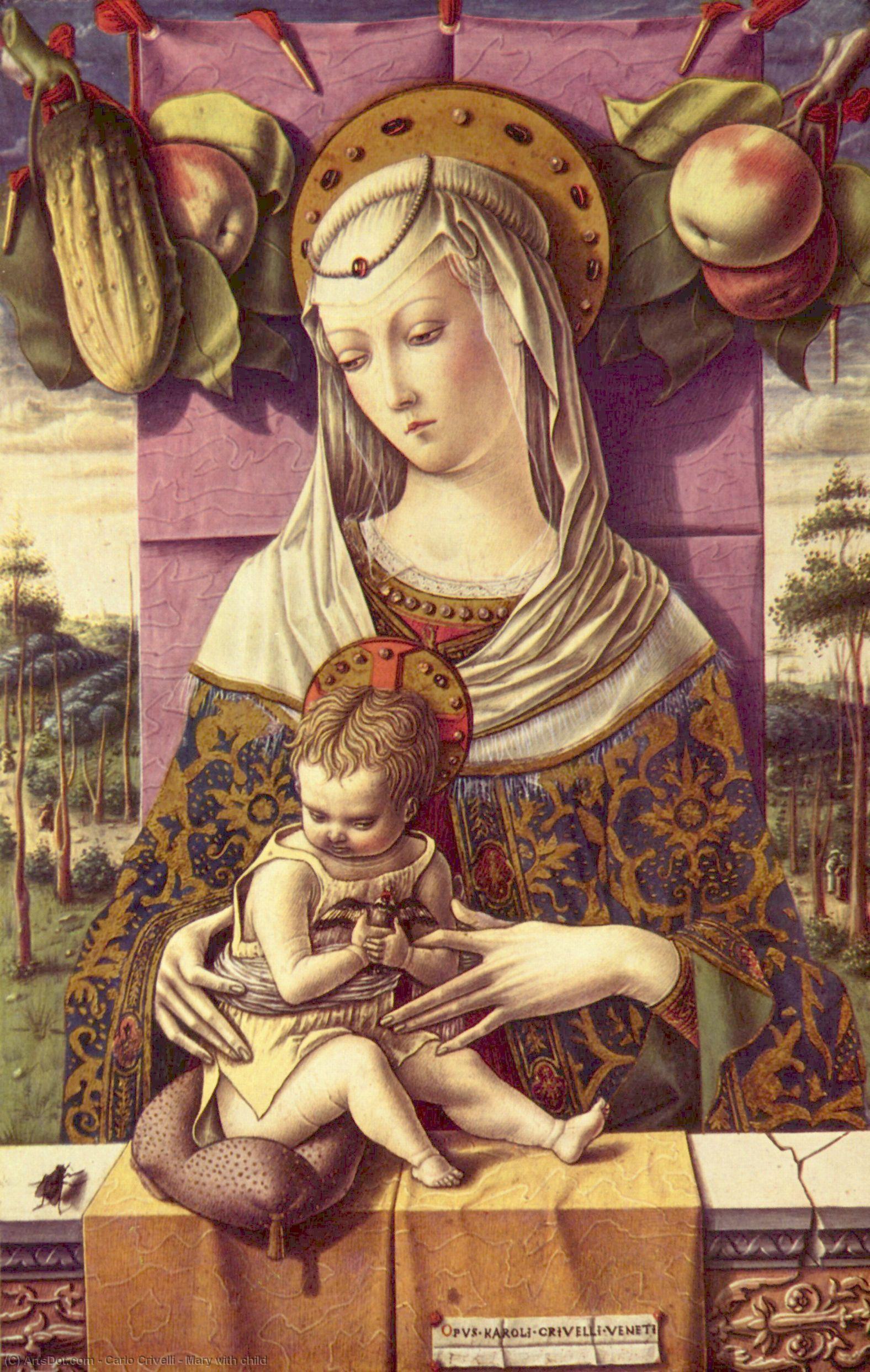
In the quiet intimacy of Carlo Crivelli’s "Mary with Child," painted in 1473, we are invited into a sacred space that transcends the boundaries of time. This exquisite masterpiece captures the Virgin Mary cradling the infant Jesus, a moment of profound tenderness set against a striking, deep purple backdrop. The composition is a masterclass in the late Gothic sensibility, where every element serves to elevate the spiritual narrative. As the eye wanders across the canvas, one is immediately struck by the artist's ability to blend the celestial with the earthly, creating a scene that feels both otherworldly and tangibly present. For the discerning collector or interior designer, this piece offers a captivating focal point, bringing a sense of historical weight and quiet reverence to any curated space.
Crivelli, a Venetian-trained master who found his true voice in the Marches of Ancona, utilizes a highly distinctive trompe l'oeil technique that breathes life into the inanimate. The painting is celebrated for its hyper-realistic textures and meticulous attention to detail, a hallmark of his personal style. Notice how the light interacts with the scattered fruits—the crisp skins of apples and the unexpected presence of bananas—which appear almost ready to fall from the frame. This deliberate use of illusionism creates a sensory experience, tricking the eye into perceiving depth and volume. The interplay between the regal, crowned figure of Mary and the hyper-detailed botanical elements showcases a technical virtuosity that was revolutionary for its time, making it an enduring inspiration for those who appreciate fine craftsmanship.
Beyond its visual splendor, the artwork is steeped in rich, layered symbolism. The presence of fruit in Renaissance iconography often serves as a meditation on the Fall of Man and the subsequent redemption offered through Christ. The apples, scattered with deliberate placement, may represent the original sin, while the Virgin Mary herself stands as the New Eve, her maternal embrace signifying the promise of salvation. This tension between the earthly temptation of the fruit and the divine purity of the Madonna creates an emotional resonance that is both complex and deeply moving. To possess a reproduction of such a work is to bring more than just decoration into a home; it is to invite a profound dialogue on faith, beauty, and the intricate tapestry of human history.