A Vision of Divine Majesty: The Splendor of Saint Louis of Toulouse
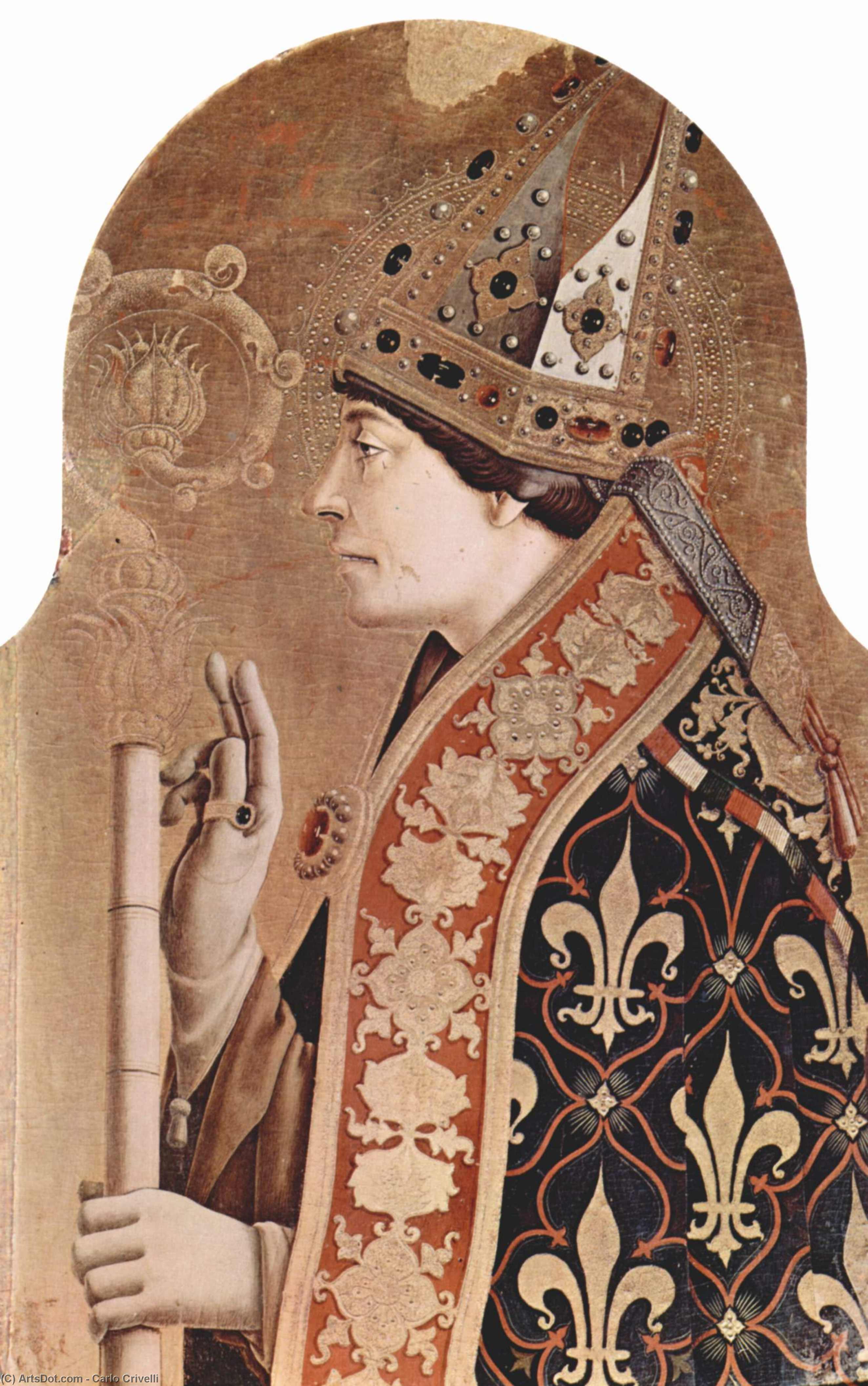
In the delicate interplay of light and gold that defines the Italian Renaissance, Carlo Crivelli’s Saint Louis of Toulouse emerges as a breathtaking testament to spiritual devotion and artistic precision. Painted around 1470, this masterpiece transcends its medium of tempera on panel to offer a window into a world where the earthly and the divine are inextricably linked. The painting presents a figure of profound authority and sanctity; a man adorned with a regal crown and clutching a scepter, symbols that speak to his noble lineage and his consecrated role within the church. Crivelli, a master of the Venetian school who found his true voice in the Marches, imbues this portrait with a sense of presence that is almost tactile, inviting the viewer to contemplate the weight of both crown and soul.
The artistry of Crivelli is famously characterized by a conservative Late Gothic sensibility, a style that clings to decorative richness even as the Renaissance pushes toward naturalism. In this work, we see his signature trompe l'oeil techniques at their most evocative. The use of light and shadow—the subtle application of chiaroscuro—bestows a remarkable volume upon the saint, making the heavy, ornate fabrics of his red and gold attire appear to ripple with life. Every fold of cloth and every glint of precious metal is rendered with an obsessive attention to detail that captures the eye and holds it captive. This meticulousness does not merely showcase technical prowess; it serves a higher purpose, elevating the subject matter through a visual language of opulence and permanence.
Beyond the singular figure of the Saint, the composition breathes through its balanced arrangement of secondary figures, which provide a sense of depth and narrative context. These surrounding characters, though more shadowed, create a sacred space that feels populated by the very history of the faith. The color palette, dominated by rich crimsons and shimmering golds, evokes a sense of warmth and eternal light, making the painting an ideal centerpiece for those seeking to infuse a room with historical gravity and contemplative peace. For the discerning collector or interior designer, a high-quality reproduction of this work offers more than mere decoration; it provides an anchor of cultural heritage, bringing the luminous, disciplined beauty of the Quattrocento into the modern living space.
To possess a piece inspired by Crivelli is to embrace the intersection of meticulous craftsmanship and profound emotion. Whether placed in a quiet study or a grand gallery, Saint Louis of Toulouse continues to command respect through its ability to evoke awe. It remains a poignant reminder of an era when art was a bridge between the mortal realm and the infinite, rendered with a precision that ensures its brilliance will never fade.