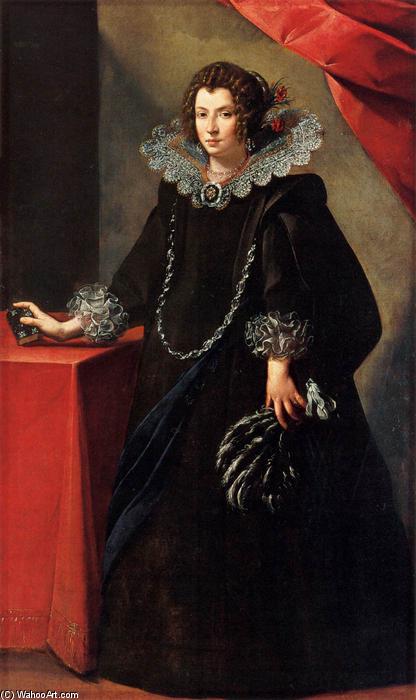
The
Portrait of a Lady by
Carlo Francesco Nuvolone is a stunning example of Baroque portraiture, characterized by its intricate details and dramatic use of color. Painted in 1647, this oil on canvas masterpiece measures 200 x 120 cm and is currently housed at the
Collezioni Comunali d'Arte di Palazzo d'Accursio in Bologna, Italy.
Artistic Technique and Style
The painting showcases Nuvolone's exceptional skill in capturing the subtleties of light and shadow. The subject's face is illuminated, while the background is shrouded in a warm, golden glow. The use of
chiaroscuro creates a sense of depth and volume, drawing the viewer's attention to the lady's elegant features. The intricate details on her dress, including the lace and embroidery, demonstrate Nuvolone's mastery of texture and pattern.
Historical Context and Significance
The
Portrait of a Lady is a testament to the artistic innovations of the Baroque period. Nuvolone's work was influenced by the likes of
Anthony Van Dyck, who also explored the genre of portraiture. The painting's dramatic flair and attention to detail reflect the artistic trends of the time, which emphasized emotion, movement, and grandeur. For more information on Baroque art, visit the
Palazzo d'Accursio page on ArtsDot.
- The painting's use of color and light creates a sense of drama and tension.
- The subject's elegant attire and poised demeanor reflect her high social status.
- Nuvolone's masterful technique and attention to detail make the painting a standout example of Baroque portraiture.
Handmade oil paintings reproductions of the
Portrait of a Lady are available on ArtsDot, allowing art enthusiasts to own a piece of history. The website also features works by other notable artists, including
Giacomo Pavia and
Pieter De Hooch. For more information on these artists and their works, visit the
Giacomo Pavia page or explore the
Pieter De Hooch section on ArtsDot.
The
Portrait of a Lady by Carlo Francesco Nuvolone is a masterpiece that continues to captivate art lovers with its beauty, elegance, and historical significance.