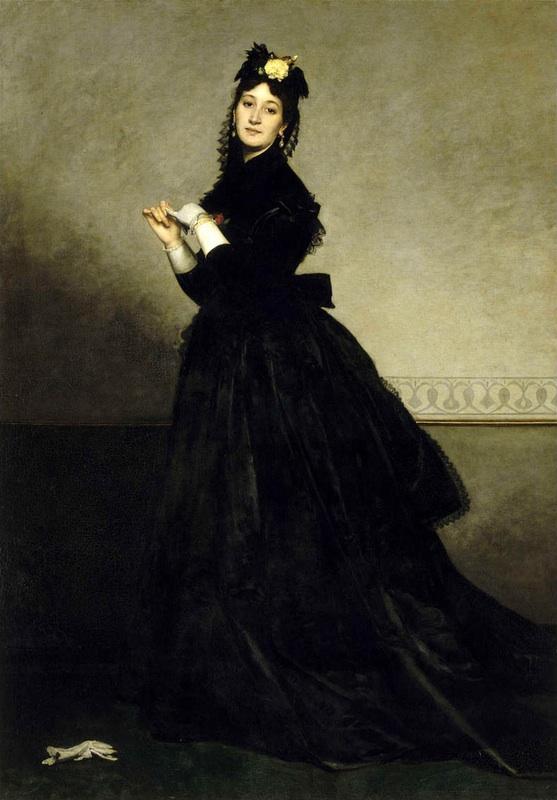
The
Lady with a Glove is a stunning oil on canvas painting created by the French artist
Carolus-Duran (Charles-Auguste-Emile Durand) in 1869. This life-sized full-length portrait of the artist's young wife, Pauline, showcases his exceptional skill in capturing the elegance and sophistication of high society during the Third Republic era in France.
A Work of Artistic Excellence
The painting is set against a backdrop of a wall with a white border, and the subject is dressed in a long, flowing black dress with a white glove on her hand. The
Musée d'Orsay in Paris, where the painting is currently housed, describes it as a "sober composition, masterful drawing and delicate use of colour which recall David and Ingres." The attention to detail and the use of light and shadow create a sense of depth and dimensionality, making the subject appear almost lifelike.
Key Features of the Painting: - The subject's face and fashionable hairstyle are beautifully rendered, showcasing the artist's ability to capture the subtleties of human expression.
- The glove on the subject's hand is a striking element, adding a touch of elegance and sophistication to the overall composition.
- The use of color is muted, with shades of grey, black, and white dominating the palette, which creates a sense of understated luxury.
A Testament to Carolus-Duran's Skill
The
Lady with a Glove is widely regarded as one of Carolus-Duran's most famous works, and it has been praised for its technical excellence and artistic merit. As noted on
ArtsDot.com, the painting is a "masterful depiction of members of high society in Third Republic France." For more information on Carolus-Duran and his works, visit
ArtsDot.com.
The
Lady with a Glove is a must-see for anyone interested in 19th-century French art, and it continues to inspire and delight audiences to this day. Whether you are an art historian, a collector, or simply someone who appreciates beauty, this painting is sure to leave a lasting impression.