A Meditation on Solitude and Remembrance
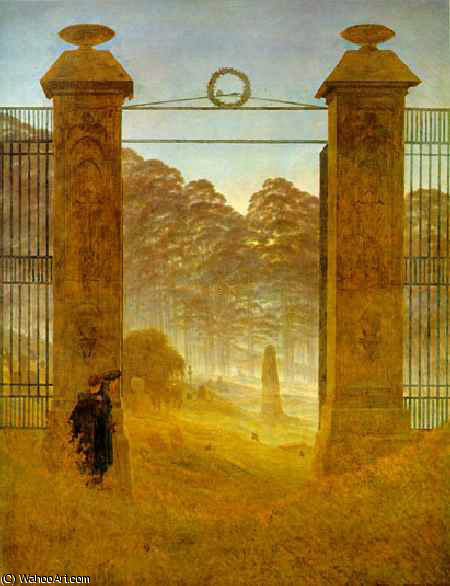
The painting “Cemetery at Dusk” by Caspar David Friedrich encapsulates the essence of Romantic landscape art—a genre born from a profound reaction against Enlightenment rationalism and fueled by an obsession with emotion and imagination. Executed sometime around 1830, this piece isn’t merely a depiction of a graveyard; it's a carefully constructed visual poem designed to evoke contemplation on mortality and the sublime beauty found in decay. Friedrich’s artistic journey began amidst personal tragedy—the premature deaths of his mother and siblings instilled within him an acute awareness of human vulnerability and the inevitability of loss, themes that permeate throughout his oeuvre.
- Subject Matter: The scene portrays a solitary stone pillar flanked by a weathered metal gate, symbolizing passage into the afterlife or perhaps simply the boundaries between life and death. Sparse vegetation—primarily trees—dominates the background, creating an atmosphere of quiet melancholy.
- Style & Technique: Friedrich’s distinctive style is characterized by meticulous detail combined with atmospheric perspective. He employs a muted palette dominated by browns, greys, and blues to convey the solemn mood of twilight. Brushstrokes are deliberate and expressive, capturing the textures of stone and foliage with remarkable accuracy.
The painting's historical context speaks volumes about the anxieties of its time. Friedrich lived during a period marked by scientific advancements that challenged traditional religious beliefs—a confrontation he responded to not through dogma but through artistic exploration. He sought to capture the spiritual dimension of experience, mirroring the Romantic preoccupation with feeling and intuition. The gate itself is laden with symbolic significance; it represents both physical closure and psychological barriers – obstacles encountered on one’s journey toward transcendence.
Symbolism:
The solitary figure standing near the gate embodies human introspection and confronts the unknown realm beyond death. It's a poignant reminder of our own mortality, urging viewers to contemplate the significance of existence.
“Cemetery at Dusk” transcends its literal representation, resonating with an enduring emotional impact. Friedrich’s masterful use of light and shadow enhances the painting’s dramatic effect, creating a sense of profound stillness and inviting contemplation. It's a piece that speaks to our deepest anxieties about death but simultaneously celebrates the beauty inherent in accepting the cyclical nature of life and decay—a timeless meditation on remembrance and the sublime grandeur of the natural world. Collectors and interior designers alike will appreciate this artwork’s ability to infuse spaces with serenity and inspire reflection.