A Masterpiece of German Romanticism
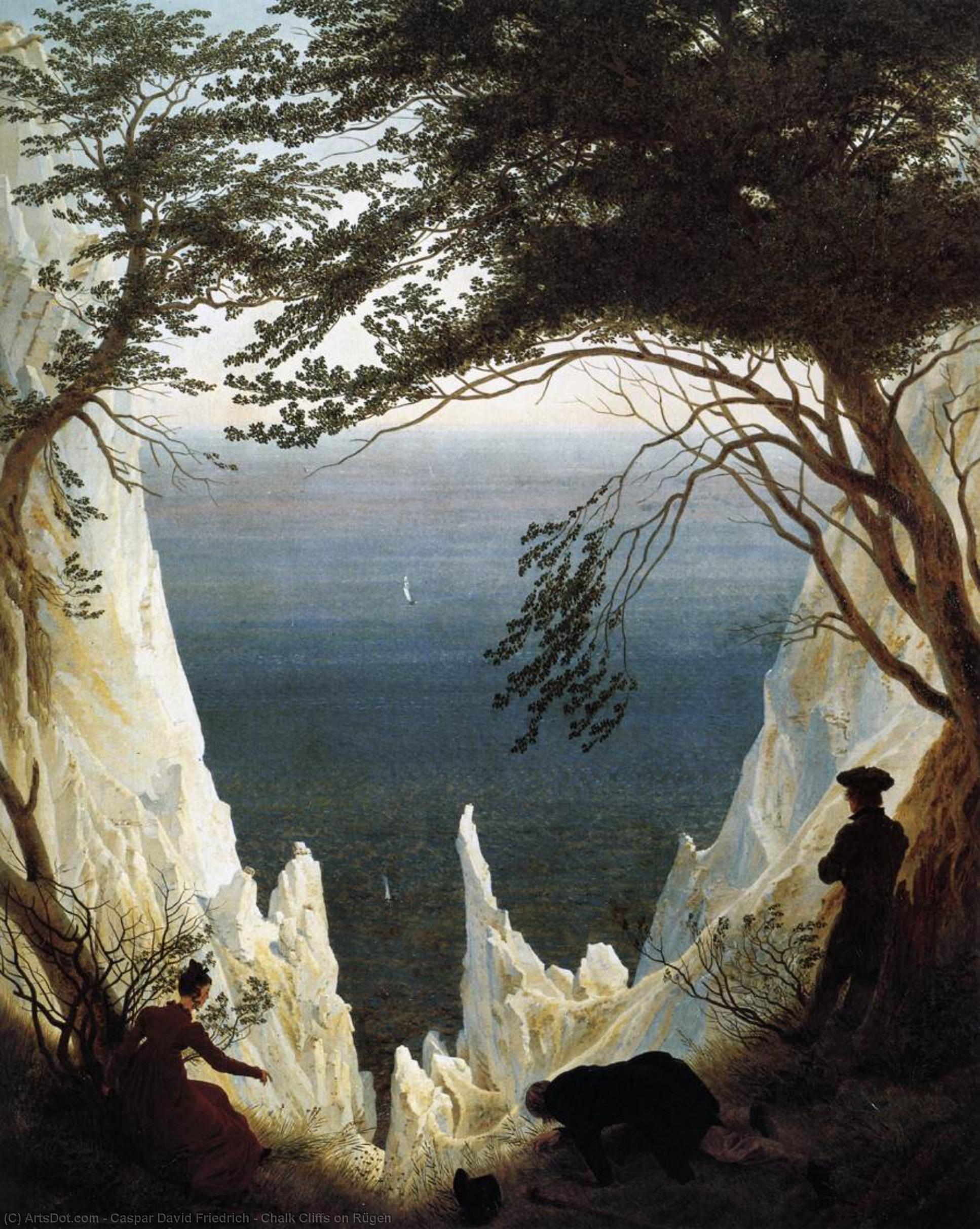
"Chalk Cliffs on Rügen" (1818) is one of Caspar David Friedrich's most iconic works, embodying the essence of German Romanticism. This oil painting captures a breathtaking view from the chalk cliffs of Stubbenkammer on the island of Rügen, a celebrated lookout point at the time. The artwork reflects Friedrich's deep connection to nature and his exploration of the sublime—evoking awe, wonder, and introspection.
A Serene and Dramatic Landscape
The composition is framed by two large trees whose branches create a natural archway, drawing the viewer into the scene. Below, three human figures are depicted in contemplation: one seated, another standing, and a third crouching near an animal. The rugged cliffs plunge dramatically into a vast expanse of water under a soft, diffused sky bathed in hues of pink, orange, purple, and gold. This interplay of light and shadow creates depth and tranquility, while the human figures add a narrative element of reverence for nature.
Symbolism and Emotional Depth
The figures in the painting are rich with symbolism. The central figure, often interpreted as Friedrich himself, stands humbly without his hat, gazing into the abyss—a metaphor for mortality. The woman on the left, believed to be Friedrich's wife Caroline, points toward either the abyss or nearby flowers, suggesting a dialogue between life and death. The colors of their clothing—blue (faith), red (love), and green (hope)—embody the Christian virtues, adding layers of meaning to the scene.
Technique and Composition
Friedrich's masterful use of oil paints brings texture and life to the cliffs, water, and sky. The vertical lines of the tree trunks provide stability, while horizontal lines in the cliffs and water create balance. Organic shapes contrast with geometric forms, enhancing visual interest. Soft, diffused lighting illuminates the scene, creating a serene mood that invites contemplation.
Historical Context
Painted during Friedrich's honeymoon trip to Rügen in 1818, this work celebrates his union with Caroline Bommer. It reflects the Romantic era's shift toward spirituality and nature as a divine creation, contrasting with the materialism of the time. The painting also explores themes of mortality and transcendence, resonating deeply with viewers seeking meaning beyond the physical world.
Why Collectors and Designers Love This Artwork
"Chalk Cliffs on Rügen" is a timeless piece that brings elegance and depth to any space. Its serene yet dramatic composition makes it ideal for living rooms, offices, or galleries where contemplation and beauty are valued. The rich color palette and intricate details ensure it stands out as a focal point in interior design.
Bring This Masterpiece into Your Home
Own a high-quality reproduction of "Chalk Cliffs on Rügen" and experience the sublime beauty of Friedrich's vision. Whether you're an art lover, collector, or designer, this painting adds sophistication and emotional resonance to your space.