A Dawn of Renewal: Exploring Caspar David Friedrich’s “Easter Morning”
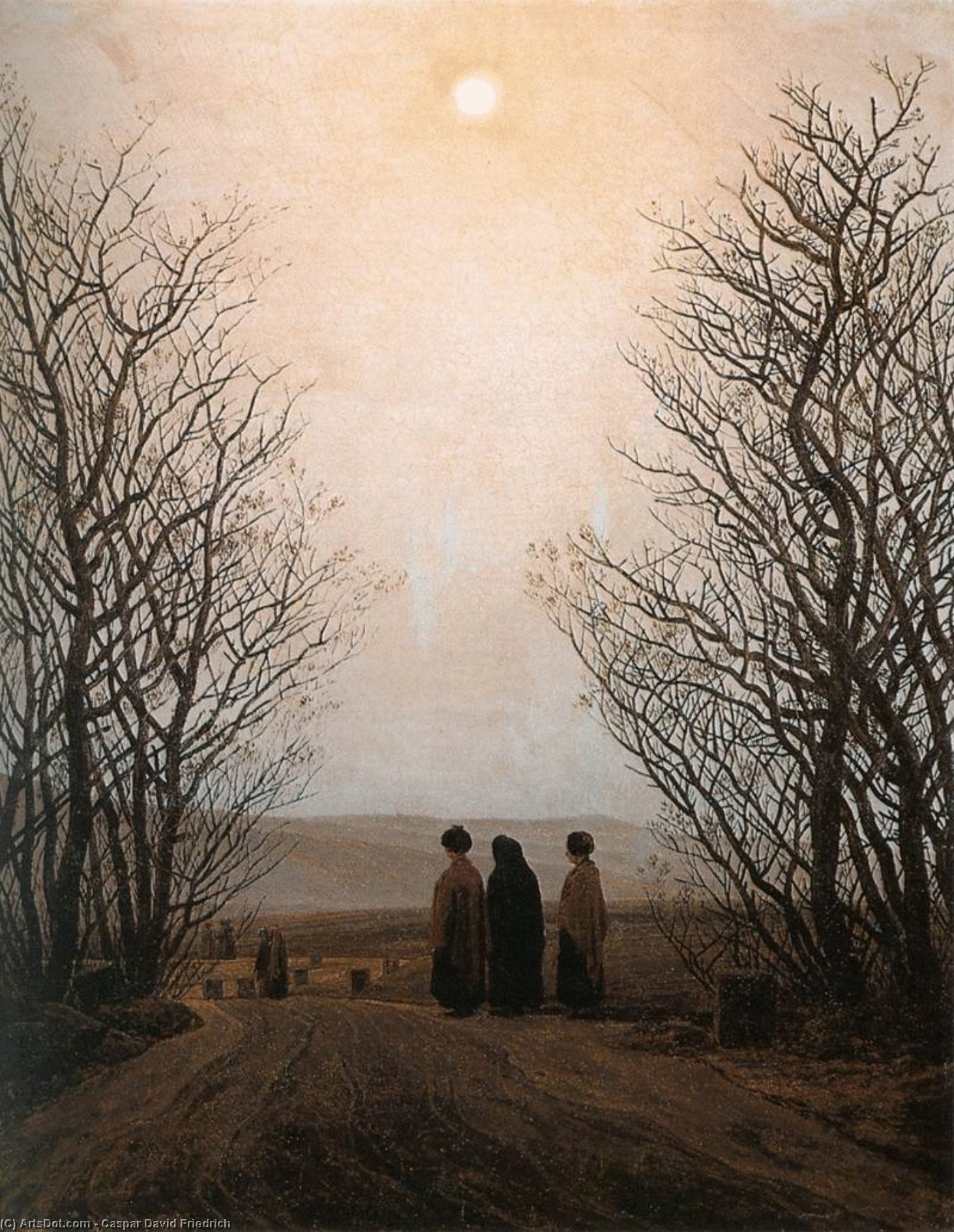
Caspar David Friedrich's 1833 oil on canvas, *Easter Morning*, is a quintessential example of German Romanticism, currently residing in the Museo Thyssen-Bornemisza in Madrid. Measuring a modest 44 x 34 cm, this seemingly small work holds immense power, inviting contemplation and evoking a profound sense of spiritual awakening. It’s more than just a landscape; it's an emotional and symbolic journey rendered with masterful technique.
Subject & Composition: A Pilgrimage at Sunrise
The painting depicts two figures – presumably a man and a woman – accompanied by a dog, walking along a winding path as the sun crests the horizon. The scene is enveloped in a serene, almost ethereal light, filtering through the bare branches of surrounding trees. Friedrich deliberately positions the figures with their backs to the viewer, a common device in his work that encourages *us* to step into the landscape and share their perspective. This compositional choice isn’t about the individuals themselves, but rather about the experience of witnessing the dawn – a metaphor for spiritual rebirth. The winding road suggests a pilgrimage or journey, both physical and internal.
Style & Technique: Romanticism's Masterful Brush
Friedrich was a leading figure in the German Romantic movement, characterized by an emphasis on emotion, individualism, and the sublime power of nature. *Easter Morning* exemplifies this style through its atmospheric perspective, soft color palette, and meticulous attention to detail. His technique involves layering translucent glazes of oil paint, creating a luminous quality that captures the delicate nuances of light and shadow. The brushwork is subtle yet deliberate, conveying both realism and a sense of mystical reverence. He doesn’t simply *represent* nature; he imbues it with feeling.
Symbolism & Meaning: Resurrection and Renewal
The symbolism within *Easter Morning* is rich and layered. The rising sun, the most prominent element, represents not only a new day but also resurrection, hope, and spiritual enlightenment – fitting for a painting titled “Easter Morning.” The dog symbolizes loyalty, companionship, and protection on this metaphorical journey. The barren trees, while appearing stark, hint at the promise of spring and renewal to come. The figures themselves, shrouded in shadow, represent humanity’s search for meaning and connection with the divine. Friedrich often used landscapes as allegories for the human condition, and this painting is no exception.
Historical Context: A Reflection of its Time
Created in 1833, *Easter Morning* reflects a period of significant social and intellectual change. The Enlightenment’s emphasis on reason was giving way to a renewed interest in spirituality, emotion, and the power of nature. Friedrich's work resonated with this shift, offering viewers an escape from the increasingly industrialized world and a pathway towards inner peace. The year 1833 saw significant artistic activity across Europe, as evidenced by events like the opening of the Salon in Paris (documented in historical records), placing Friedrich’s contribution within a broader cultural landscape.
Emotional Impact & Legacy
*Easter Morning* is not a painting that shouts for attention; it whispers to the soul. It evokes feelings of tranquility, hope, and introspection. The painting's enduring appeal lies in its ability to tap into universal human experiences – our longing for connection, our search for meaning, and our appreciation for the beauty of the natural world.
Friedrich’s legacy continues to inspire artists and art lovers alike, solidifying his place as one of the most important figures in the history of landscape painting.
It remains a powerful testament to the enduring power of Romanticism.
- For further exploration of Friedrich's work, visit the Pommersches Landesmuseum, which holds significant collections related to his life and art.
- Consider this piece as a focal point for interiors seeking a calming and contemplative atmosphere.
- High-quality reproductions are available, allowing you to bring the serenity of *Easter Morning* into your own space.