A Winter's Embrace: Contemplating Friedrich's Solitude
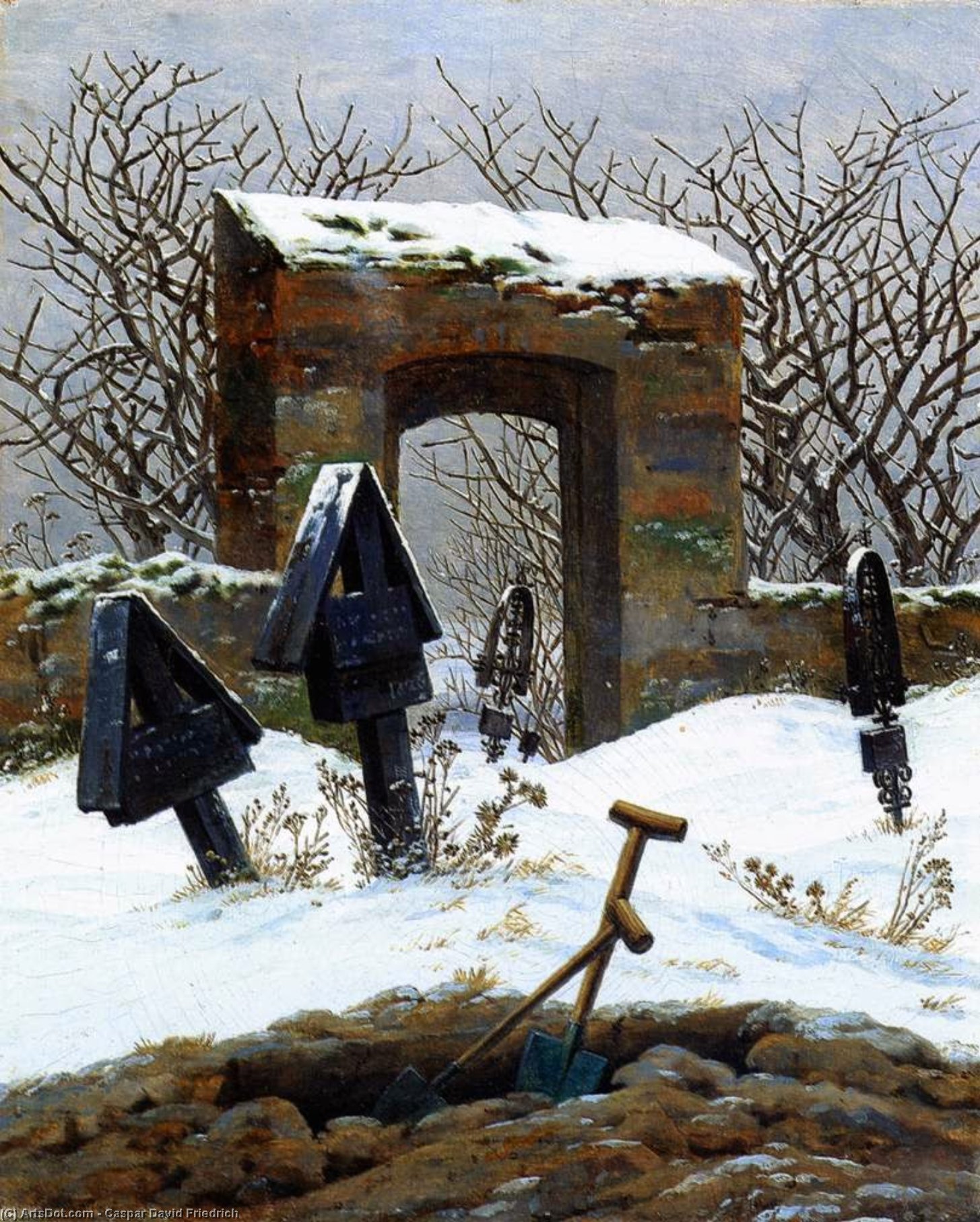
To stand before a scene like "under Snow" is to step across the threshold of time itself, into the quietude that only deep winter can bestow. Caspar David Friedrich, master chronicler of the sublime and the solitary soul, captures here not merely a landscape, but an emotional state—a profound moment of contemplation suspended beneath a blanket of white. The composition draws the eye immediately into the muted tones and the stark geometry of the brick building, which anchors the scene in human history while the surrounding snow whispers of eternity. It is a vision steeped in the Romantic yearning for the infinite, where the tangible world meets the ethereal mystery.
The Poetics of Place and Structure
Friedrich masterfully balances the organic chaos of nature with the rigid order of man-made structures. The courtyard glimpsed through the doorway suggests a life lived within walls, yet the surrounding trees, dusted lightly with snow, reach upward in silent aspiration. Notice the four wooden posts jutting from the foreground; they are remnants, markers of what once was—a fence, perhaps, or the boundary of an old garden. These elements invite the viewer to ponder passage and memory. The technique employed is one of delicate atmospheric perspective; the details soften into the distance, allowing the mind room to wander where the eye can no longer focus. This careful handling of light and shadow imbues the entire scene with a palpable hush.
Symbolism in the Winter Landscape
For those attuned to the deeper currents of art history, this painting resonates deeply with the symbolism prevalent during Friedrich's time. The snow itself is rarely just weather; it represents purification, dormancy, and the veil between worlds. It blankets the sharp edges of daily life, forcing a confrontation with what remains—the enduring forms, the steadfast architecture, and the quiet resilience of nature. The overall atmosphere speaks to Sehnsucht, that untranslatable German yearning for something unattainable, something beyond the visible horizon. It is a meditation on transience, beautifully rendered.
Bringing the Sublime Home
For the collector or designer seeking an artwork that elevates a space from mere dwelling to sanctuary, "under Snow" offers unparalleled depth. A reproduction of this piece does more than decorate; it transforms the room's mood. It whispers tales of German Romanticism and the sublime encounter with nature’s grandeur. Imagine the soft, diffused light captured here illuminating a drawing-room or gallery wall—it brings an immediate sense of peace, a necessary pause in the clamor of modern life. Owning this piece is acquiring a portal to quiet introspection, a visual balm for the overstimulated spirit.