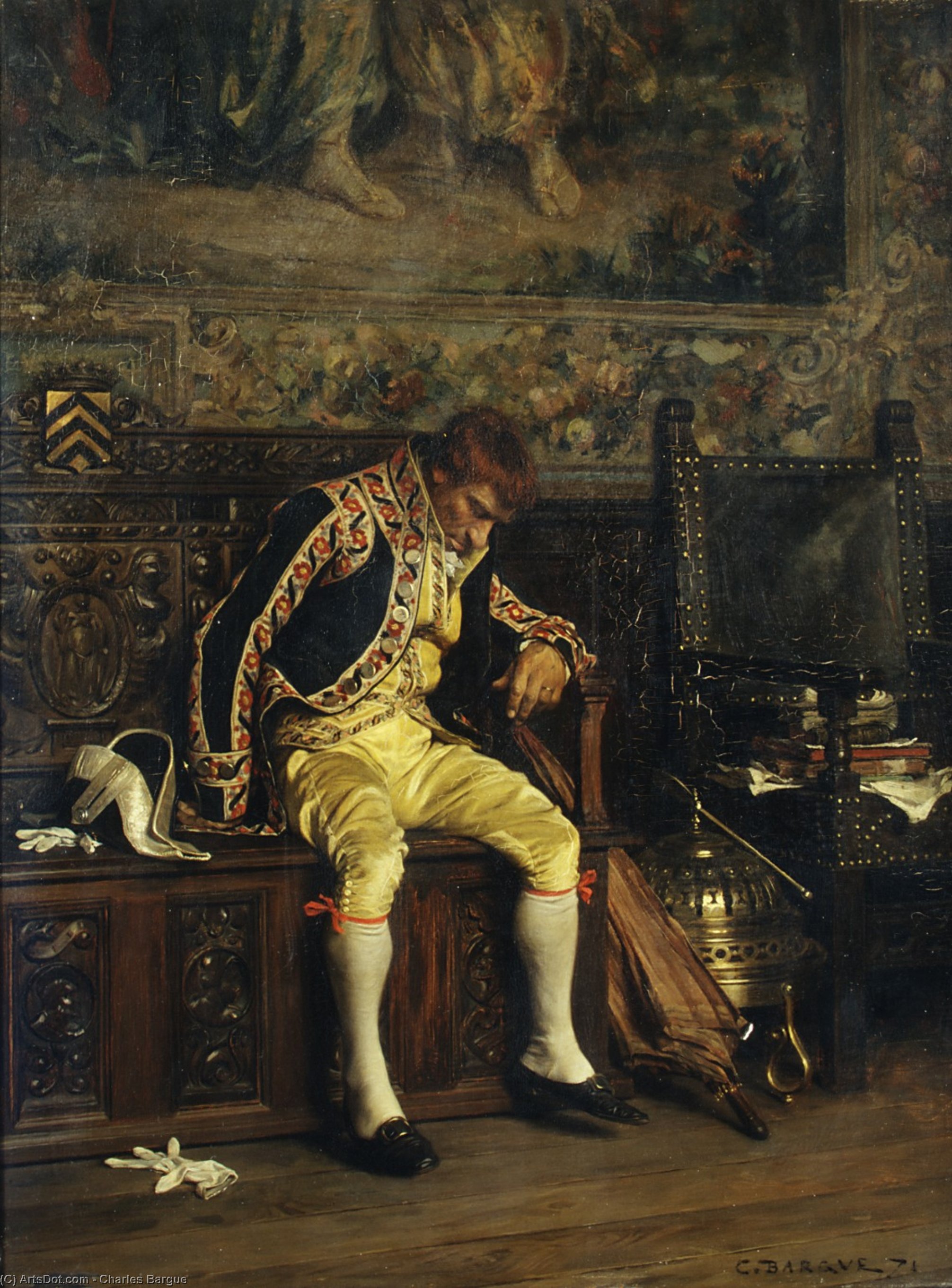
A Portrait of Quietude: Exploring Charles Bargue’s “A Footman Sleeping”
Charles Bargue’s “A Footman Sleeping,” completed in 1871, stands as a cornerstone of classical drawing instruction and embodies the ethos of meticulous observation and restrained emotion that defined the École des Beaux-Arts during its zenith. More than just a depiction of slumbering manikin—a deliberate choice reflecting Bargue's pedagogical philosophy—the painting offers a profound meditation on stillness, vulnerability, and the subtle beauty found within seemingly unremarkable moments.
The Drawing Course: A Legacy of Precision
Bargue’s influence extends far beyond his artistic output. Alongside Jean-Léon Gérôme, he revolutionized drawing pedagogy with their groundbreaking “Cours de dessin,” published between 1866 and 1871. This ambitious undertaking aimed to elevate aspiring artists from the study of plaster casts—the initial step—to mastering monumental drawings by Old Masters and culminating in direct observation of the human figure. The course’s enduring success testifies to Bargue's unwavering commitment to classical realism and his belief that true artistic skill resided in replicating nature with unparalleled accuracy.
Style and Technique: Mastering Gesture and Light
The painting itself exemplifies Bargue’s distinctive style—characterized by a masterful command of gesture and an astute understanding of chiaroscuro. Bargue skillfully captures the relaxed posture of the footman, conveying not merely physical repose but also psychological tranquility. The artist employs subtle shading to sculpt the form, emphasizing contours and creating depth without resorting to dramatic contrasts. Note particularly how Bargue renders the folds of the coat fabric—a testament to his meticulous attention to detail and his ability to convey texture convincingly.
Historical Context: Academic Idealism Amidst Change
"A Footman Sleeping" emerged during a period of significant artistic transformation, as Impressionism challenged the conventions of academic painting. Yet, Bargue steadfastly upheld the tenets of classical idealism—a tradition rooted in Renaissance humanism and prioritizing anatomical correctness and idealized beauty. The painting reflects the École des Beaux-Arts’ desire to preserve established artistic standards while simultaneously preparing students for the complexities of a rapidly evolving visual culture.
Symbolism and Emotional Resonance: Beyond Representation
Beyond its technical prowess, “A Footman Sleeping” resonates with symbolic significance. The sleeping figure represents not merely physical rest but also spiritual contemplation—a state of mind conducive to artistic insight. Bargue’s deliberate choice to depict a commonplace subject elevates it to an emblem of profound human experience. The painting invites viewers to consider the beauty inherent in quietude and the importance of observing the world with attentive awareness, mirroring the core principles of Bargue's influential drawing course.
A Timeless Inspiration
The enduring appeal of “A Footman Sleeping” is evident in its influence on subsequent generations of artists. Pablo Picasso and Vincent van Gogh famously copied Bargue’s plate work—a bold gesture demonstrating the continuing relevance of classical realism. Today, reproductions of this captivating artwork continue to inspire interior designers and collectors alike, offering a glimpse into the artistic ideals that shaped the Victorian era and securing Bargue's place as one of the most important figures in art history.