A Pastoral Symphony in Oil
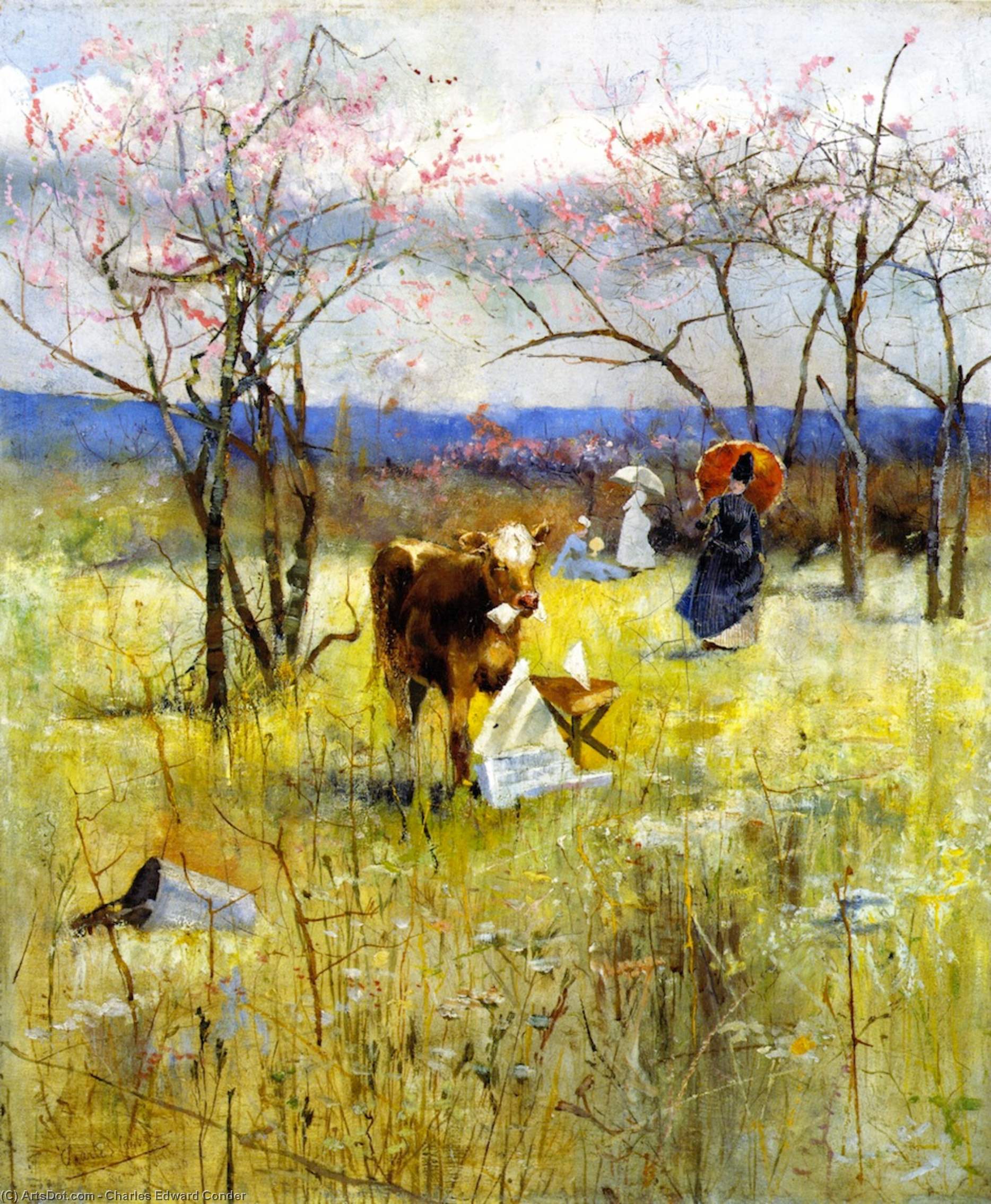
In the gentle embrace of the Australian countryside, Charles Edward Conder captures a moment of profound stillness in his 1888 masterpiece, A Taste for Literature. This evocative oil on canvas serves as more than just a landscape; it is a window into a bygone era of pastoral serenity. The composition centers around a quiet interaction between nature and humanity, where a solitary cow grazes peacefully beside the sturdy trunk of a tree, acting as an anchor for the wandering eye. Scattered throughout this verdant expanse are figures that seem to move with the slow, rhythmic pulse of rural life. Some wander near the heart of the scene, while others linger in the soft distance, creating a sense of depth and communal quietude that invites the viewer to step directly into the frame.
The atmosphere is draped in a delicate, almost ethereal light, characteristic of Conder’s signature style. His technique relies on soft colors and delicate brushstrokes, which work in harmony to blur the lines between the earth and the sky. There is a subtle mystery held within the weather; the presence of two umbrellas—one positioned near the center and another toward the periphery—hints at a light drizzle or perhaps the protective shade of a summer sun. This ambiguity adds a layer of poetic tension to the work, suggesting that even amidst the elements, there is an unshakeable peace to be found in the landscape. For the collector, this painting offers a sense of atmospheric depth that can transform any interior into a sanctuary of calm.
Historical Resonance and Artistic Legacy
To understand A Taste for Literature, one must look to the vibrant history of the late 19th-century Australian art scene. Charles Edward Conder, a British-born talent who arrived in Sydney at the tender age of sixteen, brought with him a refined European sensibility that would eventually merge with the rugged beauty of the Australian bush. This painting stands as a testament to his ability to capture the essence of everyday life, moving beyond mere documentation to achieve something much more soulful. Conder’s work during this period was instrumental in defining a unique national identity through art, often working alongside contemporaries like Frederick McCubbin to celebrate the quiet dignity of the colonial landscape.
The emotional impact of the piece lies in its ability to evoke nostalgia and a longing for simplicity. For interior designers seeking to infuse a space with character, this reproduction provides a sophisticated focal point that balances historical weight with aesthetic lightness. The painting does not demand attention through jarring contrasts; instead, it earns it through a subtle, enduring beauty. It is a work that rewards long periods of contemplation, making it an ideal acquisition for those who appreciate art that speaks to the soul and celebrates the timeless harmony between man, animal, and the natural world.