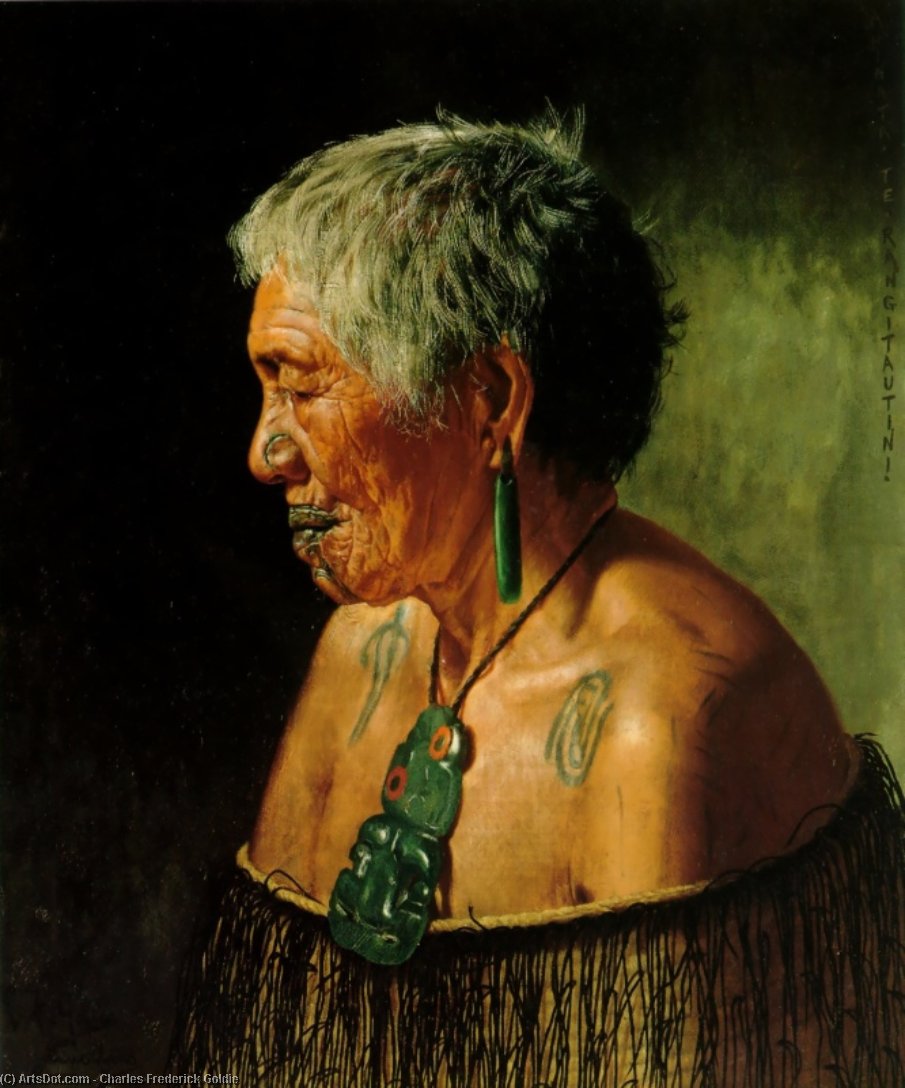
The painting
Ahinata Te Rangitautini Tuhourangi tribe by
Charles Frederick Goldie is a masterpiece that showcases the artist's skill in capturing the essence of Māori culture. Created in 1903, this oil on canvas painting measures 62 x 51 cm and is a testament to Goldie's dedication to portraying the dignity and beauty of New Zealand's indigenous people.
The Artist's Inspiration
Charles Frederick Goldie was a renowned New Zealand artist, born in Auckland in 1870. He was known for his portraits of Māori dignitaries, which were highly regarded for their accuracy and sensitivity. Goldie's work was influenced by his fascination with Māori culture and his desire to preserve its history and traditions. His paintings can be found on
ArtsDot.com, where art enthusiasts can discover and appreciate his remarkable artwork.
The Painting's Significance
The painting
Ahinata Te Rangitautini Tuhourangi tribe is a significant work that highlights the importance of Māori tattoos, known as Ta Moko. The subject of the painting, Ahinata, is adorned with intricate facial tattoos, which hold deep cultural and spiritual meaning. The painting is not only a beautiful representation of Māori art but also a valuable record of the tribe's history and traditions.
Key Features of the Painting: - The subject's facial tattoos, which are a distinctive feature of Māori culture
- The use of traditional Māori clothing and adornments
- The artist's attention to detail and commitment to accuracy
To learn more about
Charles Frederick Goldie and his work, visit
ArtsDot.com, where you can find a range of his paintings, including
The Widow and Tamehana. For more information on the artist's life and work, see his biography on
Wikipedia.
The painting
Ahinata Te Rangitautini Tuhourangi tribe is a remarkable example of
Charles Frederick Goldie's skill and dedication to preserving Māori culture. As a valuable piece of New Zealand's artistic heritage, it continues to inspire and educate art lovers around the world.