Explore the captivating portraits & Giorgionesque figure compositions of Charles Haslewood Shannon (1863-1937). Discover his classic style, influenced by Venetian masters, and legacy in British art. View artworks on ArtsDot!
Discover Watts Gallery – Artists’ Village in Surrey, showcasing Victorian art by G.F. Watts, Arts & Crafts history, Limnerslease studio, and the stunning Watts Mortuary Chapel. A unique, single-artist art experience in the UK.
A Moment Frozen in Time: Exploring Charles Haslewood Shannon’s “The Bathers”
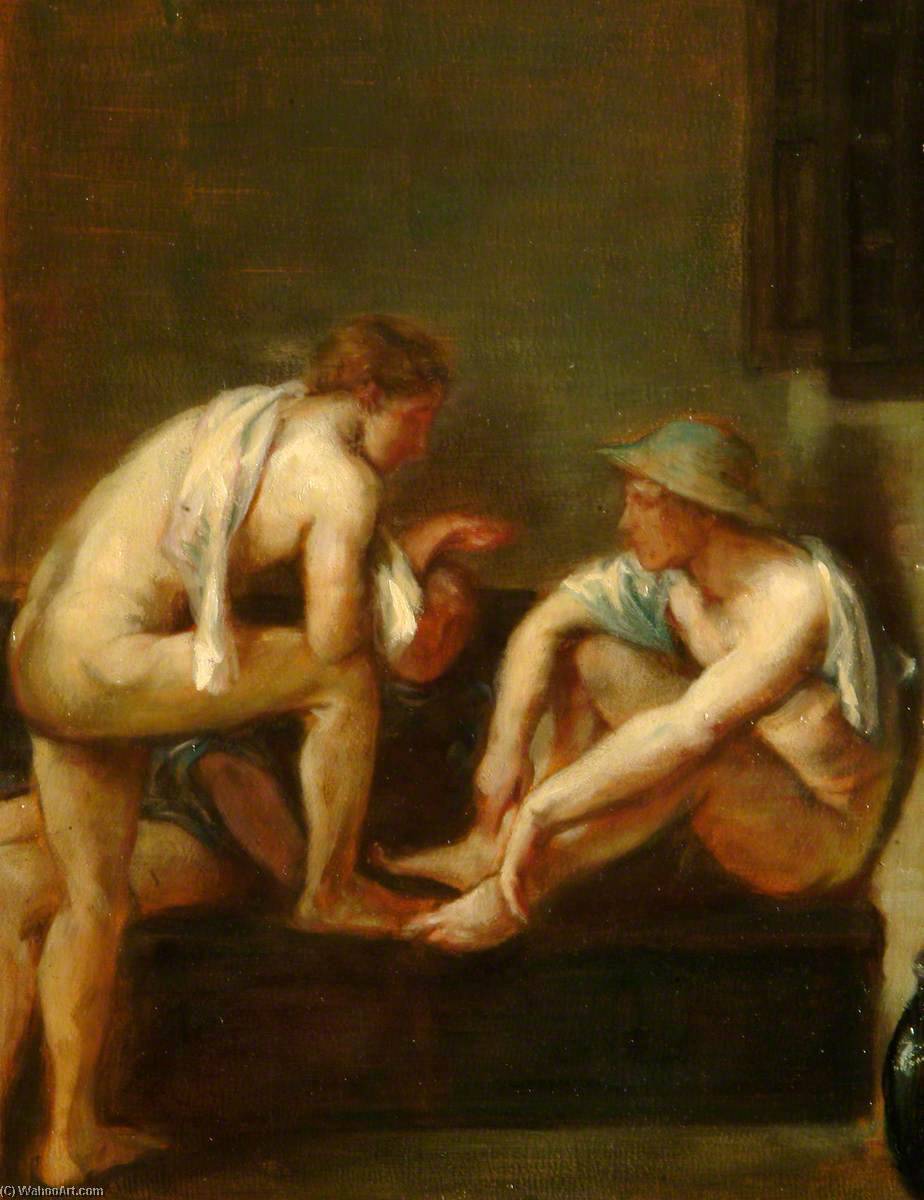
Charles Haslewood Shannon (1863 – 1937), a British artist whose legacy resides primarily within the realm of Venetian influences and intimate portraiture, produced “The Bathers,” circa 1900. This captivating oil on canvas depicts two nude male figures engaged in an act of quiet contemplation—one gently supporting the foot of the other—within a sparsely furnished interior bathed in subdued light. Currently housed at Watts Gallery – Artists’ Village in Guildford, United Kingdom, the painting transcends mere representation; it embodies a profound exploration of form, texture, and psychological nuance that continues to resonate with audiences today.
Style and Technique: Echoes of Venetian Grandeur
Shannon's artistic vision was decisively shaped by his lifelong partnership with fellow artist Charles Ricketts and, crucially, by his unwavering admiration for the masters of Venice—Giorgione, Titian, and Tintoretto. Consequently, “The Bathers” exhibits a characteristic Venetian aesthetic marked by a masterful manipulation of chiaroscuro – dramatic contrasts between light and shadow – to sculpt the figures’ musculature and imbue them with an aura of solemn stillness. The artist eschewed the flamboyant brushstrokes favored by Impressionists, opting instead for a deliberate impasto technique—thickly applied paint—that creates palpable textural richness and reinforces the painting's sculptural quality. This meticulous attention to detail speaks volumes about Shannon’s commitment to capturing not just what he saw but also what he felt.
Historical Context: The Dawn of Modern Art
“The Bathers” emerged during a pivotal moment in European art history—the burgeoning movement toward modernism that challenged traditional conventions and prioritized subjective experience over objective observation. While firmly rooted in academic realism, Shannon’s work subtly anticipates the stylistic innovations of subsequent generations of artists. It reflects the broader cultural preoccupation with nudity as a symbol of purity and vulnerability – themes prevalent in both classical mythology and Victorian art circles. The painting's setting—a simple room devoid of extraneous ornamentation—further underscores its focus on human form and psychological introspection, aligning it squarely with the artistic ambitions of the era.
Symbolism: Gesture and Quietude
Beyond its formal brilliance, “The Bathers” is laden with symbolic significance. The posture of one figure—supporting the foot of his companion—represents an act of selfless care and devotion – a gesture that speaks to enduring humanist values. Simultaneously, the figures’ stillness conveys a sense of profound contemplation—a deliberate refusal to engage in outward activity—suggesting an inner life rich in emotion and thought. The muted palette—dominated by earthy tones—contributes to the painting's contemplative mood, fostering a feeling of intimacy and serenity that invites viewers to linger upon its surface.
Emotional Impact: A Timeless Portrait of Humanity
Ultimately, “The Bathers” succeeds in conveying an enduring emotional resonance. Shannon’s masterful depiction of human anatomy captures not only physical beauty but also the subtle complexities of human psychology—a testament to his artistic sensitivity and profound understanding of the human condition. The painting's quiet dignity and understated elegance continue to inspire admiration for its timeless appeal, reminding us that art possesses the capacity to transcend temporal boundaries and communicate universal truths about our shared humanity. Its presence at Watts Gallery ensures that this remarkable artwork will endure as a beacon of artistic excellence for generations to come.