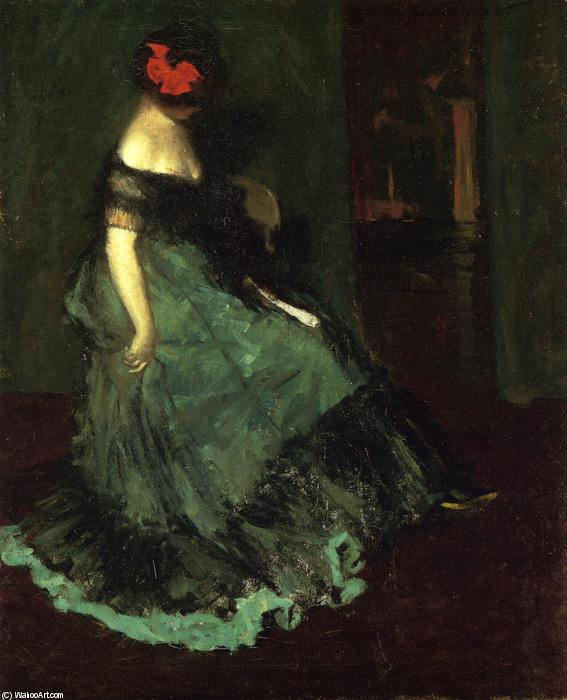
Discover "The Red Bow" by Charles Webster Hawthorne – a captivating Post-Impressionist portrait of a woman in rich greens & reds. Explore its textured impasto & evocative style.
Charles Webster Hawthorne was an American painter renowned for his evocative portraits and landscapes, particularly his depictions of New England coastal life. A key figure in the Cape Cod School of Art, he championed plein air painting and influenced generations with his tonal style and dedication to capturing light and atmosphere.
Brooklyn Museum
(New York City, United States of America)
Explore Brooklyn Museum's stunning art collection spanning millennia! From Egyptian antiquities to American masterpieces & Beaux-Arts architecture – discover NYC’s second largest cultural hub.
The Enigmatic Beauty of “The Red Bow” by Charles Webster Hawthorne
Charles Webster Hawthorne’s “The Red Bow,” painted in 1902, is more than just a portrait; it's a carefully constructed tableau of quiet contemplation and subtle symbolism, deeply rooted in the artist’s profound connection to the rugged beauty of Maine. Hawthorne, a pivotal figure in the Cape Cod School of Art movement, masterfully employs an impressionistic style—a deliberate departure from strict realism—to capture not just the likeness of his subject but also the very essence of her mood and the atmosphere surrounding her. The painting immediately draws the eye with its rich, layered application of oil paint, a hallmark of Hawthorne’s technique, creating a palpable sense of texture that invites close inspection. Thick impasto strokes build up the folds of the woman's dark green dress, while lighter washes define the shadowed doorway and indistinct background, suggesting a room bathed in soft, diffused light—a characteristic feature of his plein air approach to painting.
A Portrait Steeped in New England Tradition
Hawthorne’s work is inextricably linked to the traditions of American landscape painting, particularly the Luminist movement, which emphasized capturing the effects of light and atmosphere. However, unlike many Luminists who focused solely on landscapes, Hawthorne brought a distinctly human element into his art. “The Red Bow” exemplifies this fusion, presenting a solitary figure within a domestic setting—a deliberate choice that speaks to the core themes of introspection and quiet dignity prevalent in New England artistic circles at the turn of the 20th century. The subject’s obscured face, partially veiled by a red headscarf, adds an intriguing layer of mystery, prompting viewers to project their own interpretations onto her expression—is she lost in thought, weary from labor, or simply observing the world around her? The painting's composition subtly echoes the traditions of portraiture found in Dutch masters, particularly Rembrandt, with its dramatic use of light and shadow to define form and mood.
Technique and Symbolism: A Dance of Color and Texture
Hawthorne’s masterful technique is evident in every brushstroke. He utilizes a limited palette—primarily deep greens, browns, and the vibrant red of the headscarf—to create a harmonious yet emotionally resonant scene. The careful layering of paint, achieved through meticulous blending and building up texture, contributes significantly to the painting's depth and luminosity. Notice how the light catches on the folds of the dress, creating an almost sculptural effect. The use of impasto – applying thick layers of paint directly onto the canvas – not only adds visual interest but also emphasizes the materiality of the artwork itself. Beyond its technical brilliance, “The Red Bow” is laden with symbolic potential. The red headscarf, a striking element against the muted greens and browns, could represent passion, remembrance, or perhaps even a hint of melancholy. The shadowed doorway suggests a transition—a moment of pause between one state of being and another.
A Window into Early 20th-Century New England
“The Red Bow” offers a poignant glimpse into the social and artistic landscape of early 20th-century New England. Hawthorne’s association with the Cape Cod School of Art fostered a community dedicated to capturing the beauty of the region's natural world while simultaneously exploring themes of human experience. His work reflects a growing interest in psychological realism—a desire to delve beneath the surface and reveal the inner lives of his subjects. The painting’s quiet intimacy, coupled with its masterful execution, makes it a compelling example of American art at the dawn of a new century. It's a piece that invites contemplation, sparking questions about identity, memory, and the enduring power of visual storytelling. Reproductions of this evocative work can bring a touch of New England’s timeless beauty to any space, offering a subtle yet profound connection to a rich artistic heritage.