A Window Into Colonial Elegance
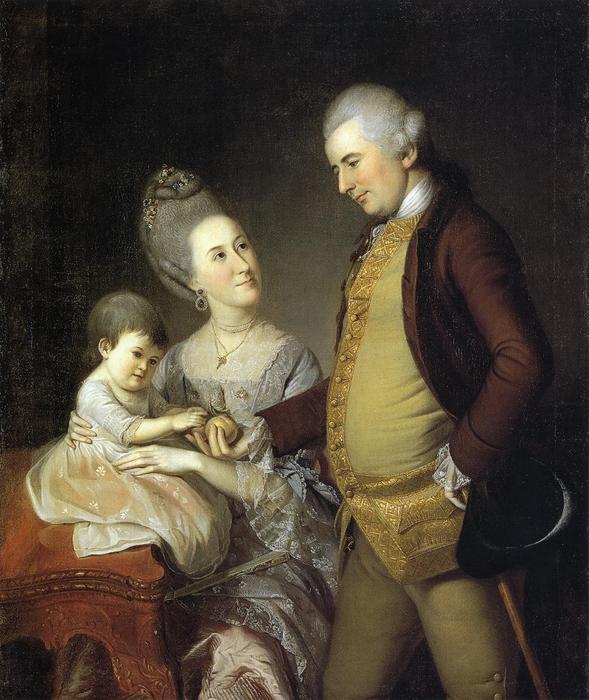
In the quiet grandeur of 1772, before the thunder of the American Revolution reshaped the destiny of a continent, Charles Willson Peale captured a moment of profound domestic stability in his masterpiece, The John Cadwalader Family. This portrait is far more than a mere collection of likenesses; it is a carefully orchestrated tableau that serves as a window into the social aspirations and refined sensibilities of the American colonial elite. Through his brush, we encounter John Cadwalader Sr., his wife Anne, and their young son, presented not just as individuals, but as a unified symbol of prosperity and Enlightenment ideals. The painting breathes with the quiet confidence of a family standing at the precipice of a new era, embodying the poise and dignity that defined the burgeoning American upper class.
Peale’s composition is a masterclass in Neoclassical balance, utilizing a triangular arrangement of figures to instill a sense of permanence and hierarchical order. The subjects are nestled within an environment of opulent textures and material wealth. One cannot help but be drawn into the scene by the rich, tactile details: the deep crimson velvet of an upholstered chair, the heavy luster of mahogany, and the glint of fine silverware resting upon a linen-draped table. These elements are not merely decorative; they function as symbols of status and the settled comfort of the merchant class. The presence of servants in the periphery further underscores the domestic grandeur, creating a layered narrative of a household that is both industrious and exquisitely cultivated.
The Mastery of Light and Texture
Technically, Peale demonstrates an extraordinary command over chiaroscuro, using dramatic contrasts between light and shadow to sculpt his subjects with a palpable, three-dimensional presence. This interplay of light does more than create depth; it directs the viewer's eye across the canvas, illuminating the delicate lace of a collar or the soft sheen of a silk gown, while allowing the background elements to recede into a mysterious, atmospheric warmth. His brushwork is meticulous, characterized by a polished refinement that avoids the frantic energy of the Rococo style in favor of the clarity and precision championed by Neoclassicism.
For the discerning collector or interior designer, this painting offers an unparalleled sense of historical weight and sophistication. The emotional impact of the work lies in its ability to evoke a sense of nostalgia for a lost world of grace and decorum. Whether placed as a focal point in a traditional study or used to add a layer of classical gravitas to a contemporary dining space, a high-quality reproduction of this piece brings with it the spirit of American heritage. It is an invitation to contemplate the intersection of art, science, and patriotism—a legacy left by Peale that continues to inspire awe and admiration in the modern age.