A Vision of Revolutionary Virtue
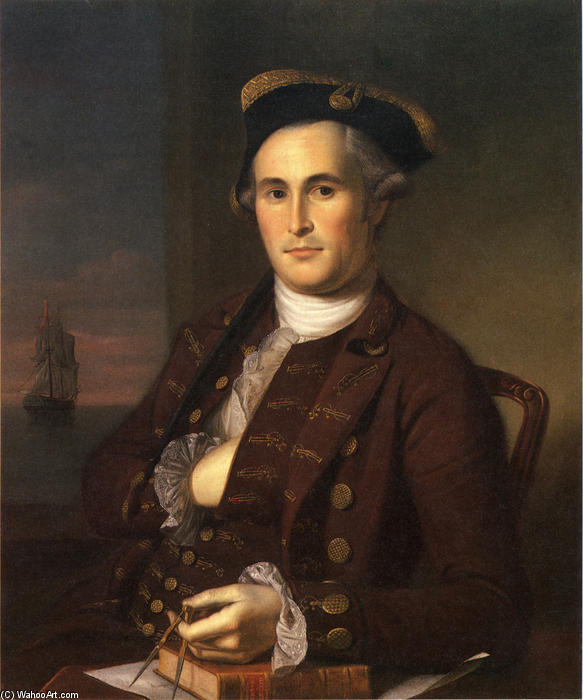
In the quiet intensity of Charles Willson Peale’s 1774 portrait of Mordecai Gist, we encounter more than just a likeness of a prominent Maryland figure; we step into the very heart of the American colonial spirit. Painted on the precipice of revolution, this work captures a moment of profound historical tension and burgeoning identity. Peale, an artist whose life was inextricably woven into the fabric of the American struggle for independence, utilizes his mastery of oil on canvas to present Gist not merely as a man, but as a personification of the era's emerging ideals. The subject is rendered with a dignified presence that commands the viewer's attention, inviting us to contemplate the weight of leadership and the solemnity of duty during one of history's most transformative epochs.
The technique employed by Peale reflects the refined neoclassical influences that were sweeping through the Atlantic world. Drawing inspiration from Roman portraiture traditions, Peale demonstrates an extraordinary command over light and shadow, a method known as chiarosc de lumi, to sculpt the subject's features with remarkable three-dimensionality. Every texture—from the heavy, tactile quality of the clothing to the subtle nuances of the skin—is rendered with meticulous precision. This careful attention to detail does more than showcase technical prowess; it lends an air of permanence and truth to the portrait, making the sitter feel vibrantly alive even centuries after the brush left the canvas.
Symbolism and the Weight of History
Beyond the physical representation of Mordecai Gist, Peale embeds subtle yet powerful symbolic elements that resonate with the political climate of 1774. The composition is balanced and deliberate, utilizing a neutral backdrop to ensure that the focus remains entirely on the character and stature of the subject. In such portraits of this period, the arrangement of objects and the very posture of the sitter often served as a silent language of status and intellect. Through the careful interplay of light, Peale highlights the strength in Gist's gaze, suggesting a man prepared for the rigors of the Continental Army and the heavy responsibilities of command that would soon define his life.
For the discerning collector or interior designer, this piece offers an unparalleled opportunity to introduce a sense of historical gravitas and timeless elegance into a space. The portrait functions as a window into a lost world of republican virtue and moral fortitude. Whether placed in a formal study, a sophisticated library, or a curated gallery wall, a high-quality reproduction of this work serves as a profound conversation piece. It does not merely decorate a room; it anchors it with a sense of heritage, providing an emotional depth that inspires reverence for the enduring human spirit and the foundational stories of a nation.