A Window into a Founding Father’s Soul: Charles Willson Peale's “William Smith and His Grandson”
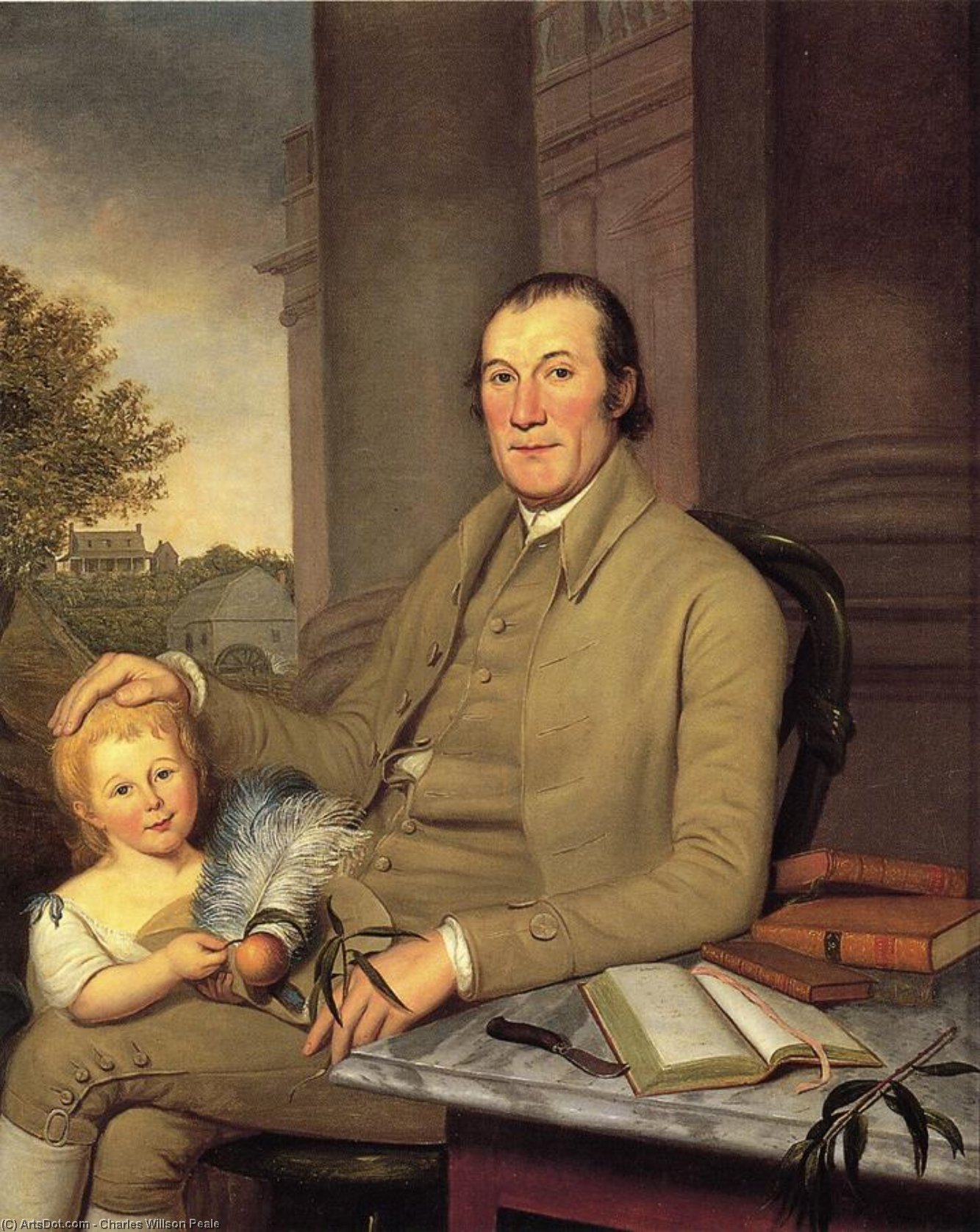
Charles Willson Peale’s 1788 oil on canvas, "William Smith and His Grandson," isn’t merely a portrait; it’s a carefully constructed tableau of familial love, burgeoning American identity, and the quiet dignity of a nation's formative years. Housed within the Virginia Museum of Fine Arts in Richmond, this painting transcends its simple subject matter to offer a poignant glimpse into the values and aspirations of late 18th-century America. Peale, already establishing himself as a leading portraitist and a pioneer in American museum culture, masterfully employs Rococo techniques—characterized by soft lighting, delicate brushwork, and an emphasis on elegant composition—to create an atmosphere of warmth and intimacy.
The scene unfolds within a classically inspired interior, subtly suggesting both the comforts of domestic life and the intellectual pursuits valued during this period. A table laden with books – symbols of knowledge, education, and the Enlightenment’s embrace of reason – anchors the composition. William Smith, a prominent Baltimore merchant distinguished by his dignified bearing and attentive gaze, sits comfortably in a chair, gently cradling his young grandson. The boy, dressed in pristine white, gazes at his grandfather with an expression of innocent adoration, a direct conduit to the viewer’s heart. Peale's skill lies not just in capturing likeness but in conveying the palpable connection between generations – a silent testament to the enduring power of family bonds.
The Painter as Observer and Chronicler
Peale wasn't simply recording appearances; he was actively shaping the narrative of this scene. His meticulous attention to detail—the texture of William’s coat, the folds in his clothing, the youthful innocence of the boy – speaks volumes about his commitment to realism. Yet, there’s an undeniable theatricality to the arrangement, a deliberate staging that elevates the portrait beyond a simple likeness. Peale was keenly aware of the power of visual representation and used it to communicate broader ideas about American society. He frequently incorporated symbolic elements into his work, subtly reinforcing themes of patriotism, civic virtue, and the importance of education.
Furthermore, “William Smith and His Grandson” reflects Peale’s own evolving role as a cultural historian. As one of the first Americans to establish a museum—the Philadelphia Museum in 1794—Peale was deeply invested in preserving and showcasing American history through art. This painting can be seen as part of that larger project, documenting a specific moment in time and offering a visual record of the values he believed were essential to the nation’s future.
Symbolism and the Dawn of a Nation
The choice of setting—a room filled with books—is particularly significant. It underscores the importance of learning and intellectual development, reflecting the Enlightenment ideals that underpinned the American Revolution. The grandfather's gentle gesture towards his grandson symbolizes the passing down of wisdom and values from one generation to the next – a cornerstone of American identity. The muted color palette, dominated by warm browns, creams, and golds, contributes to the painting’s overall sense of serenity and stability, mirroring the hopes for a prosperous future.
Beyond its immediate depiction of family, “William Smith and His Grandson” embodies the nascent spirit of America. It's a portrait not just of individuals but of an emerging nation grappling with questions of identity, governance, and the promise of self-determination. Peale’s masterful composition captures this complex interplay of personal relationships and national aspirations, solidifying its place as a pivotal work in American art history.
A Legacy of Portraiture and Museum Vision
Charles Willson Peale's legacy extends far beyond this single captivating portrait. His pioneering efforts in establishing the Philadelphia Museum laid the foundation for America’s museum movement, transforming the way Americans engaged with art and history. “William Smith and His Grandson” stands as a testament to his artistic skill, his keen observation of human nature, and his profound understanding of the values that shaped early American society. Reproductions of this iconic painting continue to resonate today, offering viewers a timeless glimpse into a pivotal moment in American history – a quiet celebration of family, knowledge, and the enduring spirit of a nation.