Christopher Richard Wynne Nevinson (1889-1946) was an English painter, etcher, and lithographer who gained prominence as one of Britain’s foremost war artists during World War I. His formative years were shaped by his father's role as a journalist covering the conflict and his mother's involvement in advocating for women’s suffrage – influences that instilled in him a commitment to social awarenes
Asters – An Ode to Remembrance and Intellectual Pursuit
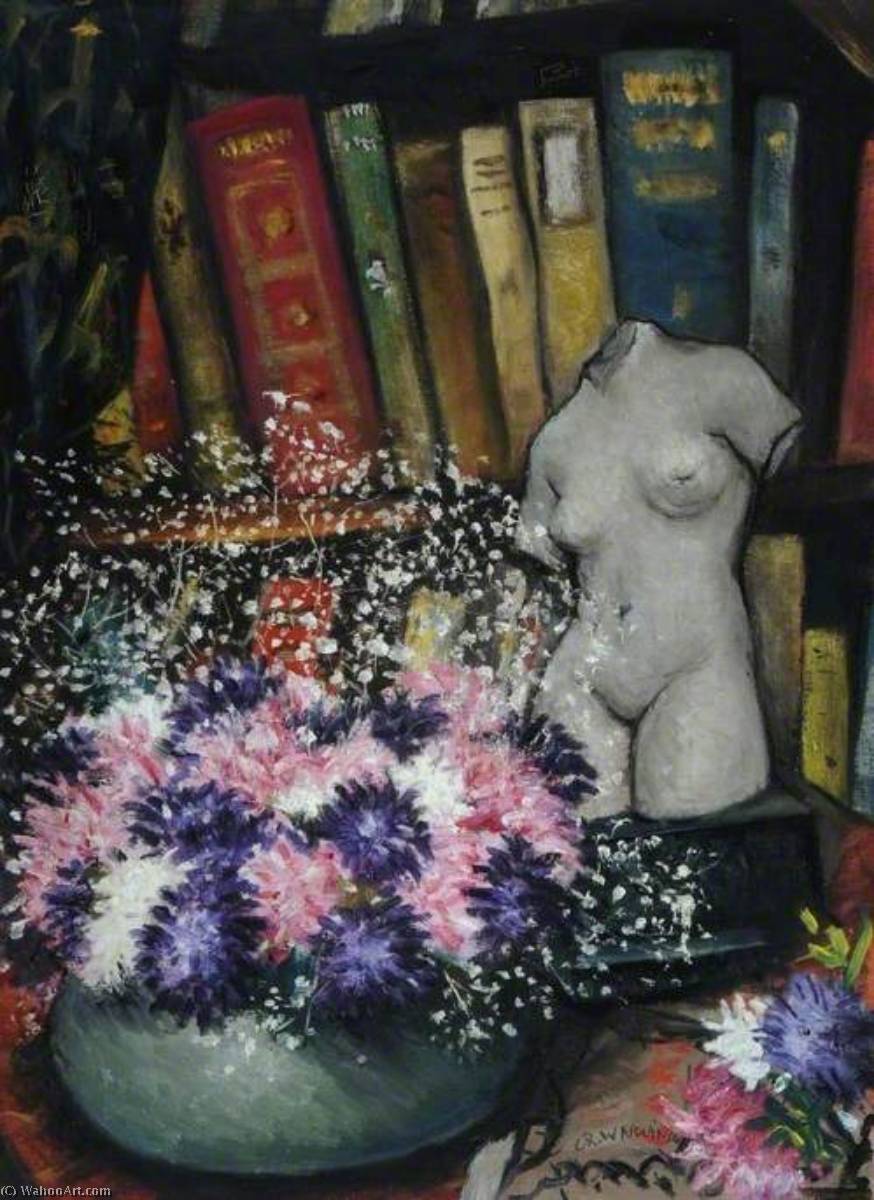
Christopher Richard Wynne Nevinson’s “Asters” stands as a poignant testament to the anxieties and aspirations of Britain during the tumultuous years following World War I. Painted sometime after 1920, this artwork transcends mere botanical depiction; it embodies a deeper exploration of memory, contemplation, and the enduring influence of knowledge upon artistic expression.
- Subject Matter: The centerpiece is a statue—likely representing a soldier or figure embodying heroism—placed thoughtfully amidst a vase overflowing with asters. These flowers, known for their vibrant purple hues and delicate petals, serve as a powerful symbol of mourning and remembrance – reflecting the collective grief experienced by the nation after the devastating conflict.
- Style: Nevinson’s style aligns firmly within the burgeoning Expressionist movement, characterized by its emphasis on emotional intensity and subjective experience. Unlike Impressionism's focus on capturing fleeting moments of light, Expressionism seeks to convey inner feelings and psychological states directly onto canvas.
- Technique: Executed in oil paint on canvas, Nevinson employs a textured brushstroke technique that lends the artwork a palpable sense of physicality. The artist’s deliberate layering of pigment creates depth and luminosity, capturing not just the visual appearance but also the emotional resonance of the scene.
The surrounding bookshelves laden with books contribute significantly to the artwork's intellectual atmosphere. They represent more than simply objects; they symbolize accumulated wisdom, scholarship, and the ongoing effort to grapple with the complexities of human history. The careful arrangement of the books—spanning various sizes and colors—suggests a deliberate consideration for visual harmony alongside conveying an idea of erudition.
Historical Context: Nevinson’s work emerged from the immediate aftermath of World War I, a period marked by profound disillusionment and questioning. Artists like Nevinson responded to the trauma of war not with glorification but with honest introspection—attempting to articulate the psychological impact on individuals and society. “Asters” encapsulates this spirit of reflection, prompting viewers to contemplate themes of loss, resilience, and the importance of preserving cultural heritage.
Emotional Impact: Ultimately, “Asters” evokes a feeling of solemn beauty. The juxtaposition of the statue’s stoic posture against the vibrant flowers creates a compelling visual dialogue—a reminder that even amidst sorrow, there exists an enduring capacity for grace and contemplation. It invites viewers to pause, consider, and find solace in the quiet dignity of remembrance.