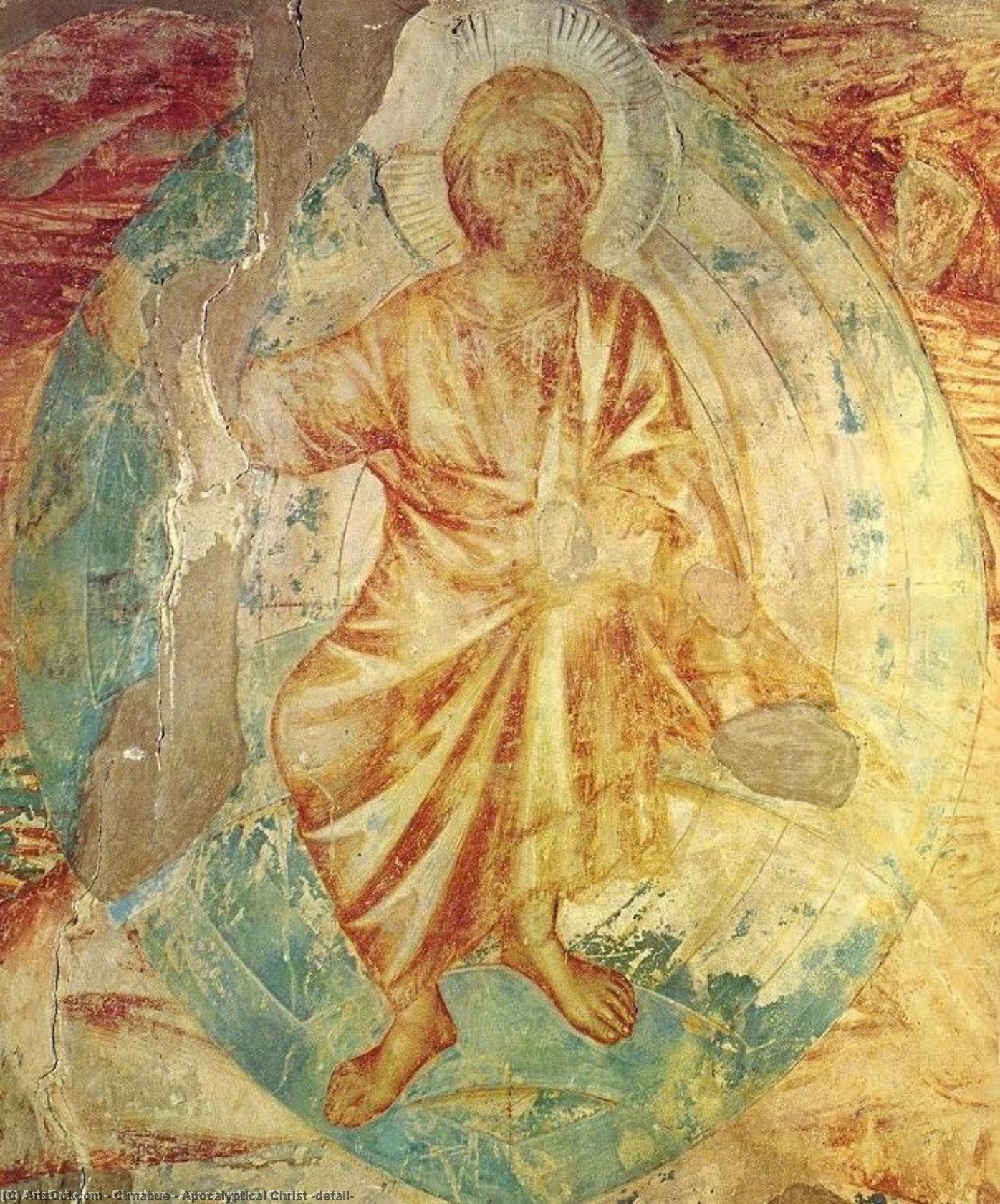
Apocalyptical Christ (detail) – A Byzantine Echo in Florentine Art
The fresco depicting “Apocalyptical Christ” by Cimabue stands as an extraordinary testament to the artistic crossroads of the 13th century, marking a pivotal moment where Byzantine iconography began its gradual assimilation into nascent Italian sensibilities. Discovered within the serene sanctuary of San Francesco in Assisi, this monumental artwork offers a glimpse into the spiritual fervor and stylistic innovations that characterized the Trecento – a period preceding the Renaissance—and cemented Cimabue’s legacy as one of Florence's earliest masters. Its faded grandeur speaks volumes about its age, yet retains an undeniable power to captivate viewers centuries later.
- Overall Impression: The image portrays Christ Pantocrator (Ruler of All), seated majestically on a throne, dominating the frame with his imposing stature and radiant halo. Surrounding him is a swirling circular background in shades of azure and gold—a deliberate allusion to the celestial realm—reflecting the profound influence of Byzantine artistic traditions. Visible signs of deterioration – cracks and discoloration – underscore its history but do not diminish its inherent beauty or symbolic significance.
- Style & Technique: Cimabue’s approach is unmistakably Byzantine, prioritizing stylized figures with elongated proportions and employing a technique rooted in fresco painting—applying pigments mixed with water onto wet plaster. The flowing lines and curvilinear contours characteristic of Byzantine iconography are skillfully executed, mirroring the spiritual ethos of the time.
- Composition & Symbolism: The central figure embodies divine authority through the halo, book (representing wisdom), and draped garments symbolizing royalty. These elements resonate deeply with Christian theology, reflecting the pervasive preoccupation with religious symbolism during Cimabue’s era. The flattened perspective contributes to a sense of solemnity and reinforces the artwork's contemplative mood.
- Historical Context: Cimabue’s work represents a crucial transition from Byzantine artistic conventions toward the stylistic developments that would herald the Renaissance. He skillfully blended Byzantine influences with emerging Florentine realism, foreshadowing the humanist ideals and naturalistic representations that would soon redefine Western art.
- Emotional Impact: Viewing “Apocalyptical Christ” evokes feelings of reverence, solemnity, and spiritual contemplation—a reflection of its purpose as a devotional artwork intended to inspire piety and convey the majesty of God.
Detailed Examination – Fresco Technique & Material Palette
The fresco technique itself is remarkable for its precision and durability. Cimabue utilized pigments derived primarily from earth minerals—ochre, umber, and sienite—combined with binders like egg yolk to achieve a rich textural surface. The careful layering of pigment ensured that the image would endure through time, preserving its original splendor despite centuries of exposure. The muted color palette—dominated by earthy tones contrasted with cooler blues—underscores the artwork’s contemplative atmosphere and reflects the stylistic preferences of Byzantine art.
Further Research & Comparative Analysis
As evidenced by “The Mocking of Christ” (Wikipedia), Cimabue's artistic vision extended beyond mere replication; he actively engaged in a dialogue with Byzantine precedents, subtly adapting them to Florentine sensibilities. The meticulous detail evident in both pieces—particularly the depiction of drapery folds and facial expressions—demonstrates Cimabue’s mastery of artistic craftmanship. Exploring similar artworks like “Apocalyptical Christ” (detail) – AFRIPICS– provides invaluable insight into the broader artistic landscape of the Trecento, illuminating Cimabue's role as a pioneer in shaping the trajectory of Italian art history.
A Legacy Enduring Through Time
“Apocalyptical Christ” remains an enduring symbol of Florentine artistic heritage—a masterpiece that continues to inspire admiration and scholarly debate. Its reproduction offers collectors and interior designers alike the opportunity to experience firsthand the grandeur and spiritual depth of Cimabue’s groundbreaking vision, transporting them back to a formative period in Western art history.