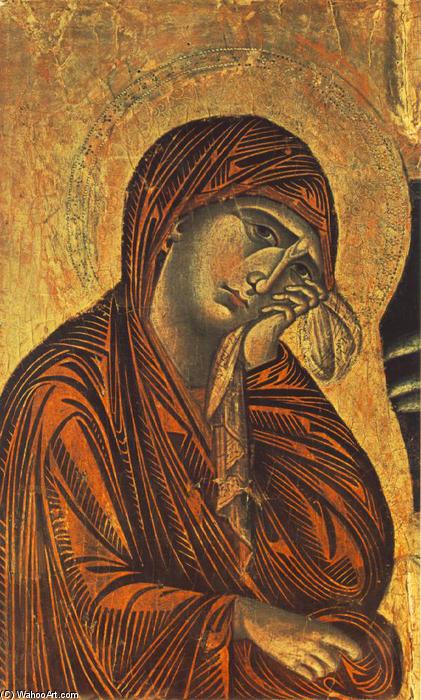
A Glimpse into Divine Sorrow: Cimabue’s *Crucifix (detail)*
This exquisite detail from Cimabue's larger *Crucifix* (circa 1268) offers a profoundly moving encounter with the Virgin Mary and infant Jesus. Painted during a pivotal moment in art history, this work transcends mere religious iconography to become a powerful expression of maternal grief and spiritual contemplation. It’s a piece that resonates across centuries, offering both artistic beauty and emotional depth.
Historical Context & Artistic Transition
Cimabue – or *Cenni di Pepo* as he was known – stands at the cusp of the Italian Renaissance. He was one of the first artists to actively move away from the rigid conventions of the Italo-Byzantine style, which had dominated Italian painting for generations. While still exhibiting elements of Byzantine formality—note the gold halo and stylized drapery—Cimabue infused his work with a nascent naturalism. This is visible in the attempt to render more lifelike proportions and introduce subtle shading, paving the way for artists like Giotto, who would fully embrace Renaissance ideals. The artwork originates from Florence, Italy, a city rapidly becoming a center of artistic innovation. Originally created for the church of San Francesco in Pisa, it now resides at the Barts Hospital in London.
Subject & Symbolism
The detail focuses intensely on the Madonna and Child. Mary cradles the infant Jesus, her expression one of profound sorrow and premonition. This isn’t a joyful depiction of motherhood; rather, it foreshadows the suffering to come – Christ's Passion and crucifixion.
Key symbolic elements amplify this emotional weight:
- The veil draped over Mary’s head signifies her purity and modesty, traditional attributes associated with the Virgin.
- Her downcast gaze is a powerful visual cue of grief, sorrow, and acceptance of her son's destiny.
- The gold halo surrounding both figures denotes their holiness and divine status.
Technique & Materials
Cimabue masterfully employed tempera paint on a gesso-prepared wood panel. This technique, common in the period, involved layering pigments mixed with egg yolk to create luminous colors. The artist’s skillful use of
impasto – applying thick layers of paint – is particularly evident in the folds of Mary's cloak and her skin tones, adding a tactile quality and enhancing the sense of volume. Despite its age, the artwork retains a remarkable vibrancy thanks to the enduring qualities of tempera and the inclusion of gold leaf for highlights. The shallow perspective and limited atmospheric depth are characteristic of panel painting from this era.
Emotional Impact & Aesthetic Qualities
The overall effect is one of solemnity, piety, and profound emotional resonance. Cimabue doesn’t simply depict a religious scene; he invites the viewer to share in Mary's sorrow and contemplate the weight of faith and sacrifice. The warm earthy tones – ochre, terracotta, and gold – create a rich, aged aesthetic that evokes a sense of timelessness. While not striving for photorealistic detail, Cimabue’s stylized approach imbues the figures with a dignified grace and emotional power. This *Crucifix (detail)* is more than just an artwork; it's a window into the spiritual world of medieval Italy and a testament to the enduring power of human emotion. It would be a stunning focal point in any collection, adding depth and historical significance to both classic and contemporary interiors.