A Moment of Serenity: Unveiling Cimabue’s Saint Francis
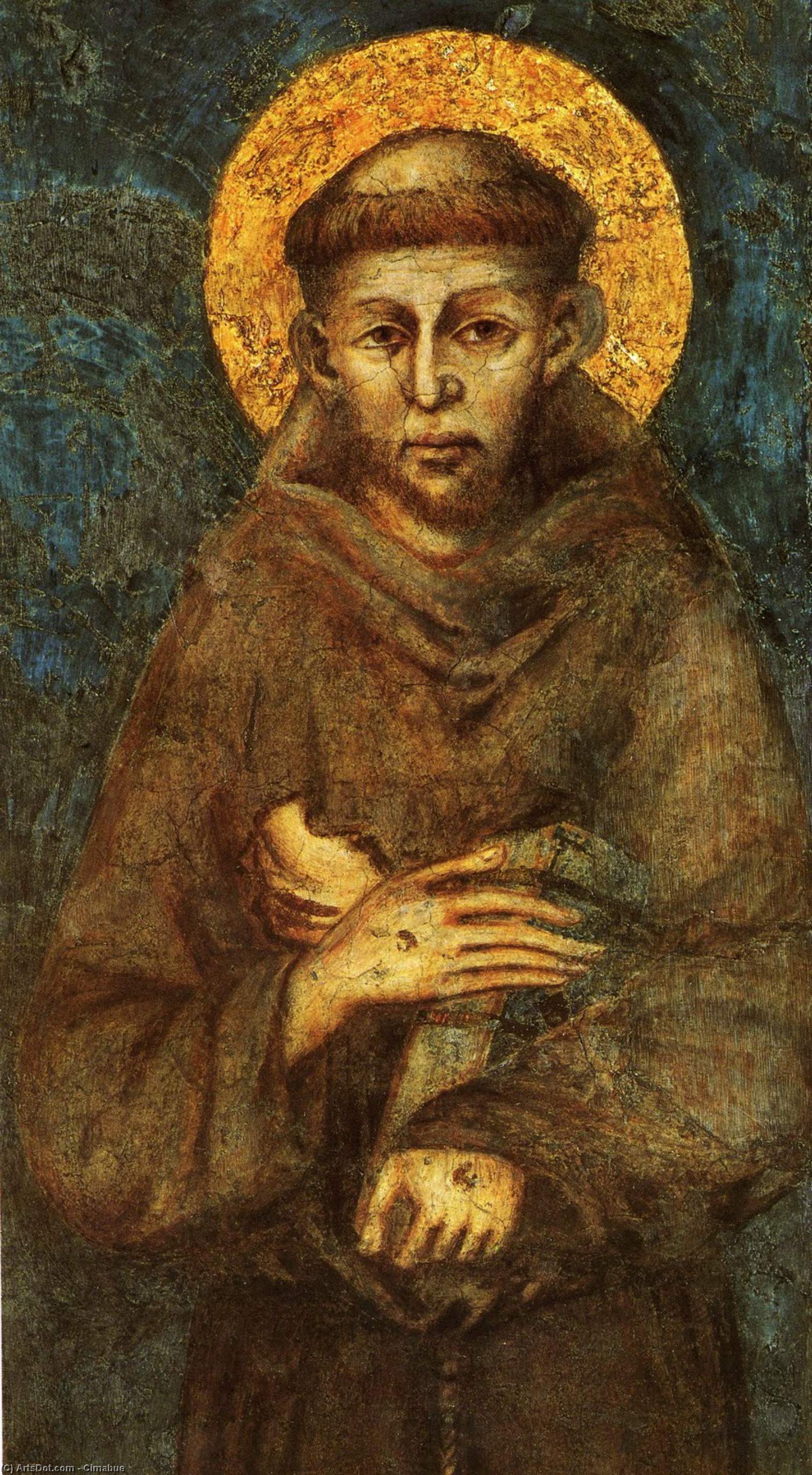
Cimabue's “Saint Francis of Assisi (detail)” isn’t merely a depiction of a religious figure; it’s a poignant encapsulation of the burgeoning humanism that would soon define the Italian Renaissance. Painted around 1285-1290, this intimate scene captures a tender moment – the embrace between Saint Francis and a young child, radiating an almost palpable serenity. The work stands as a crucial testament to Cimabue’s role in transitioning Western art away from the rigid formality of Byzantine iconography towards a more naturalistic and emotionally resonant style. It's a deceptively simple composition, yet brimming with subtle complexities that invite prolonged contemplation.

The painting’s foundation lies firmly within the Byzantine tradition, evident in the stylized rendering of Saint Francis himself – his haloed head, the rich brown robe, and the careful attention to detail in his posture. However, even here, Cimabue demonstrates a nascent desire for greater realism. The baby held in his arms isn't rendered with the same idealized perfection as the saint; instead, it possesses a quiet vulnerability that subtly shifts the focus towards human connection. The book he holds – a symbol of Francis’s renunciation of worldly possessions and dedication to scripture – further reinforces this evolving narrative.
Byzantine Roots, Renaissance Seeds
Cimabue's journey as an artist is inextricably linked to his Florentine origins and the legacy of Giotto di Bondone, who had spent time studying in Constantinople. Cimabue’s early works were heavily influenced by Byzantine models, characterized by flattened perspectives, hierarchical scale (where important figures dominate the composition), and a preference for gold leaf and vibrant colors. Yet, he wasn't content to simply replicate these established conventions. He began experimenting with techniques that would eventually pave the way for Giotto’s revolutionary innovations – particularly in his use of space and the depiction of human emotion.
The painting’s color palette is rich and luminous, dominated by deep browns, blues, and golds. Cimabue masterfully employs *tempera*, a fast-drying paint that allowed for meticulous detail work. Notice the intricate brushstrokes – each one contributing to the texture of the robe, the folds of the fabric, and the delicate features of the child. The background is rendered in a characteristic Byzantine style, with receding architectural forms creating a sense of depth, albeit subtly.
Symbolism and Spiritual Resonance
Beyond its aesthetic qualities, “Saint Francis of Assisi (detail)” carries profound symbolic weight. The act of embracing a child represents the core tenets of Francis’s spirituality – compassion, humility, and a deep love for humanity. The book symbolizes his commitment to a life devoted to God and the dissemination of His word. The scene itself embodies the essence of Franciscan ideals: a rejection of material wealth in favor of spiritual devotion and a profound connection with the vulnerable and marginalized.
Furthermore, this particular depiction of Saint Francis is significant because it’s one of the earliest known realistic portrayals of the saint. Prior to Cimabue, Francis was often depicted in an abstract, symbolic manner. Cimabue's decision to capture a recognizable human figure – with his slightly protruding ears and earnest expression – marked a pivotal moment in the artistic representation of this influential religious leader.
A Legacy of Transition
“Saint Francis of Assisi (detail)” is more than just a beautiful painting; it’s a window into a transformative period in Western art history. Cimabue's work represents a crucial bridge between the Byzantine world and the burgeoning innovations of the Renaissance, demonstrating his courage to challenge artistic conventions and lay the groundwork for future generations of artists. Reproductions of this captivating artwork offer a tangible connection to this pivotal moment, allowing us to appreciate both the enduring beauty of Byzantine art and the nascent promise of a new era in Italian painting.