A Florentine Pioneer: Exploring Cimabue’s St Matthew
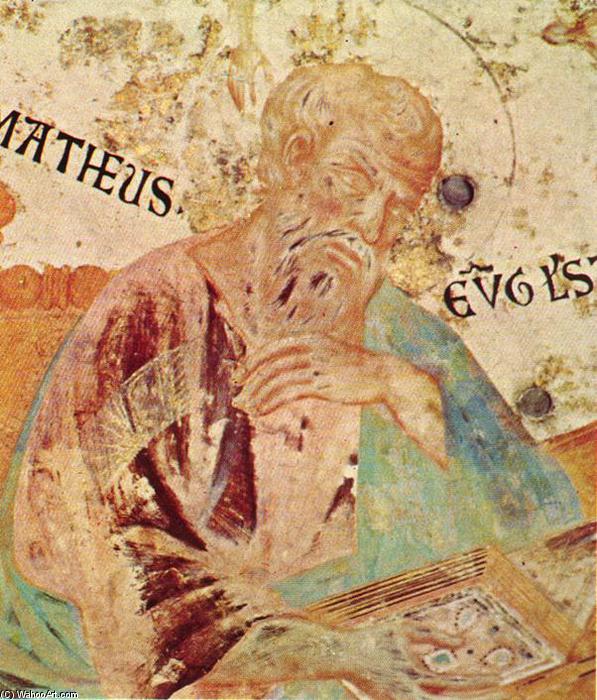
The painting “St Matthew,” attributed to Cimabue (c. 1240 – 1302), isn't merely a depiction of Saint Matthew; it represents a pivotal moment in the artistic evolution of Florence and, by extension, Western Europe. Painted around 1280, this masterpiece stands as one of Cimabue’s most celebrated works—a testament to his audacious embrace of naturalism within the confines of Byzantine iconography. Vasari famously described Cimabue as “the Florentine Dawn,” encapsulating perfectly his role in ushering in a new era of artistic expression. He was a sculptor and painter who skillfully blended Eastern influences with emerging Italian sensibilities, establishing him as a foundational figure for subsequent generations of artists.
- Subject Matter: The painting portrays Saint Matthew, the Evangelist traditionally depicted as receiving the Gospel from Jesus Christ. This scene embodies themes of divine revelation and spiritual contemplation—central concerns within medieval Christian art.
- Style & Technique: Cimabue’s style is characterized by a deliberate departure from the stylized flatness characteristic of Byzantine frescoes. He achieves depth and volume through careful modeling of drapery and flesh, utilizing encaustic paint – a technique involving beeswax mixed with pigment—a method that would soon be superseded by oil painting but remained influential for its luminosity and durability.
Historical Context: Byzantium’s Legacy & Florentine Innovation
Cimabue's artistic vision was profoundly shaped by the Byzantine tradition, which dominated European art for centuries prior to his time. Cimabue absorbed Byzantine compositional principles—particularly the pyramidal structure—and incorporated elements of Byzantine iconography into his work. However, he wasn’t simply replicating Byzantine aesthetics; he actively interrogated them. The subtle realism evident in St Matthew's face and hands – features rendered with remarkable sensitivity – signals a conscious effort to move away from the idealized representations prevalent in Byzantium towards a more humanistic approach. This shift reflects broader cultural changes occurring in Florence during Cimabue’s lifetime, where burgeoning mercantile wealth fueled artistic patronage and fostered intellectual curiosity.
Symbolism & Visual Language
Beyond its narrative depiction of Saint Matthew's encounter with Jesus, the painting is laden with symbolic significance. The books held by St Matthew represent knowledge and scripture—essential components of Christian faith. The clock symbolizes time passing and the inevitability of judgment—a reminder of mortality and divine providence. Cimabue’s masterful use of color contributes to the overall emotional impact of the piece. The muted palette, dominated by earthy tones, conveys solemnity and piety, aligning with the spiritual atmosphere of the medieval church. Yet, within this restrained aesthetic lies a palpable sense of humanity—a reflection of Cimabue's groundbreaking achievement in capturing human emotion through artistic representation.
Emotional Impact & Artistic Significance
“St Matthew” transcends its formal elements to evoke a profound emotional response in the viewer. The artist’s meticulous attention to detail invites contemplation and encourages viewers to engage with themes of faith, humility, and divine grace. Cimabue's pioneering technique—the encaustic method—established him as a visionary innovator who anticipated developments in Renaissance painting. More importantly, he represents an indispensable link between Byzantine art and the artistic breakthroughs that would transform Europe – cementing his place as one of the most influential artists of the twelfth century and securing his legacy as “The Florentine Dawn.”