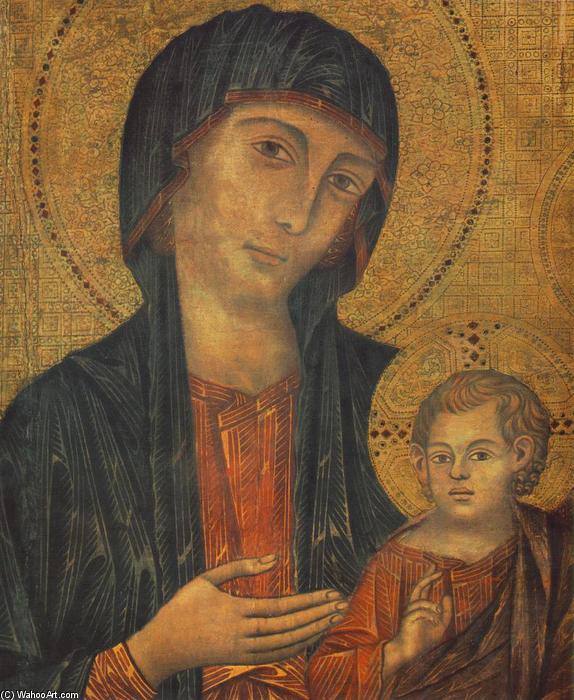
A Glimpse of Divine Majesty: Cimabue’s *Madonna in Majesty (detail)*
This exquisite detail from Cimabue's *Madonna in Majesty*, painted in 1285, offers a captivating window into the transition between Byzantine tradition and the burgeoning Renaissance in Italian art. Measuring 91 x 75 cm, this fragment embodies the spiritual fervor and artistic innovation of its time.
Byzantine Roots & Emerging Realism
Cimabue (c. 1240-1302), born Cenni di Pepo in Florence, stands as a pivotal figure. He was instrumental in
breaking away from the rigid Italo-Byzantine style that had dominated Italian painting for centuries. While deeply rooted in Byzantine conventions – evident in the flat perspective, rich gold leaf, and stylized figures – Cimabue began to introduce elements of greater naturalism. Notice how, even within the iconic representation, there’s a subtle attempt at modeling the faces and drapery, hinting at volume and form. This was revolutionary for its time!
Decoding the Composition & Technique
The detail focuses on the Virgin Mary cradling the infant Jesus. The composition is centered around this sacred mother-and-child relationship, with Mary positioned slightly off-center, drawing the viewer’s eye into the scene. A radiant halo encircles Christ, immediately signifying his divine status. The background isn't merely decorative; it’s a meticulously rendered tapestry of geometric patterns in shimmering gold – a hallmark of Byzantine art intended to evoke a sense of otherworldly splendor and spiritual depth.
Materials & Artistic Process
Cimabue likely employed
tempera or fresco on wood panel, techniques common during the Trecento period. The application of paint is deliberate, with layered brushstrokes creating texture, particularly in the luminous gold leaf areas. Lines are crisp and defined, outlining both figures and decorative elements. The shapes – circles, squares, rectangles – contribute to the overall stylized aesthetic, prioritizing symbolic meaning over strict realism.
Symbolism & Spiritual Significance
Every element within this artwork carries profound symbolism:
- The Halo: Represents divinity and sanctity.
- Mary’s Gesture: Her protective embrace of the Christ Child symbolizes nurturing, compassion, and her role as Mother of God.
- Gold Background: Represents the celestial realm – a sacred space beyond earthly concerns.
- Stylized Forms : Emphasize spiritual truths over physical accuracy, inviting contemplation rather than imitation.
Emotional Resonance & Lasting Legacy
The *Madonna in Majesty (detail)* evokes feelings of reverence, piety, and serenity. The solemn color palette – dominated by gold, brown, and black – reinforces the sacred atmosphere. Cimabue’s work served as a crucial stepping stone towards the artistic achievements of his student,
Giotto, and profoundly influenced the course of Italian painting.
This piece isn't just a beautiful object; it’s a testament to a pivotal moment in art history – a bridge between tradition and innovation, spirituality and humanism. A reproduction of this detail would bring a touch of timeless elegance and profound meaning to any interior space.