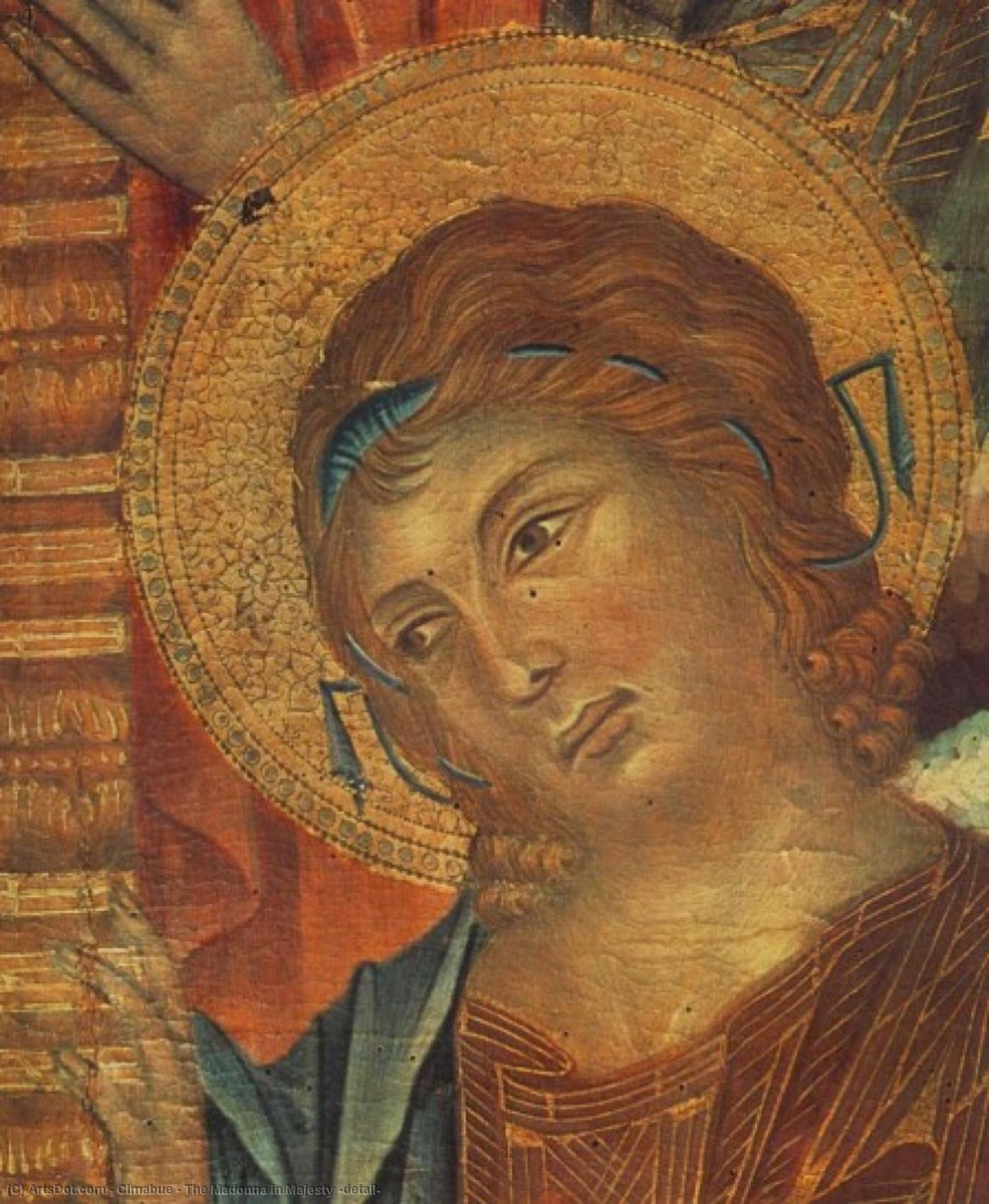
A Glimpse into Divine Majesty: Cimabue’s *Madonna in Majesty* (Detail)
This exquisite detail from Cimabue's *Madonna in Majesty*, painted in 1285, offers a captivating window into the transition between Byzantine tradition and the burgeoning Renaissance. Measuring just 48 x 39 cm, this panel – currently housed at the prestigious Galleria degli Uffizi in Florence – belies its small size with an immense artistic power and historical significance.
Subject & Composition
The fragment focuses on a portion of the larger composition depicting the Virgin Mary enthroned as Queen of Heaven, holding the Christ Child. While a detail, it encapsulates the core elements of the full work: *the Madonna’s serene dignity and the nascent humanity emerging in her portrayal*. The close-up allows for an intimate appreciation of Cimabue's delicate brushwork and his attempt to imbue his figures with greater realism than was typical of the Italo-Byzantine style. Notice how the artist begins to suggest volume through subtle shading, a departure from the flatter, more stylized depictions prevalent at the time. The red background provides a rich contrast, enhancing the luminosity of the figures.
Style & Technique
Cimabue masterfully employed tempera on panel – *a technique demanding precision and patience*. Tempera’s quick-drying nature required artists to work swiftly and deliberately, building up layers of pigment to achieve depth and detail. The style is firmly rooted in the Italo-Byzantine tradition, characterized by its gold backgrounds, elongated figures, and formalized drapery. However, Cimabue subtly introduces elements that foreshadow the Renaissance: *a greater emphasis on naturalistic proportions and a more emotive quality in the faces of his subjects*.
Historical Context & Artistic Innovation
Created during a period of significant cultural and artistic change, this work reflects the late 13th century’s growing interest in humanism. Cimabue (born Cenni di Pepo) was instrumental in breaking away from the rigid conventions of Byzantine art. He paved the way for artists like Giotto, often considered the father of Renaissance painting. *His willingness to experiment with form and expression marked a pivotal moment in Western art history*. He wasn’t merely replicating established styles; he was actively evolving them.
Symbolism & Emotional Impact
The image is rich in religious symbolism. The Madonna, as Queen of Heaven, represents divine grace and maternal love. Her regal pose and the Christ Child symbolize salvation and redemption. *The use of gold signifies divinity and eternity*. Beyond its theological meaning, the detail evokes a sense of reverence and spiritual contemplation. The Madonna’s gaze is direct yet gentle, inviting viewers into a moment of quiet devotion.
For Collectors & Interior Designers
A reproduction of this *Madonna in Majesty* detail offers a timeless elegance to any space. Its rich colors and refined composition complement both traditional and contemporary interiors. The artwork’s historical significance adds intellectual depth, making it a conversation starter and a testament to discerning taste. Consider framing this piece with ornate gold detailing to echo the original's splendor or opting for a minimalist approach to highlight its inherent beauty.
Explore Further
- Related Works: Discover Cimabue’s larger *Madonna in Majesty (Maestà)* and other detailed sections available.
- Artist Insight: Learn more about Cimabue's life and influence, and his relationship with the emerging Renaissance style.
- High-Quality Reproductions: Bring a piece of art history into your home with expertly crafted oil painting reproductions available at ArtsDot.