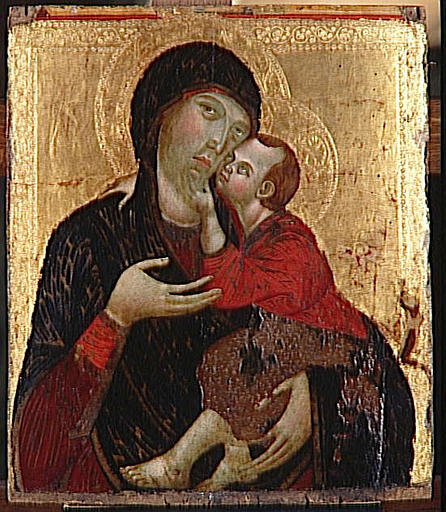
A Timeless Embrace: Cimabue's Virgin and Child
Cimabue’s “Virgin and Child,” dating from approximately 1280, is more than just a depiction of the Madonna and Child; it’s a profound statement of artistic transition. This painting, executed in the rich, jewel-toned palette characteristic of Byzantine art, embodies the last vestiges of that tradition while simultaneously hinting at the revolutionary changes to come within Italian painting. The scene itself – Mary cradling her infant son – is instantly recognizable as one of the most enduring narratives in Western art, yet Cimabue’s approach elevates it with a meticulous attention to detail and a deeply spiritual intensity.
- Byzantine Roots: Cimabue was profoundly influenced by the artistic conventions of Constantinople, the heart of the Byzantine Empire. This influence is immediately apparent in the painting's formal structure – the pyramidal composition, the stylized figures, and the use of gold leaf to create a luminous, otherworldly effect. The intricate patterns and designs, hallmarks of Byzantine decoration, are skillfully rendered here, creating a sense of opulent grandeur.
- A Florentine Innovation: While firmly rooted in Byzantine tradition, Cimabue’s work represents a crucial step towards the Renaissance. He began to subtly introduce elements of naturalism – particularly in the depiction of Mary's face and hands – moving away from the idealized, flattened forms favored by earlier Byzantine artists.
Technique and Materials: A Masterclass in Gold
Cimabue’s mastery is evident in every brushstroke. The painting was primarily executed in tempera on panel, a technique that allowed for precise detail and vibrant colors. However, it's the liberal use of gold leaf – shimmering across the Virgin’s robes and halo – that truly captivates the viewer. This wasn’t merely decorative; gold represented divine light and glory, central to Byzantine iconography. The application of gold was painstaking, requiring multiple layers and meticulous polishing to achieve its radiant effect. Cimabue's skill in layering pigments and creating depth through subtle gradations of color is remarkable, particularly considering the limitations of the medium.
Symbolism and Narrative
The painting’s symbolism is layered and rich with meaning. The Virgin Mary represents purity, humility, and divine grace. Her pose – gently cradling her child – evokes a sense of tenderness and maternal love. The presence of two additional figures, positioned on either side of the central scene, remains somewhat enigmatic. They may represent members of the family, or perhaps symbolize other aspects of faith—angels or saints—adding to the painting’s spiritual complexity. The nursing infant is a potent symbol of Christ's sacrifice and humanity’s salvation.
Emotional Impact and Legacy
"Virgin and Child" possesses an enduring emotional power that transcends its historical context. The intimate portrayal of mother and child evokes feelings of warmth, compassion, and reverence. Cimabue’s work serves as a poignant reminder of the timeless themes explored in Christian art – love, faith, and redemption. A hand-painted reproduction offers a unique opportunity to experience this masterpiece firsthand, bringing its beauty and spiritual depth into your home or studio.