A Symphony of Light and Salt: The Timeless Allure of Vernet’s Seashore
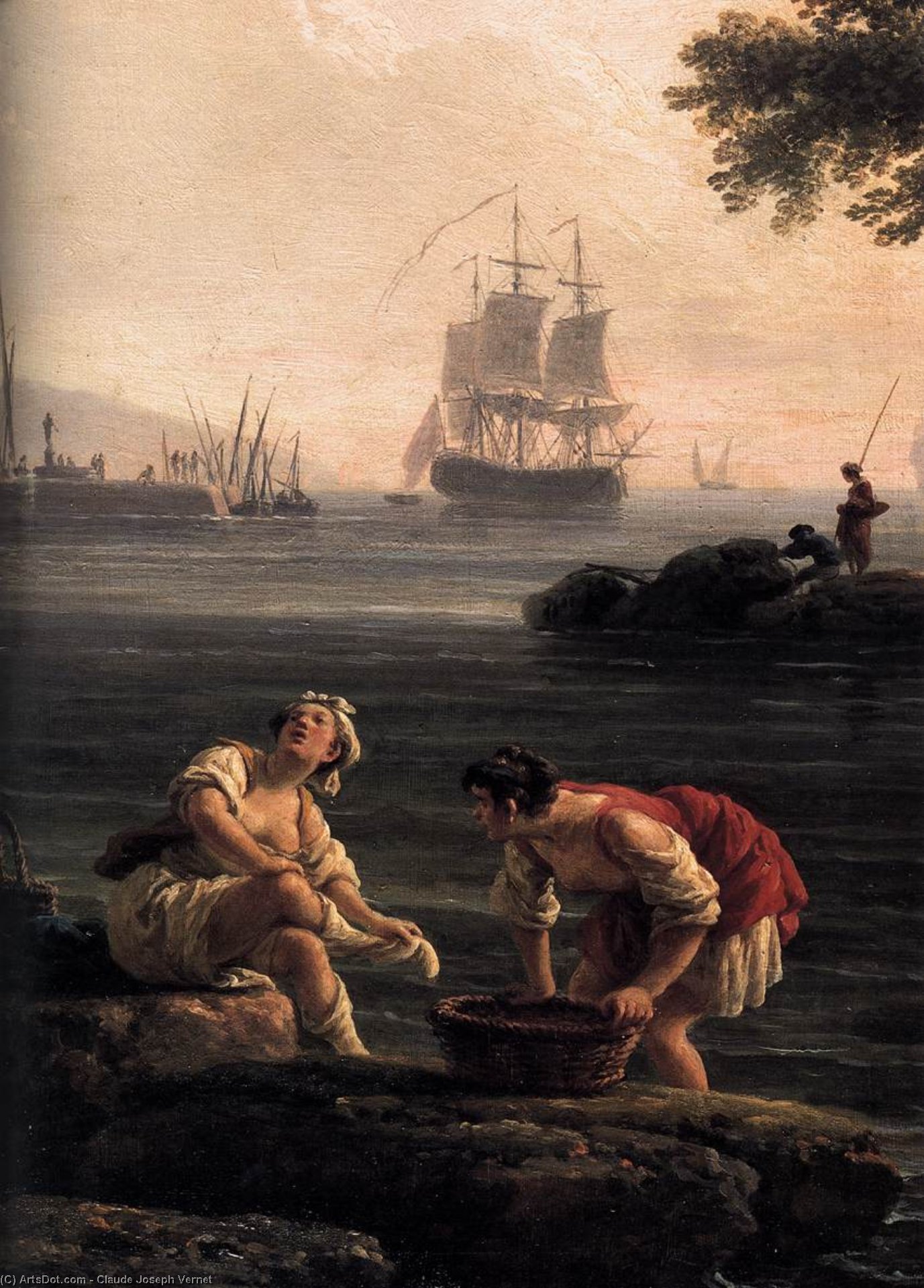
In the delicate dance between land and sea, Claude Joseph Vernet captures a moment of profound stillness that transcends the centuries. His 1776 masterpiece, A Seashore (detail), is far more than a mere coastal observation; it is an evocative window into the Enlightenment era, where the boundaries between scientific curiosity and romantic wonder began to blur. As one gazes upon this exquisite copper print, the viewer is immediately transported to a world where the rhythmic pulse of the tide dictates the pace of human life. The scene unfolds with a quiet intimacy, inviting us to linger on the rocky outcrops and the gentle movement of the waves, making it an ideal centerpiece for any collection seeking to evoke tranquility and classical elegance.
The technical brilliance of this work lies in Vernet’s mastery of the etching process, a medium that demands both immense precision and a soulful touch. By utilizing the unique properties of copper printing, the artist achieved a luminous clarity that few other techniques can replicate. Every ripple in the water and every textured crevice in the coastal rocks is rendered with meticulous detail, creating a tactile experience for the eye. The interplay of light and shadow—the chiaroscuro effect—is particularly striking, as soft, diffused light filters through a sky heavy with billowing clouds, casting a pearlescent glow over the figures below. This mastery of tonal range allows the landscape to breathe, lending a sense of atmospheric depth that makes the distant harbor feel both reachable and infinitely vast.
The Human Connection within the Sublime Landscape
While the sea provides the dramatic stage, it is the subtle presence of humanity that breathes life into the composition. Vernet populates his seascape with figures engaged in the humble, rhythmic labors of maritime life—fishermen tending to their boats and locals sharing quiet moments of conversation. These characters are not merely decorative; they represent the 18th-century fascination with documenting the natural world and the dignity of everyday existence. There is a profound sense of community captured here, a snapshot of a way of life that feels both grounded in reality and elevated by the grandeur of the surroundings. For the interior designer, this narrative element provides a soulful anchor to a room, offering a conversation piece that speaks to themes of heritage, labor, and peace.
Symbolically, the painting serves as a bridge between the rational and the emotional. The expansive, cloud-swept sky acts as a metaphor for the boundless possibilities of the human intellect during the Age of Reason, while the enduring strength of the rocky shore symbolizes stability amidst the ever-changing tides of fate. To possess a reproduction of this work is to invite a sense of historical continuity into a modern space. It offers an emotional sanctuary, a place where the chaos of contemporary life can be stilled by the sight of a distant boat and the soft, eternal murmur of the Atlantic. Whether gracing a sunlit study or a sophisticated living area, Vernet’s vision remains a powerful testament to the enduring beauty of the natural world.