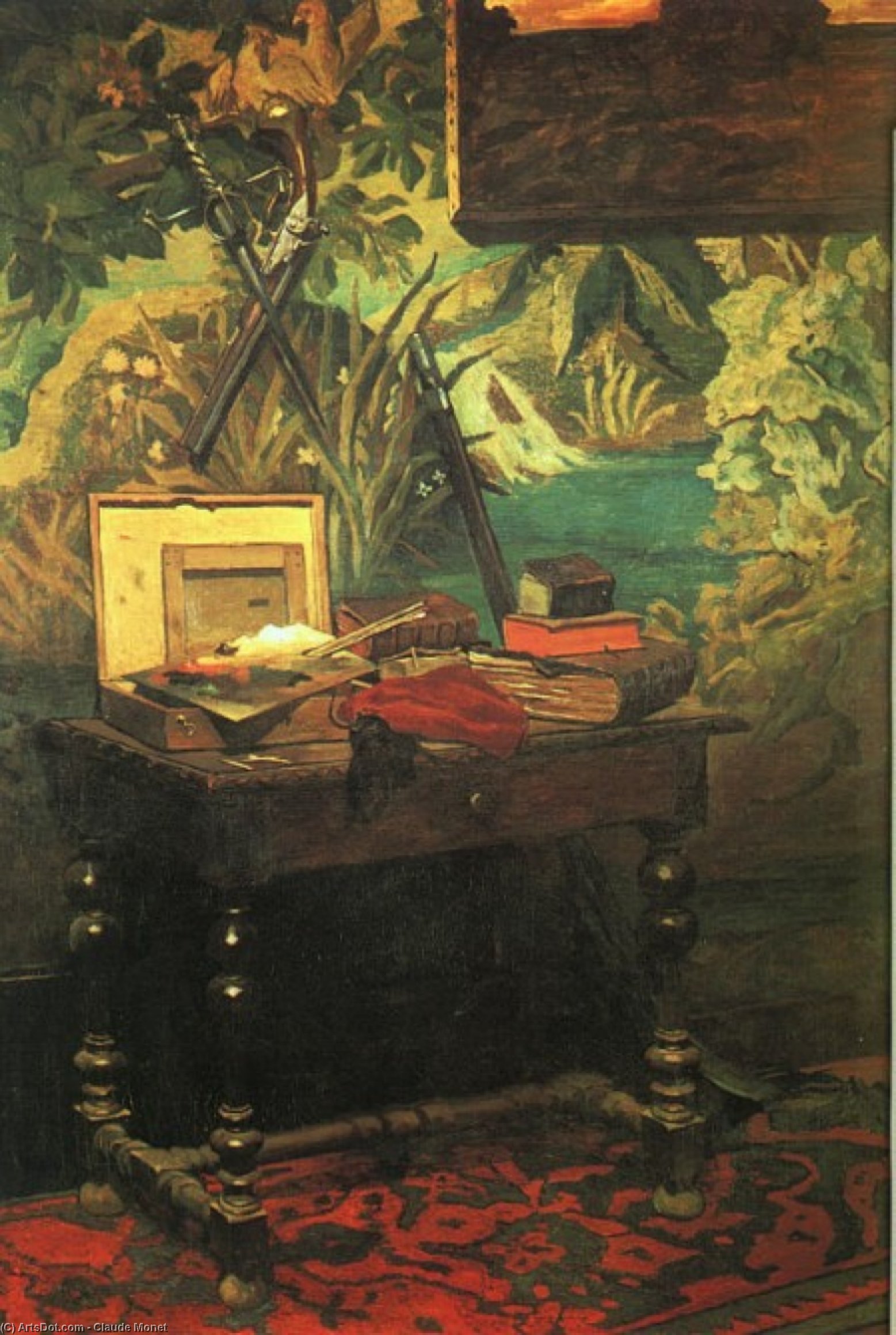
Explore Claude Monet’s ‘A Corner of the Studio,’ a captivating Impressionist oil painting offering a glimpse into his workspace. Discover its light, texture & historical significance.
Explore the world of Claude Monet, the Impressionist master renowned for capturing fleeting light and color through iconic landscapes like Water Lilies & Haystacks.
A Glimpse into the Creative Heart: Monet’s “A Corner of the Studio”
Claude Monet's 1861 painting, *A Corner of the Studio*, offers a remarkably intimate view into the world where artistic inspiration takes form. More than just a depiction of objects, this oil on canvas is a carefully constructed still life that reveals much about the young artist’s developing style and his burgeoning engagement with Realism – a movement seeking to portray life as it truly *is*. The scene isn't grand or overtly dramatic; instead, it focuses on the everyday clutter of an artist’s workspace: books piled haphazardly, practical tools like knives alongside more refined objects such as a vase and cup. A landscape painting visible in the background subtly hints at Monet’s broader artistic ambitions, suggesting a dialogue between observation and creation. The composition feels deliberately unposed, capturing a fleeting moment rather than a staged arrangement.
Technique & Artistic Transition
While still early in his career, *A Corner of the Studio* demonstrates Monet's keen eye for light and shadow – qualities that would become hallmarks of Impressionism. Notice how he renders textures: the worn wood of the table, the reflective surfaces of the metal objects, and the subtle variations in color within the books. The brushwork isn’t yet as broken or fleeting as his later works, but it's demonstrably present, moving away from the highly polished finish favored by academic painters of the time. This painting represents a pivotal moment in Monet’s artistic journey, bridging the gap between traditional Realism and the innovative techniques he would soon pioneer. The use of a darker palette contributes to an atmosphere of quiet contemplation, drawing the viewer into the intimate space.
Symbolism & Emotional Resonance
The objects within *A Corner of the Studio* aren’t merely props; they carry symbolic weight. The books suggest intellectual curiosity and artistic study. The tools – knives, brushes (implied) – represent the means by which Monet transforms his observations into art. Even the slightly disordered arrangement speaks to the creative process itself: a space where ideas are explored, experiments conducted, and inspiration found in unexpected places. The painting evokes a sense of solitude and focused energy. It’s a quiet scene, but one brimming with potential – a testament to the power of observation and the dedication required to bring artistic visions to life. The overall emotional tone is thoughtful and introspective, inviting viewers to reflect on their own creative pursuits or simply appreciate the beauty in everyday objects.
Monet’s Legacy & Collecting Today
Claude Monet (1840-1926) would go on to become a leading figure of the Impressionist movement, revolutionizing painting with his focus on capturing fleeting moments and the effects of light. Works like *Impression, Sunrise* and his series of water lilies cemented his place in art history. Owning a reproduction of *A Corner of the Studio* allows you to connect with this foundational period in Monet’s career – a time of experimentation and artistic growth. It's a piece that resonates not only with art enthusiasts but also with interior designers seeking to add a touch of timeless elegance and intellectual depth to any space. Consider pairing it with complementary colors and textures to create a harmonious and inspiring environment.