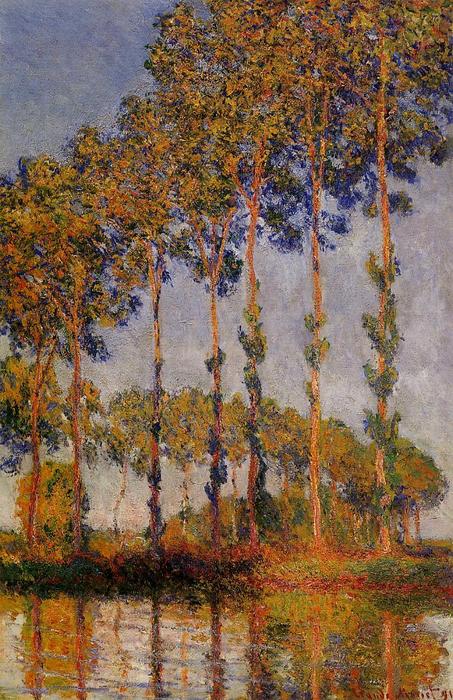
Admire Claude Monet’s ‘A Row of Poplars,’ a serene Impressionist landscape capturing light & reflection. Explore this 1891 masterpiece's beauty at ArtsDot!
Explore the world of Claude Monet, the Impressionist master renowned for capturing fleeting light and color through iconic landscapes like Water Lilies & Haystacks.
A Symphony of Light and Reflection
This captivating vertical composition by Claude Monet, painted in 1891, exemplifies the core tenets of Impressionism. “A Row of Poplars” isn’t merely a depiction of trees; it's an exploration of light, atmosphere, and the fleeting beauty of nature. The painting draws the viewer into a tranquil scene where a line of poplar trees is mirrored in the still surface of water – likely a river or lake. Dominated by harmonious shades of green, gold, and subtle browns, the artwork evokes a sense of serenity and peaceful contemplation. Monet masterfully uses broken color and loose brushstrokes to capture the shimmering effects of light on both foliage and water, creating an immersive visual experience.
Impressionism in Practice: Technique & Context
Monet’s dedication to plein air painting – working outdoors directly from observation – is vividly apparent here. The visible brushwork isn't intended to create a photographic likeness; instead, it serves to convey the *impression* of a moment in time. This piece belongs to a larger series focusing on poplar trees along the Epte River near Giverny, where Monet had settled in 1883. He was fascinated by the way light transformed these trees throughout the day and across seasons, leading him to create numerous canvases exploring variations in color and atmosphere. The technique of wet-on-wet painting – applying paint while still wet to allow for seamless blending – is crucial to achieving the soft, diffused lighting and harmonious color transitions seen in “A Row of Poplars.” This period marked a pivotal moment in art history, as Monet and his contemporaries challenged traditional academic styles and paved the way for modern art.
Symbolism & Emotional Resonance
Beyond its aesthetic beauty, "A Row of Poplars" invites deeper interpretation. The reflection in the water can be seen as symbolic of introspection and the duality of reality. Trees themselves often represent growth, resilience, and connection to nature. The verticality of the composition emphasizes aspiration and a reaching towards the light. Monet’s work consistently evokes feelings of peace, tranquility, and a profound appreciation for the natural world. The painting's gentle color palette and soft brushstrokes contribute to its calming effect, making it an ideal piece for spaces designed to promote relaxation and mindfulness.
A Legacy of Light
Claude Monet (1840-1926) remains one of the most beloved and influential artists in history. His groundbreaking work revolutionized painting and continues to inspire generations. Collections showcasing his art can be found at institutions like the Musée Marmottan Monet and the Musée de l'Orangerie in Paris, offering further insight into his artistic journey. “A Row of Poplars” is a testament to Monet’s enduring vision – a celebration of light, color, and the ephemeral beauty of nature that resonates deeply with viewers even today. A high-quality reproduction of this artwork would bring a touch of Impressionist elegance and serenity to any interior space.