Claude Monet’s Embrace of Purple: “Agapanthus Flowers” – A Giverny Reverie
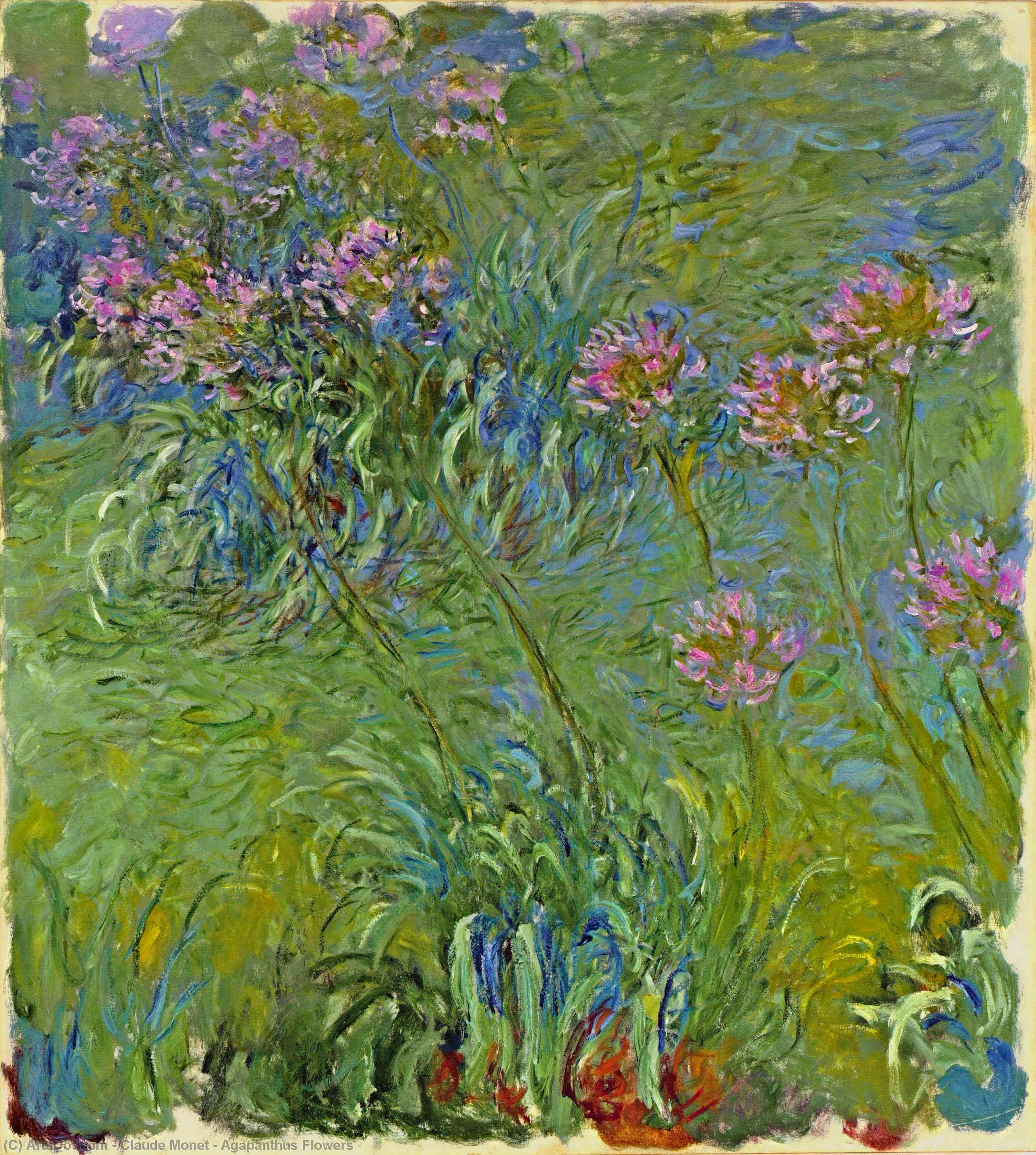
Claude Monet's "Agapanthus Flowers," painted in 1917, isn’t merely a depiction of purple blooms; it’s an immersion into the heart of Impressionism and a profound meditation on light, color, and the fleeting beauty of nature. This exquisite work, housed within the California Palace of the Legion of Honor's impressive European art collection, offers a glimpse into Monet’s meticulously cultivated world at Giverny, his beloved estate in Normandy. More than just a botanical study, “Agapanthus Flowers” is a testament to Monet’s revolutionary approach to painting – capturing not just what he *saw*, but the very essence of how light and atmosphere transformed that vision.
The scene unfolds with an almost dreamlike quality. At least thirteen distinct agapanthus flowers—their velvety purple hues ranging from deep indigo to lighter lavender—are scattered across a verdant field, their forms subtly dissolving into the surrounding greenery. Monet masterfully avoids sharp outlines or rigid structure; instead, he employs loose, broken brushstrokes that dance and shimmer across the canvas. These aren’t strokes meant to define objects, but rather to suggest their presence, their texture, and most importantly, their interaction with light. The artist's technique is a hallmark of Impressionism – prioritizing the immediate sensation of color and movement over precise representation.
Impressionist Techniques: A Symphony of Light
Monet’s genius lies in his ability to translate the ephemeral effects of sunlight onto canvas. He achieves this through a deliberate manipulation of color, layering shades of green—ranging from pale sage to deeper emerald—to create depth and atmosphere. The purple agapanthus are not simply painted as purple; they are built up from countless layers of blues, violets, pinks, and greens, each reflecting the light in a unique way. Notice how the shadows seem to vibrate with color, suggesting movement and luminosity. This technique, central to Monet’s style, was revolutionary for its time, challenging traditional academic painting conventions that prioritized realistic representation.
The composition itself is carefully considered. The flowers are arranged not as a formal grouping but rather as if they have sprung organically from the earth. Some are positioned close to the foreground, appearing almost tactile, while others recede into the distance, creating a sense of spatial depth and inviting the viewer’s eye to wander through the scene. This deliberate arrangement contributes to the painting's overall feeling of tranquility and harmony – a reflection of Monet’s own desire to capture the serenity of his garden.
Symbolism and Context: Giverny’s Garden
“Agapanthus Flowers” is deeply rooted in the context of Monet’s life at Giverny. He transformed his property into an elaborate botanical paradise, importing exotic plants from around the world – including the agapanthus itself—to create a living laboratory for his artistic explorations. The agapanthus, with its striking form and vibrant color, became a recurring motif in his work, symbolizing both beauty and resilience. It’s believed that Monet was particularly fascinated by their ability to thrive in challenging conditions, mirroring his own dedication to capturing the ever-changing effects of light and weather.
The painting can be seen as part of a larger series exploring the garden at Giverny. Alongside works like “Water Lilies and Agapanthus” (a related piece showcasing the same subject matter), these paintings document Monet’s ongoing engagement with nature, his relentless pursuit of capturing its fleeting beauty, and his innovative approach to color and light. The agapanthus, in this context, represents not just a botanical specimen but also a symbol of artistic exploration and the transformative power of observation.
Reproductions: Bringing Monet's Vision Home
WahooArt.com is proud to offer meticulously crafted oil painting reproductions of “Agapanthus Flowers,” allowing art enthusiasts to experience the magic of Monet’s brushstrokes in their own homes. Our skilled artists painstakingly recreate every detail, from the delicate texture of the flowers to the subtle nuances of light and color, ensuring an authentic representation of this iconic masterpiece. These reproductions are more than just copies; they are a celebration of Monet's legacy and a testament to the enduring power of Impressionism. Explore our selection today and bring a touch of Giverny’s serenity into your space.
For further insights into Claude Monet and his artistic journey, we encourage you to visit Wikipedia or explore the collections at institutions like the California Palace of the Legion of Honor.