Explore the world of Claude Monet, the Impressionist master renowned for capturing fleeting light and color through iconic landscapes like Water Lilies & Haystacks.
A Window Into Impressionistic Tranquility: Exploring Monet’s ‘Bateau atelier’
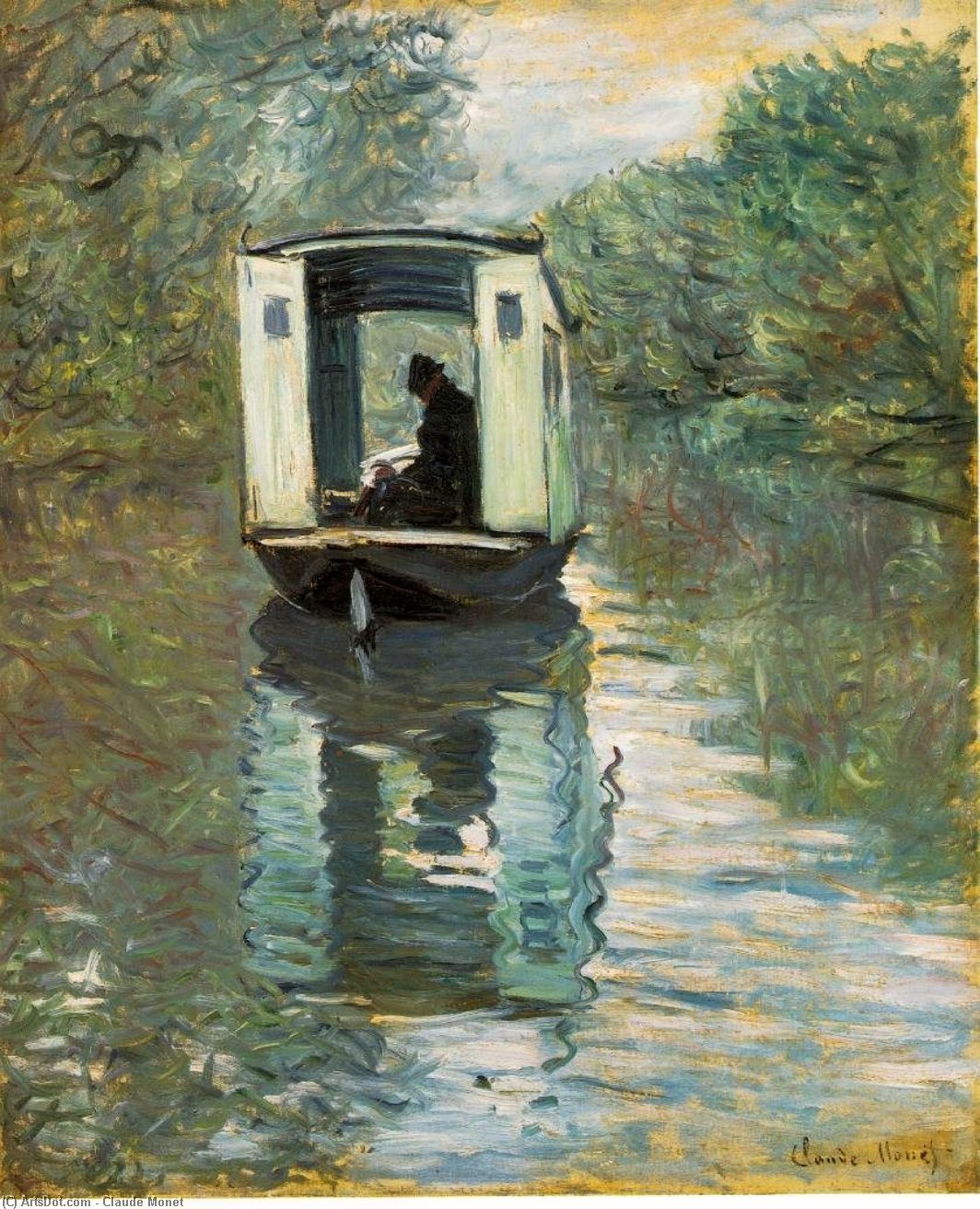
Claude Monet's “Bateau atelier,” painted in 1874, isn’t merely a depiction of a boat on water; it’s an embodiment of the Impressionist ethos—a deliberate attempt to capture fleeting sensations rather than meticulously recreating reality. This serene scene, housed primarily within the Musée Marmottan Monet in Paris, offers viewers a glimpse into the formative years of one of art history's most influential figures and exemplifies the revolutionary approach he pioneered alongside Eugène Boudin.
The Essence of Plein Air Painting
Monet’s artistic breakthrough began with Boudin’s insistence on painting *en plein air*, directly from observation. Prior to this, artists largely confined themselves to studios, painstakingly blending pigments onto canvases to achieve idealized representations. Monet recognized that true beauty resided in the ephemeral qualities of light and atmosphere—the way it dances across surfaces, transforming colors and shapes throughout the day. “Bateau atelier” perfectly illustrates this principle; the artist meticulously recorded the subtle hues of the river Seine at dawn, capturing the diffused sunlight filtering through the mist. This technique – applying paint wet-on-wet – allowed Monet to achieve unprecedented luminosity and vibrancy, mirroring the sensory experience of witnessing such a moment firsthand.
A Composition Steeped in Symbolism
Beyond its technical brilliance, “Bateau atelier” carries symbolic weight. The boat itself represents movement, exploration, and a connection with nature—themes central to Impressionist thought. Monet’s inclusion of two figures – one seated calmly observing the scene, the other standing attentively – subtly suggests contemplation and appreciation for the natural world. These individuals aren't striving to dominate their surroundings; instead, they are absorbed in experiencing its beauty. The muted palette—dominated by blues, greens, and yellows—contributes to the painting’s tranquil mood, inviting viewers into a space of quiet reflection.
Historical Context: Impressionism Takes Root
“Bateau atelier” emerged during a period of significant artistic upheaval. The Salon des Refusés of 1874 had rejected many avant-garde works deemed unsuitable by the conservative Académie Royale de Peinture, Sculpture et Architecture. Monet and Boudin bravely challenged these conventions, demonstrating that art could be truthful to its time—to the everyday life and sensory perceptions of ordinary people. This defiance paved the way for Impressionism’s acceptance as a legitimate artistic movement and cemented Monet's legacy as a champion of innovation.
Emotional Resonance: Capturing Light's Embrace
Ultimately, “Bateau atelier” succeeds in conveying a profound emotional resonance. It evokes feelings of peace, serenity, and wonder—a desire to linger in the moment and absorb the beauty of nature’s transient splendor. Monet’s masterful use of color and brushwork transports us back to that early morning light, allowing us to share in his artistic vision and experience the transformative power of Impressionism. Reproductions of this iconic artwork offer a tangible connection to this pivotal period in art history and provide an exquisite addition to any interior space seeking inspiration.