A Symphony of Light and Water: The Impressionist Soul of Boats on Rapair
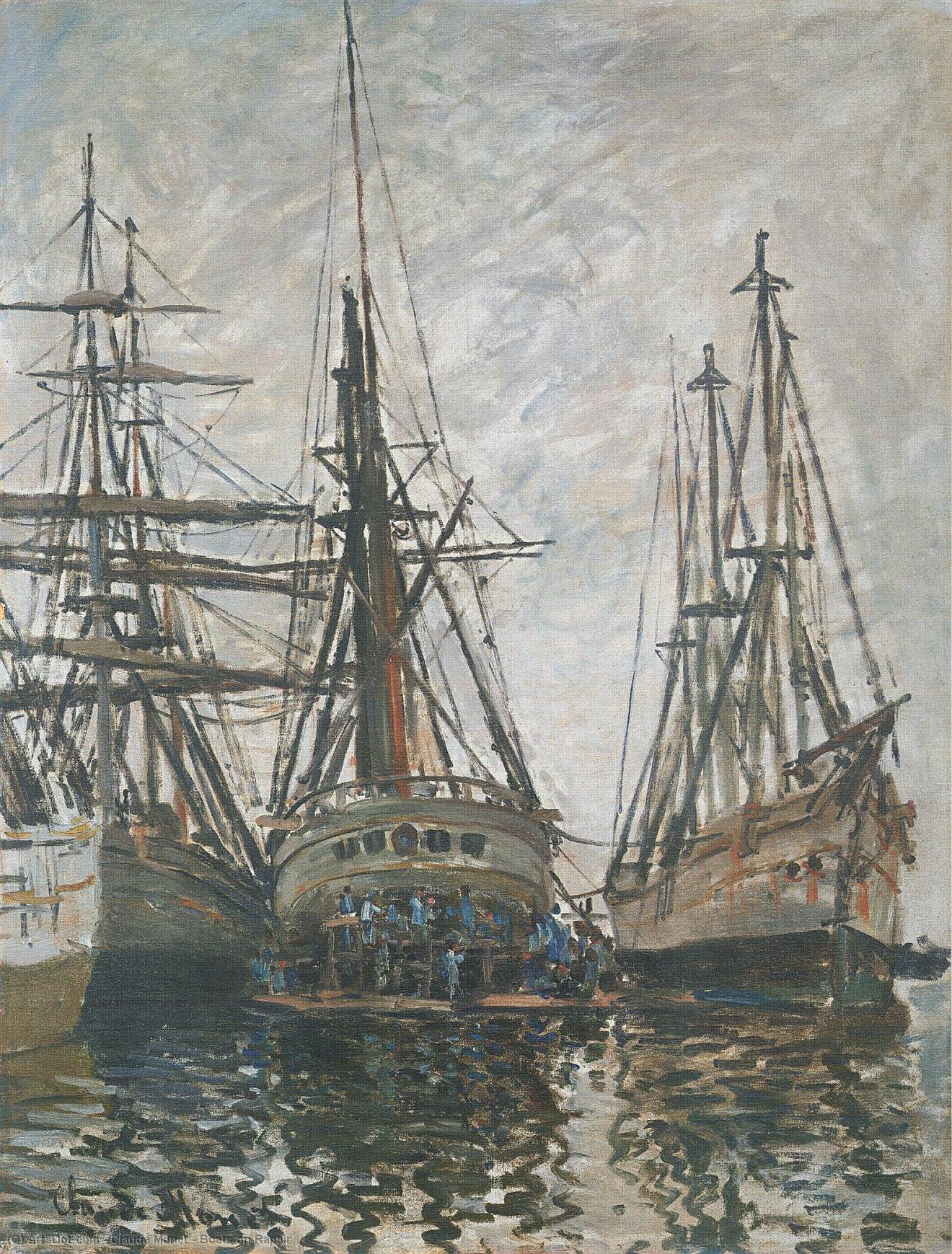
In the quietude of 1873, Claude Monet captured more than just a harbor scene; he bottled a fleeting moment of atmospheric grace. Boats on Rapair serves as a profound window into the heart of the Impressionist movement, where the objective reality of a landscape dissolves into a subjective experience of light and air. As one gazes upon this serene tableau, housed within the prestigious Musée Marmottan Monet, there is an immediate sense of being transported to the shores of Normandy. The painting does not demand attention through jarring contrasts or dramatic action; instead, it invites a slow, meditative immersion into a world where the boundaries between sea, sky, and vessel are softened by a gentle, overcast haze.
The composition is a masterclass in subtle balance, centered around three sailing vessels anchored within the harbor. Monet avoids the rigid symmetry of classical tradition, opting instead for an asymmetrical arrangement that guides the viewer’s eye across the canvas in a rhythmic dance. The low horizon line grants immense importance to the sky, allowing the heavens to mirror the tranquil waters below. Through the use of horizontal bands of water, Monet establishes a sense of profound depth, creating a layered perspective where distant elements appear to melt into a soft, atmospheric blur. This technique does not merely represent distance; it evokes the very feeling of looking through a veil of mist.
The Art of the Fleeting Moment: Technique and Palette
To understand Boats on Rapair is to understand Monet’s revolutionary brushwork. Eschewing the meticulous, polished finish favored by the Académie, Monet employed loose, broken strokes that seem to vibrate with life. These short, energetic applications of oil paint are not intended to define the hard edges of a mast or the precise texture of wood; rather, they are designed to capture the shimmering, ephemeral quality of light as it interacts with moisture-laden air. When viewed closely, the canvas reveals a lively mosaic of color, but as one retreats, these fragments coalesce into a seamless, unified impression of a peaceful afternoon.
The color palette is remarkably restrained, leaning heavily into a sophisticated spectrum of cool blues, muted greens, and soft grays. This choice of tones perfectly encapsulates the mood of an overcast day, where shadows are not dark or sharp but are instead diffused into a gentle, pearlescent glow. Yet, within this coolness, Monet provides delicate moments of warmth. Subtle hints of amber and ochre peek through the hulls and rigging of the boats, acting as vital anchors that prevent the scene from becoming monochromatic. These small accents of light provide a necessary heartbeat to the composition, enlivening the stillness with a sense of quiet vitality.
An Enduring Legacy for the Modern Collector
For the discerning collector or interior designer, Boats on Rapair offers much more than aesthetic beauty; it offers an emotional sanctuary. The painting’s ability to evoke feelings of peace, stillness, and a deep connection to the natural world makes it a timeless addition to any curated space. It possesses a unique versatility, capable of anchoring a room with its sophisticated cool tones while providing a conversational focal point that celebrates the history of modern art.
Bringing a high-quality reproduction of this masterpiece into a home or gallery allows for a daily encounter with Monet’s philosophy of plein air painting. It is an invitation to slow down and appreciate the beauty found in the everyday—the way light hits the water, the way clouds soften the horizon, and the profound tranquility found in a moment of rest. In an era of constant motion, the enduring charm of Monet's vision remains a powerful testament to the restorative power of art.