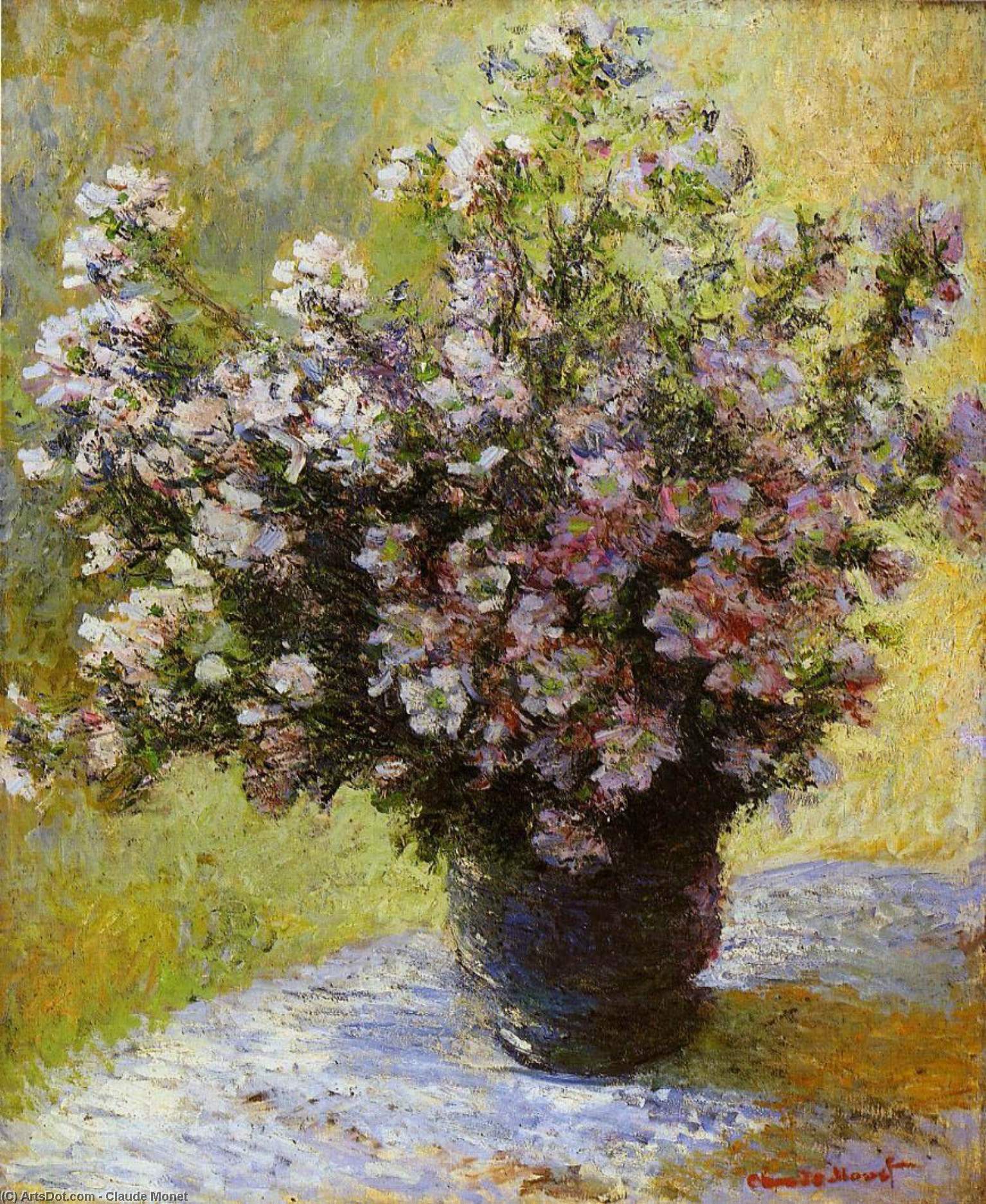
A Symphony of Light and Bloom: Exploring Monet’s *Bouquet of Mallows*
Claude Monet, a pivotal figure in the development of
Impressionism, didn't merely paint what he saw; he captured how light *felt*. Painted in 1876, *Bouquet of Mallows* is a quintessential example of this approach – a seemingly simple still life that reveals profound artistic innovation and a deep sensitivity to the ephemeral beauty of nature. This work offers more than just a floral arrangement; it’s an intimate glimpse into Monet's evolving style and his dedication to portraying fleeting moments in time.
Subject and Composition: A Momentary Stillness
The painting presents a vibrant bouquet of mallows – delicate, cup-shaped blossoms – arranged within a dark blue ceramic vase. The composition is intimate and focused, drawing the viewer’s eye directly to the flowers themselves. Monet masterfully uses cropping, filling much of the canvas with the floral arrangement, creating a sense of abundance and immediacy. A subtly rendered table surface anchors the bouquet, providing a grounding element while remaining secondary to the luminous blooms above. The placement suggests a sunlit interior, hinted at by the soft glow enveloping the flowers.
Impressionistic Technique: Capturing Fleeting Light
*Bouquet of Mallows* is a masterclass in Impressionistic technique. Monet eschews precise detail in favor of capturing the *impression* of light and color. His brushstrokes are loose, visible, and broken – not blended to create smooth surfaces but rather applied as distinct touches that allow the colors to mix optically in the viewer’s eye. This creates a sense of movement and vibrancy, as if the flowers themselves are shimmering with life. The use of
impasto—thickly applied paint—adds texture and depth, further enhancing the painting's tactile quality. Notice how the light doesn’t uniformly illuminate the bouquet; instead, it dances across the petals, creating highlights and shadows that define form and volume.
Historical Context: A Turning Point in Art
The 1870s were a period of radical change in the art world. Artists like Monet were rejecting the academic conventions of the Salon system, seeking to paint modern life as they experienced it. *Bouquet of Mallows* exemplifies this shift. Still life painting had long been considered a lower genre within the artistic hierarchy, but Monet elevates it through his innovative technique and focus on light and atmosphere. This work, along with others from this period, helped pave the way for the acceptance of Impressionism and its lasting influence on modern art. It’s important to note that Monet was experimenting with series paintings around this time – exploring how a single subject could appear different under varying conditions, foreshadowing his later iconic works like the *Haystacks* and *Water Lilies*.
Symbolism and Emotional Resonance
While not overtly symbolic, flowers have long carried layers of meaning. Mallows themselves can represent gentleness, domesticity, and even healing. In Monet’s hands, however, their symbolism is less about specific meanings and more about evoking a feeling – a sense of tranquility, joy, and the fleeting beauty of life. The painting's soft palette and luminous quality create an atmosphere of serenity, inviting contemplation and offering a moment of respite from the everyday world.
Key Characteristics
- Medium: Oil on canvas – showcasing Monet’s masterful handling of this traditional medium.
- Style: Impressionism – characterized by loose brushwork, vibrant color, and a focus on capturing light and atmosphere.
- Composition: Intimate and focused, with the bouquet filling much of the canvas to create a sense of immediacy.
- Color Palette: Soft and muted tones, emphasizing delicate shades of pink, purple, and blue.
Bringing Monet Home: Owning a Reproduction
Inspired by this captivating work? A high-quality reproduction allows you to experience the beauty of *Bouquet of Mallows* in your own space. ArtsDot offers meticulously crafted handmade oil paintings, ensuring that every brushstroke and nuance of color is faithfully reproduced. Explore our collection today and discover how Monet’s masterpiece can transform your home or office into a haven of artistic inspiration. You can also explore other works by Monet, such as
Waterloo Bridge, London and the breathtaking
Water-Lilies (54), available through ArtsDot.