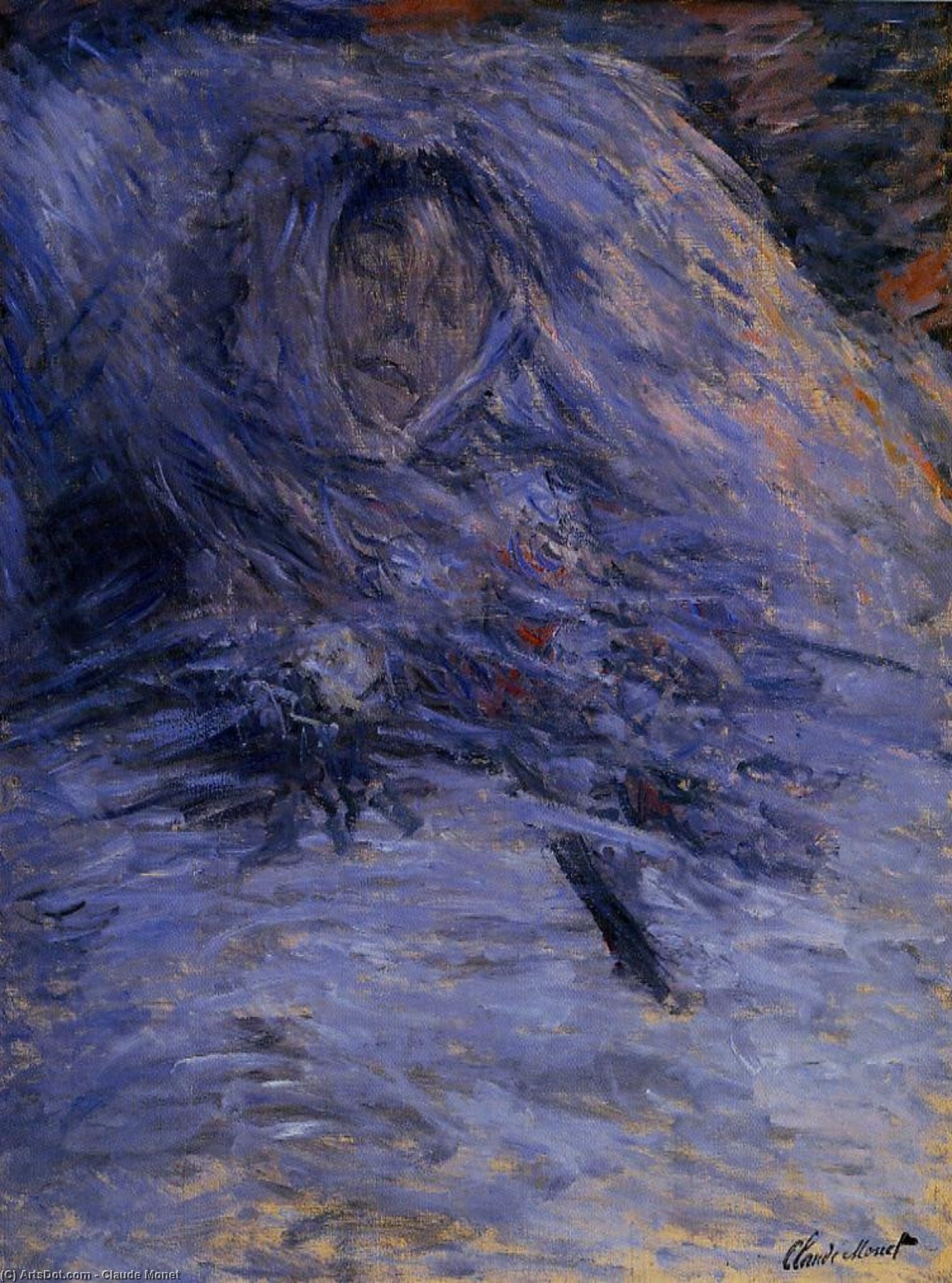
Claude Monet on Her Deathbed
Claude Monet, one of the most renowned Impressionist painters, created a powerful and poignant painting titled
Camille Monet on Her Deathbed. This oil-on-canvas work, dated 1879, is now housed in the esteemed
Musée d'Orsay in Paris, France.
The Artist: Claude Monet
Claude Monet was born in Paris, France in 1840 and is known for his innovative use of color and light. He captured the fleeting moments of everyday life, often depicting scenes from nature such as landscapes, gardens, and water lilies. Monet's works are characterized by their dreamy quality and soft brushstrokes. His early influences included Eugène Boudin, who instilled in him the crucial concept of
plein air painting – capturing the essence of a scene directly from its surroundings. This approach fundamentally altered artistic practice, prioritizing observation over meticulous representation. Monet’s entrepreneurial spirit was evident from his youthful caricatures for local businesses, demonstrating an ambition that would propel him to international acclaim.
The Painting: Camille Monet on Her Deathbed
Camille Monet on Her Deathbed portrays Camille Monet, Claude Monet’s wife, lying in bed with her head covered by a blanket. The scene exudes an undeniable solemnity, reflecting the fragility of life and capturing a moment of profound intimacy. Painted in 1879, the artwork employs a muted blue color palette—a deliberate choice that contributes to the painting's contemplative mood. Scattered objects within the room – two knives positioned strategically near the bottom right corner, another knife closer to the center-right area, a cup in the top left corner and a bowl on the lower left side – serve as compositional elements adding depth and visual interest. Resting upon the bed is a book, symbolizing reflection and perhaps remembrance. The artist’s masterful brushstrokes create an ethereal effect, blending colors seamlessly to convey a sense of serenity despite the melancholic subject matter.
Artistic Significance
This painting exemplifies Monet's ability to translate emotion onto canvas through subtle color harmonies and delicate textures. It transcends mere depiction; instead, it invites contemplation on themes of mortality and compassion. The Impressionist movement sought to capture not just what the eye sees but also how it feels—a goal brilliantly achieved by Monet in
Camille Monet on Her Deathbed. It stands as a testament to Monet’s skill in conveying human experience with sensitivity and grace.
Other Notable Works by Claude Monet
Beyond this poignant portrait, Monet's oeuvre encompasses iconic landscapes like
Floating Ice and
The Conservatory by Edouard Manet, showcasing his versatility as an artist. His enduring legacy resides in his pioneering exploration of light and color—principles that continue to inspire artists today. You can discover more about Monet’s artistic journey at
List of paintings by Claude Monet.
For a stunning reproduction of Camille Monet on Her Deathbed, visit Musée National d'Art Moderne in Paris, France.