A Fleeting Moment: Claude Monet’s ‘Dandelions’
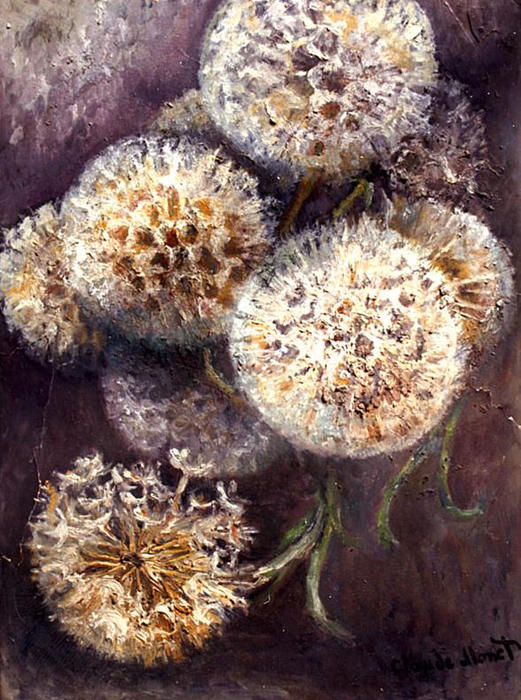
Claude Monet's *Dandelions* is more than just a floral study; it’s an intimate glimpse into the heart of Impressionism, capturing a transient moment of natural beauty with remarkable sensitivity. Painted in oil on canvas (79 x 58 cm), this work exemplifies Monet’s dedication to portraying the ephemeral effects of light and atmosphere – qualities that define his enduring legacy.
Impressionistic Technique & Style
This painting is a quintessential example of
Impressionism, a movement born from a desire to break away from academic traditions and embrace subjective perception. Monet, along with his contemporaries, moved their easels *en plein air* – outdoors – to directly observe and record the shifting qualities of light and color. In *Dandelions*, this is evident in the loose, visible brushstrokes that build up texture and form. Rather than meticulously rendering every detail, Monet prioritized capturing the *impression* of the scene: the delicate fluffiness of the seed heads, the subtle gradations of tone, and the overall sense of airy lightness. The technique isn’t about precise representation; it's about evoking a feeling, a memory of a sun-drenched meadow.
Subject & Composition
The subject matter itself – dandelions – is deceptively simple. Often dismissed as weeds, Monet elevates these humble flowers to the realm of artistic significance. He focuses on the seed heads at their most fragile and beautiful stage, poised for dispersal by the wind. The composition centers around this cluster, drawing the viewer’s eye into a world of delicate textures and subtle contrasts. A dark, muted background serves to accentuate the luminosity of the dandelions, making them appear almost ethereal. This shallow depth of field further emphasizes their immediate presence, inviting us to appreciate their fleeting beauty.
Historical Context & Provenance
Painted at an unknown date during Monet’s prolific career (1840-1926), *Dandelions* offers a window into the artist's ongoing exploration of nature and light. The painting remained in private hands for decades, surfacing publicly only in 2011 when it was sold at auction in Kharkiv, Ukraine, for $6 million to an anonymous buyer. Its journey from a private collection to the art market underscores its increasing recognition as a significant work within Monet’s oeuvre. While not currently held in a major public collection like those found at the
Musée Marmottan Monet or the
Musée de l'Orangerie in Paris, its recent visibility has cemented its place in art historical discourse.
Symbolism & Emotional Impact
Dandelions are rich with symbolism. They represent wishes, hope, and resilience – qualities embodied in their ability to thrive even in challenging environments and spread their seeds far and wide on the breeze. Monet’s depiction of these seed heads evokes a sense of fragility, transience, and the cyclical nature of life. The painting is imbued with a quiet serenity, inviting contemplation and offering a moment of peaceful escape. It's a reminder to appreciate the beauty in everyday things, even those often overlooked.
For Collectors & Interior Designers
- A Touch of Impressionist Elegance: *Dandelions* brings a sophisticated and calming presence to any space.
- Versatile Aesthetic: Its muted color palette complements a wide range of interior styles, from traditional to contemporary.
- Conversation Starter: This artwork is sure to spark engaging conversations about art history and the beauty of nature.
- High-Quality Reproductions Available: Experience the charm of Monet’s *Dandelions* with a meticulously crafted, hand-made oil painting reproduction.
This work isn't merely a depiction of dandelions; it is an embodiment of Monet’s artistic philosophy – a celebration of light, color, and the fleeting beauty of the natural world. It remains a testament to his enduring influence on modern art.