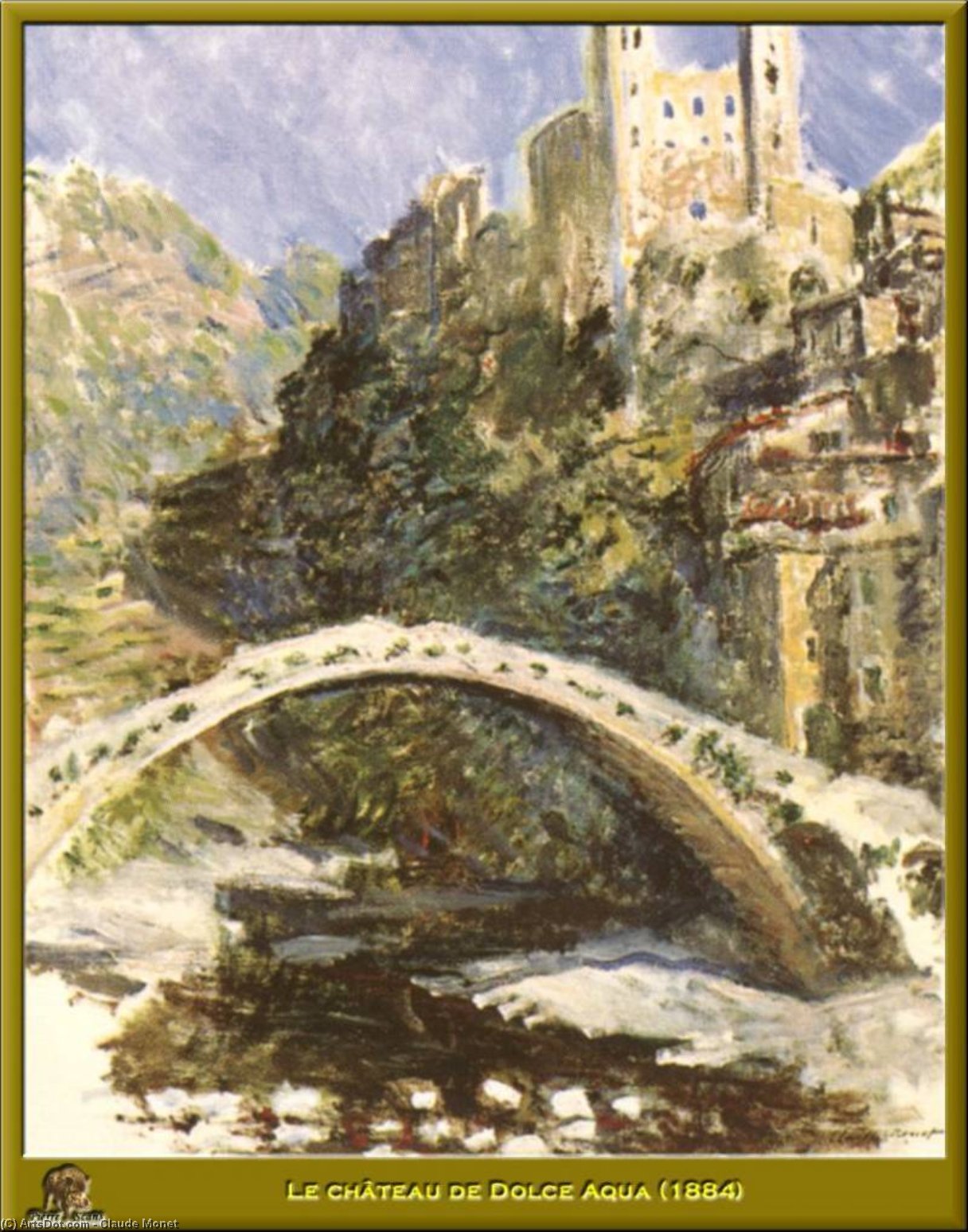
Le Choteau de Dolceaqua: A Winter's Serenity by Claude Monet
Le Choteau de Dolceaqua, painted in 1884 by the celebrated French artist Claude Monet, is a captivating landscape that exemplifies his Impressionistic style. This work transports viewers to a tranquil winter scene in Dolceacqua, Italy, showcasing a picturesque bridge spanning a waterway with a castle majestically perched in the background. The painting’s enduring appeal lies in its ability to capture a fleeting moment of serene beauty and evoke a sense of peaceful contemplation.
Composition and Atmospheric Detail
The composition is carefully orchestrated to draw the eye across the scene. A gracefully arched bridge, featuring two distinct spans—one notably larger than the other—forms a central element, connecting the foreground with the distant castle. The water reflects the muted tones of the winter sky, creating a sense of depth and tranquility. Several figures are subtly integrated into the landscape, adding a touch of human presence without disrupting the overall harmony. These individuals appear to be enjoying the scenery or engaged in everyday activities, further enhancing the painting's narrative quality. Monet’s masterful use of light and shadow creates an atmosphere that is both peaceful and picturesque, perfectly capturing the essence of a winter day.
Impressionism: Capturing Fleeting Moments
Le Choteau de Dolceaqua stands as a quintessential example of Impressionism. Monet’s technique emphasizes the fleeting effects of light and color rather than precise detail. His brushstrokes are loose and visible, contributing to the painting's vibrant energy and sense of immediacy. The colors used—muted earth tones punctuated by highlights of gold and blue—create a harmonious palette that reflects the winter landscape. This approach was revolutionary at the time, challenging traditional academic painting styles and paving the way for modern art movements. Monet’s dedication to capturing these ephemeral moments in nature is what defines his artistic legacy.
Historical Context and Inspiration
Monet painted Le Choteau de Dolceaqua during a period of extensive travel throughout Europe, seeking inspiration from diverse landscapes. Dolceacqua, a charming village nestled in the Ligurian Alps of Italy, provided him with an ideal subject for capturing the beauty of winter scenery. The painting reflects Monet’s fascination with architecture integrated into natural settings—a recurring theme in his work. This particular piece showcases his ability to find beauty and inspiration even in seemingly ordinary scenes, transforming them into works of art that resonate with viewers across generations.
Symbolism and Emotional Impact
While not overtly symbolic, Le Choteau de Dolceaqua evokes a sense of tranquility, history, and romanticized beauty. The castle itself represents permanence and the passage of time, while the bridge symbolizes connection and transition. The winter landscape suggests resilience and quiet strength. Overall, the painting creates an emotional response that is both calming and uplifting, inviting viewers to pause and appreciate the simple pleasures of nature. It’s a testament to Monet's ability to capture not just what he saw, but also how it made him feel—a hallmark of Impressionistic art.