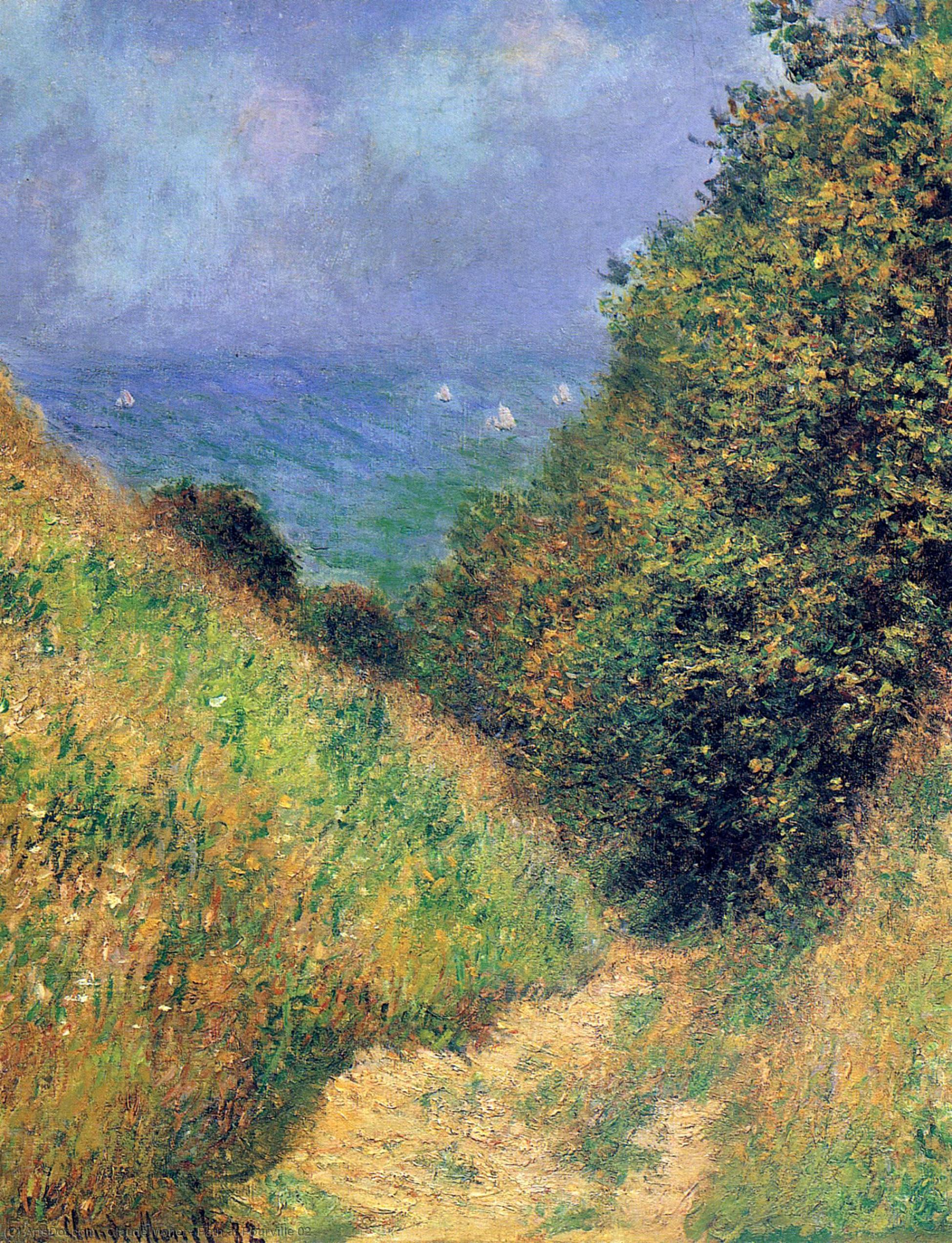
Experience Claude Monet's 'Path at Pourville 02,' a serene Impressionist landscape capturing the harmony of nature and human presence under a vibrant blue sky. Explore this iconic masterpiece.
Explore the world of Claude Monet, the Impressionist master renowned for capturing fleeting light and color through iconic landscapes like Water Lilies & Haystacks.
A Symphony of Light and Atmosphere: Exploring Claude Monet’s Path at Pourville 02
Claude Monet's *Path at Pourville 02*, painted in 1882, stands as a cornerstone of Impressionist art—a testament to the movement’s audacious ambition to capture not just what the eye sees but how it feels. More than simply depicting a picturesque landscape, Monet sought to distill the very essence of experience itself, prioritizing fleeting impressions over meticulous detail. This painting embodies this philosophy perfectly, inviting viewers into a tranquil scene bathed in dappled sunlight and imbued with an undeniable sense of serenity.
The Essence of Impressionism: Painting Beyond Representation
Impressionism wasn’t about faithfully recreating reality; it was about conveying its immediate sensory impact. Artists like Monet rejected the academic conventions of their time—the smooth brushstrokes, precise shading, and idealized forms favored by the Salon—embracing instead loose, visible brushwork that captured the shifting qualities of light and color. Monet's technique is particularly noteworthy: he applied paint in short, broken strokes, allowing colors to blend optically on the canvas rather than mixing them beforehand. This method brilliantly reproduces the way sunlight filters through foliage, creating a vibrant interplay of greens, blues, and yellows—a visual dance that embodies the spirit of Impressionism. The artist’s meticulous observation of nature was paramount; he spent countless hours studying the effects of weather conditions on the landscape, striving to capture them with unparalleled accuracy.
A Moment Frozen in Time: Contextualizing Pourville
Painted during Monet's formative years as an Impressionist innovator, *Path at Pourville 02* reflects the broader artistic and intellectual currents of its era. The painting emerged from a period of significant experimentation within the art world, fueled by advancements in scientific understanding—particularly Darwin’s theory of evolution—which challenged traditional notions of God's role in creation. Monet’s focus on capturing natural beauty wasn’t merely aesthetic; it was also deeply rooted in philosophical considerations about humanity’s relationship with the environment. Pourville itself served as a favored subject for Monet, representing a quintessential corner of Normandy – a region celebrated for its lush meadows and vibrant wildflowers. The artist sought to portray not just the visual splendor of the place but also its intangible atmosphere—the warmth of the sun, the rustle of leaves, and the quiet contemplation it inspires.
Symbolism Within Serenity: Interpreting the Scene
Beyond its technical brilliance, *Path at Pourville 02* possesses subtle symbolic resonance. The pathway itself symbolizes a journey – perhaps not just physical but also spiritual—leading towards enlightenment or understanding. Surrounding trees represent stability and resilience, anchoring the scene amidst the dynamism of light and color. And crucially, the presence of boats and figures adds layers of narrative complexity. These elements invite contemplation about human activity within the natural world, suggesting that beauty can coexist with purpose and engagement. They remind us to pause and appreciate the simple pleasures of existence—a sentiment perfectly captured in Monet’s masterful depiction of a tranquil summer afternoon.
Emotional Resonance: The Legacy of Impressionism
Ultimately, *Path at Pourville 02* transcends its formal qualities to evoke a profound emotional response. Its luminous palette and expressive brushstrokes convey a feeling of peace and tranquility—a desire to escape the pressures of urban life and reconnect with the restorative power of nature. Monet’s work continues to inspire artists and designers alike, demonstrating that true beauty lies not in flawless imitation but in capturing the fleeting essence of experience. Reproductions of this iconic painting offer an opportunity to bring a touch of Impressionist serenity into any interior space—a timeless reminder of Monet's enduring vision for art and its ability to illuminate the human spirit.