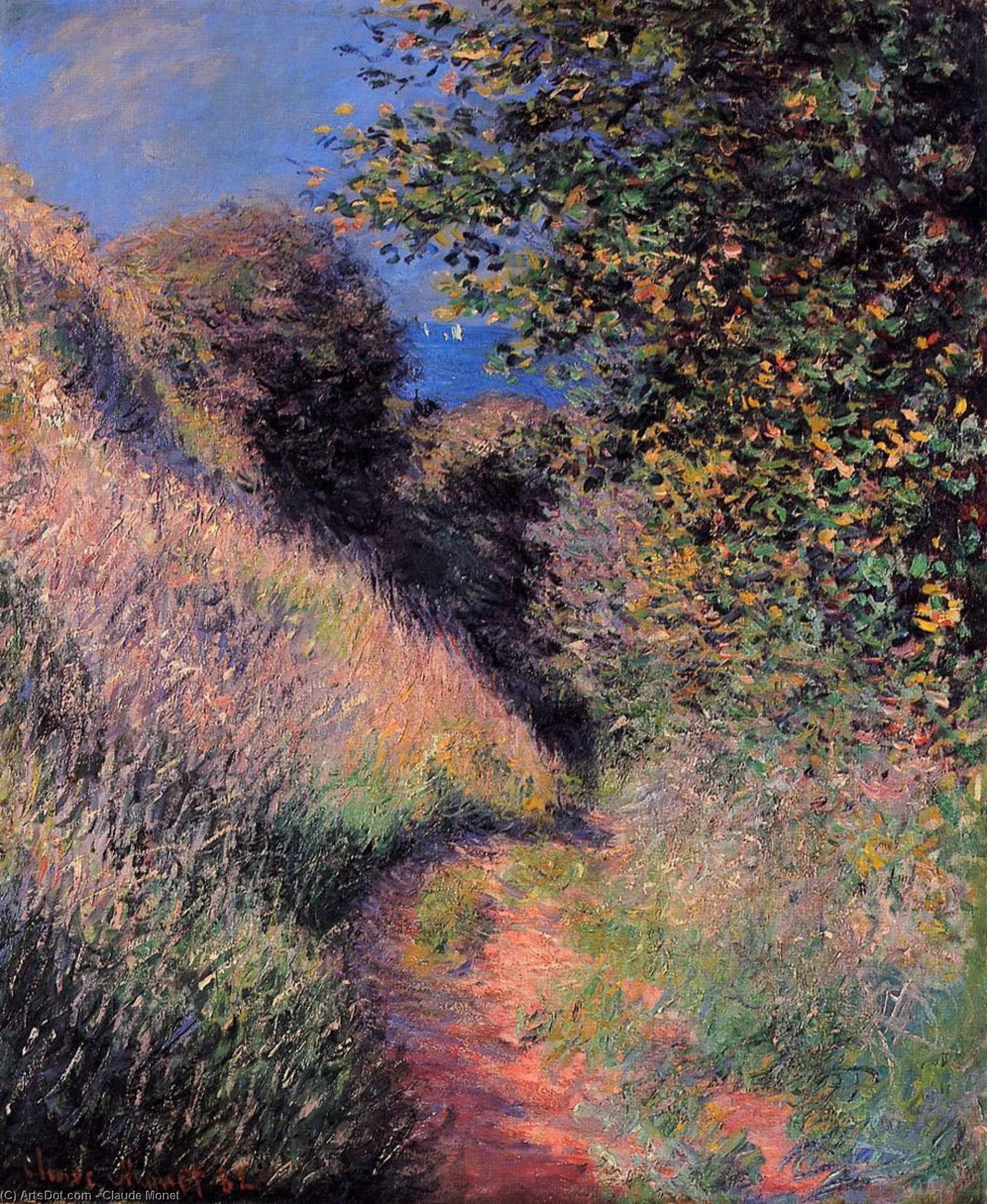
The Essence of Impressionism – Path at Pourville
Claude Monet’s Path at Pourville, painted in 1882, isn't merely a landscape; it’s a fleeting moment captured on canvas—a distillation of light, color, and the very essence of Impressionist philosophy. This work, residing within the heart of Monet’s prolific output, offers a profound glimpse into his revolutionary approach to art: abandoning academic precision for an immediate, sensory experience. The scene unfolds in the small fishing village of Pourville, Normandy, a place chosen by Monet specifically for its simplicity and the quality of light it offered – a crucial element in his artistic exploration. It’s a painting that invites us to step into a tranquil world, where time seems to slow and the beauty of nature takes center stage.
Monet's genius lies not just in depicting a physical location but in conveying an atmosphere—a feeling of serenity and quietude. The path itself, rendered with loose, broken brushstrokes, isn’t sharply defined; instead, it dissolves into the surrounding foliage, blurring the boundaries between foreground and background. This technique, characteristic of Impressionism, emphasizes the subjective perception of reality – how we *see* a scene rather than simply reproducing it faithfully.
A Symphony of Light and Color
The painting’s palette is remarkably restrained yet intensely vibrant. Monet masterfully employs broken color—applying small dabs and strokes of pure pigment directly onto the canvas, allowing them to blend optically in the viewer's eye. This technique creates a shimmering effect, particularly noticeable in the dappled sunlight filtering through the trees. Observe how he uses variations of green – from deep emerald to pale sage – to capture the nuances of the foliage, and how touches of blue and violet hint at the distant sky. The overall impression is one of luminous warmth, suggesting a summer afternoon bathed in golden light.
- Color Theory: Monet’s use of complementary colors (green and orange/yellow) creates visual excitement and depth.
- Brushwork: Short, broken brushstrokes are key to capturing the fleeting effects of light and atmosphere.
- Value Contrast: Subtle shifts in value – the darker shadows versus the brighter highlights – add dimension and realism to the scene.
Impressionism’s Roots & Monet's Innovation
Path at Pourville is deeply rooted in the Impressionist movement, which emerged in France during the 1870s as a reaction against the rigid conventions of academic painting. Artists like Monet sought to capture the *impression* of a scene—the immediate sensory experience—rather than meticulously detailing every element. However, Monet pushed the boundaries of Impressionism further, experimenting with techniques that anticipated later developments in modern art. His focus on capturing light and atmosphere, his use of color theory, and his willingness to break from traditional compositional rules all contributed to his groundbreaking style.
Monet’s artistic journey was profoundly influenced by the Symbolist poetic movement of the late 19th century, which emphasized emotional expression and subjective experience. He also drew inspiration from Russian and Far Eastern music, as well as the works of composers like Chopin, seeking to translate musical harmonies into visual forms. This confluence of influences resulted in a uniquely evocative style that continues to resonate with viewers today.
A Legacy of Light – Reproductions & Beyond
Monet’s Path at Pourville stands as a testament to his artistic vision and a cornerstone of the Impressionist movement. Its enduring appeal lies in its ability to transport us to a tranquil corner of Normandy, inviting us to contemplate the beauty of nature and the power of light. Today, high-quality reproductions of this masterpiece are available through ArtsDot.com, offering an accessible way to experience Monet’s genius firsthand. These handmade oil painting reproductions capture not only the visual details of the original but also its emotional essence, allowing you to bring a touch of Impressionist magic into your home or office.
Furthermore, exploring related works by Monet – such as Alley near Pourville and Cliff Walk at Pourville – provides a deeper understanding of his artistic process and the evolution of his style. And for those seeking to delve further into Monet’s life and work, Claude Debussy's compositions, inspired by Monet's artistic philosophy, offer another layer of appreciation for this extraordinary artist.